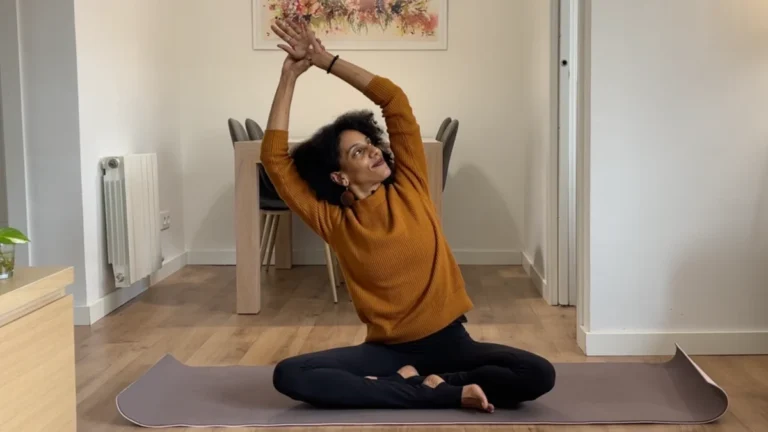






Published May 7, 2026
In the modern wellness landscape, yoga has evolved from a niche spiritual practice into a global industry. Yet, as the popularity of yoga has surged, the pedagogical methods employed by instructors have come under increasing scrutiny. For veteran practitioners—some with over three decades of experience—the evolution of teaching is not merely about perfecting physical alignment; it is about the radical recalibration of the teacher-student dynamic.
Early in their careers, many instructors fall into the trap of “over-teaching”—offering exhaustive, granular explanations that exceed the cognitive bandwidth of students juggling the pressures of contemporary life. This article explores the transition from performative instruction to student-centered facilitation, providing a framework for teachers to evaluate their methodology through five essential, introspective questions.
The Evolution of the Yoga Educator: A Chronological Perspective
The trajectory of a yoga teacher’s career often follows a distinct arc. In the early stages, there is a natural inclination toward the “encyclopedic approach.” Teachers, eager to demonstrate their expertise and deep knowledge of anatomy and philosophy, often overload students with technical data.
The Phase of Information Overload
Three decades ago, the prevailing model of instruction was often lecture-heavy. Teachers would frequently run past scheduled class times, ignoring the logistical realities of their students’ lives. The pedagogical shift occurred when veteran teachers realized that the goal of yoga was not to transfer information, but to facilitate a personal experience.
The Shift to Conscious Pacing
By the mid-2010s, a movement toward "accessible yoga" began to gain traction. Teachers began to recognize that overwhelming a student with anatomical cues or philosophical lectures could, paradoxically, make the practice less approachable. The focus shifted from how much a teacher knows to how much a student can reasonably integrate into their practice during a 60-to-90-minute session.
5 Essential Questions for the Modern Yoga Instructor
To move beyond the limitations of traditional, teacher-centric instruction, educators are now encouraged to apply a set of critical questions to their class planning. These questions serve as a diagnostic tool for both the sequence design and the teacher’s own ego.
1. Who Am I Teaching? The Art of Adaptive Sequencing
The ability to improvise is perhaps the greatest marker of an experienced teacher. However, improvisation requires a foundation of rigorous skill.
- The Improvisation Paradox: Just as a jazz musician must master scales before they can improvise, a yoga teacher must master the foundations of anatomy and movement before they can safely abandon a prepared sequence.
- The "Go With the Flow" Mindset: Supporting the students in front of you often means abandoning a perfectly curated plan. Whether it is addressing a collective request for shoulder release or shifting the tempo to accommodate a fatigued group, adaptability is a hallmark of professional maturity. Teachers must learn to shed perfectionism, viewing the class as a living, breathing collaboration rather than a fixed performance.
2. Am I Trying to “Fix” Students? Deconstructing the Savior Complex
One of the most persistent issues in the wellness industry is the subtle infusion of ableism and the “healer” archetype.
- The Myth of the Broken Student: When teachers view students as “lacking” or in need of being “fixed,” they inadvertently strip the student of their agency. This perspective creates a power imbalance that undermines the core tenets of yoga.
- Fostering Autonomy: The professional responsibility of the teacher is not to perform miracles, but to provide a toolkit. By shifting the perspective from "I am here to heal you" to "I am here to offer practices that you can use to empower yourself," the teacher moves from an authoritative position to one of facilitation.
3. Empowerment vs. Reliance: Building a Sustainable Practice
Capitalism dictates that teachers should ensure students remain dependent on the studio environment for their well-being. However, the traditional ethos of yoga is rooted in the transfer of knowledge.
- The 80/20 Principle: To encourage home practice, many experts now advocate for the 80/20 principle: keep 80 percent of the sequence consistent to build familiarity and skill, while introducing 20 percent new material. This consistency allows students to internalize movements, making them confident enough to replicate them outside of the studio.
- Decentralizing the Teacher: The ultimate goal of a yoga teacher is to become redundant. By teaching students the "fullness" of the practice, educators help them build a personal, sustainable ritual that does not rely on constant external supervision.
4. Teaching Yoga, Not Just Asana: The Eight-Limbed Path
Asana—the physical practice—is the primary entry point for most students. Yet, limiting instruction to physical postures ignores the transformative power of pranayama, meditation, and ethical philosophy.
- Bridging the Gap: Teachers often feel insecure about teaching philosophy, fearing they lack the academic credentials to discuss the Yoga Sutras or other ancient texts. However, the most effective approach is transparency. By sharing how a specific philosophical concept (such as ahimsa or non-violence) is currently manifesting in their own life, teachers offer a relatable, humanized entry point to complex ideas.
- Authenticity Over Authority: Students resonate more with a teacher who is an active student themselves than with one who pretends to have reached a state of perpetual enlightenment.
5. Overfocusing on the Teacher’s Journey: Creating Space
Trauma-informed teaching is built upon the recognition of student agency. If a student chooses to opt out of a pose or spend the entire class in Savasana, they are exercising their right to listen to their own body.
- Releasing the Ego: A teacher’s discomfort with a student deviating from the sequence is often a reflection of the teacher’s own ego. Allowing students to have their own unique, potentially non-linear experience is essential for creating a safe, inclusive environment.
- Respecting Diversity of Experience: Every student enters the studio with a different history, body, and nervous system. A teacher’s job is not to ensure everyone looks the same in a pose, but to ensure everyone feels respected and empowered to choose what is right for them.
Implications for the Future of the Industry
The shift toward these pedagogical inquiries has significant implications for the yoga industry. As teachers adopt these methods, the role of the studio is also forced to evolve.
Data-Driven Shifts in Teacher Training
Professional training programs are increasingly incorporating psychological and pedagogical components. It is no longer sufficient for a 200-hour or 500-hour certification to focus exclusively on anatomy and Sanskrit. Future curricula are expected to prioritize:
- Trauma-Informed Facilitation: Understanding the nervous system’s response to stress and the role of choice in healing.
- Educational Psychology: Learning how to effectively pace information to maximize retention and student empowerment.
- Ethical Professionalism: Moving away from the "guru" model toward a model of community-supported education.
Official Responses and the Path Forward
Leading organizations, including the Accessible Yoga School, have spearheaded this shift. By offering workshops that focus on the "how" rather than just the "what," these institutions are creating a new standard for excellence in the field.
The professional consensus is clear: the era of the dictatorial, high-volume, "one-size-fits-all" yoga class is waning. In its place, a more nuanced, empathetic, and educator-focused model is emerging. This evolution does not diminish the discipline of yoga; rather, it honors the ancient tradition by making it accessible to a wider, more diverse audience, ensuring that the practice remains a tool for liberation rather than a performative exercise.
Conclusion
The path of the yoga teacher is inherently one of lifelong learning. By consistently asking the hard questions—challenging our motivations, our ego, and our commitment to student empowerment—we elevate the practice of teaching from a job to a service. Whether you are a seasoned veteran with decades of experience or a new teacher just starting your journey, the invitation remains the same: teach less, empower more, and trust the inherent wisdom of your students.
For those looking to refine their approach to sequence design and pedagogical philosophy, advanced workshops and educational resources are currently available through the Accessible Yoga School’s 2026 fall curriculum.