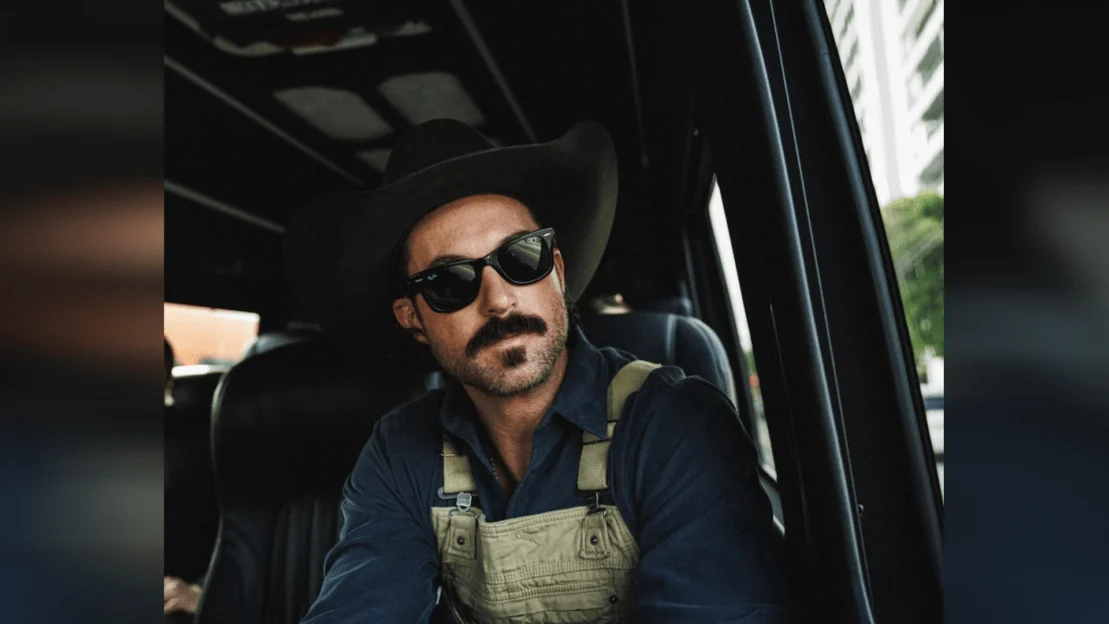
For many, the life of a modern country music superstar is defined by the haze of neon lights, the roar of sold-out arenas, and the rhythmic clatter of a tour bus wheels against asphalt. For Riley Green, however, the life of a chart-topping artist is merely one half of a dual-track existence. Even as the "Worst Way" singer continues to ascend to the highest echelons of the industry, he remains committed to a rigorous physical regimen that would challenge a professional athlete.
At 37, Green is currently in the midst of a career-defining hot streak. With a sold-out North American Cowboy As It Gets tour, a recent No. 1 single in "Change My Mind," and the highly anticipated September 18 release of his next studio album, That’s Just Me, Green’s professional output is at an all-time high. Yet, rather than slowing down to accommodate his expanding fame, Green has leaned into the intensity, proving that his "fitness-first" mentality is the engine driving his professional longevity.
Main Facts: A Career in Overdrive
Riley Green’s current trajectory is nothing short of meteoric. Following a successful run of shows in Australia, the five-time ACM Award winner has pivoted to his North American tour while simultaneously branching out into high-profile television ventures. His reach now extends well beyond the radio waves; he has recently wrapped his first major acting role on Taylor Sheridan’s Marshals, joined the coaching panel for the upcoming season of NBC’s The Voice, and served as a co-host for ABC’s broadcast of the CMA Fest.
Despite this "Swiftian" level of productivity, Green remains the gold standard for physical fitness in country music. Maintaining a year-round, visible six-pack while balancing seven No. 1 hits is a feat of discipline that requires a precise, non-negotiable hierarchy of priorities. For the former Jacksonville State quarterback, the formula is simple: music is his vocation, but fitness is the necessary prerequisite to sustain it.
Chronology: From the Gridiron to the Grand Ole Opry
To understand Green’s work ethic, one must look at his past. Before he was selling out stadiums, he was calling signals as a college quarterback. This background instilled in him the "pecking order" of discipline he maintains today.
- The Early Days: Green grew up in Alabama, idolizing NFL legends like Troy Aikman. His formative years were spent as a three-sport high school athlete, developing the foundational strength and competitive spirit that he carries into his music career.
- The Transition: After shifting from the football field to the construction site, Green learned the value of manual labor, often working "hammer and nails" by day to support his pursuit of a music career by night. He recalls that period as one of constant physical soreness—not from injury, but from the raw, unrelenting grind of labor.
- The COVID Pivot: The global pandemic served as a turning point for his physical lifestyle. With the touring world shut down, Green invested in a comprehensive home gym, establishing a standard for training that he refused to abandon once the world opened back up.
- The Modern Era: Today, his routine is integrated into his tour bus, which now tows a mobile, condensed version of his home gym, ensuring that no matter the city, he has the tools to keep his physical health in the "green."
Supporting Data: The "Traveling Gym" Strategy
Green’s success is not just about willpower; it is about infrastructure. Acknowledging that "90% of the battle is motivation," he realized that the traditional touring model—which often involves searching for local gyms or falling into sedentary habits—was unsustainable.
His custom-built mobile gym is a masterclass in efficiency. Outfitted with a Smith machine and essential resistance equipment, it allows him to bypass the logistical nightmares of finding a local Planet Fitness or health club. When he is on the road, he adheres to a 30-to-45-minute "bro-split" workout. By super-setting his exercises—grouping bench presses with incline work and pushups, or pairing flies with dips—he achieves maximum intensity in a compressed window.
Furthermore, he has evolved his training to accommodate the realities of being 37. Recognizing that the "wear and tear" of his football days, including two separated shoulders and recurring knee fluid, could impede his performance, he has incorporated a dedicated core and stretching circuit. This includes hanging leg raises, weighted leg lifts, and bicycle crunches, specifically designed to alleviate the lower-back strain often caused by long hours on a tour bus mattress.
Official Responses: The Philosophy of the "Artist-Athlete"
When asked about his dual-life, Green is candid about the struggle. "I go through waves of extreme motivation," he admits. "And then there’ll be a little lull where my travel gets insane… and then I gotta find a way to really get it."
Green’s philosophy on songwriting mirrors his approach to the gym: it is about volume and consistency. "My mindset is, write as many songs as you can. If you write 30 mediocre songs, you’re gonna write one good song for about every 30." This belief in the law of large numbers led him to become the first artist since Taylor Swift to secure back-to-back solo-written No. 1 singles.
Regarding his foray into acting, Green cites the influence of fellow musician-turned-actor Tim McGraw. Watching McGraw’s performance in 1883 provided the proof of concept that a touring musician could successfully transition into the high-stakes environment of a film set. "Acting probably made me more nervous than anything I’ve done in a while," Green says, noting that the pressure of having an entire film crew rely on his performance provided a new, unfamiliar kind of challenge.
Implications: The Future of the "Green" Brand
The implications of Green’s lifestyle are clear: he is building a brand that transcends the typical limitations of a country star. By maintaining his physical peak, he remains capable of the high-energy, demanding performances that his fans expect, while simultaneously opening doors in television and film that require a level of stamina only an athlete-turned-artist can provide.
His commitment to stretching—a practice he now treats as seriously as he did during his football years—highlights a shift toward longevity. He is no longer just chasing the "pump"; he is ensuring his body can survive the next two decades of touring.
As he continues to balance his "bucket-list" goal of hitting home runs in every MLB stadium—a challenge he has already conquered in three cities—and his relentless songwriting schedule, the message from the Riley Green camp is consistent: he has no intention of slowing down.
For the fans, the result is a consistent stream of new music and a performer who shows up at every show with the same intensity he had when he was under center on the football field. As Green himself puts it, "As long as I’m working out fairly consistently, I’m going to be in decent shape. I just gotta keep finding ways to do it with everything else going on."
With a trailer full of gym equipment in tow and a calendar packed with high-profile projects, Riley Green has effectively turned his life into a perpetual motion machine. Whether he is in front of the camera, in the recording booth, or under the lights of a Major League stadium, he remains, in every sense of the word, a competitor.