Published: August 14, 2026
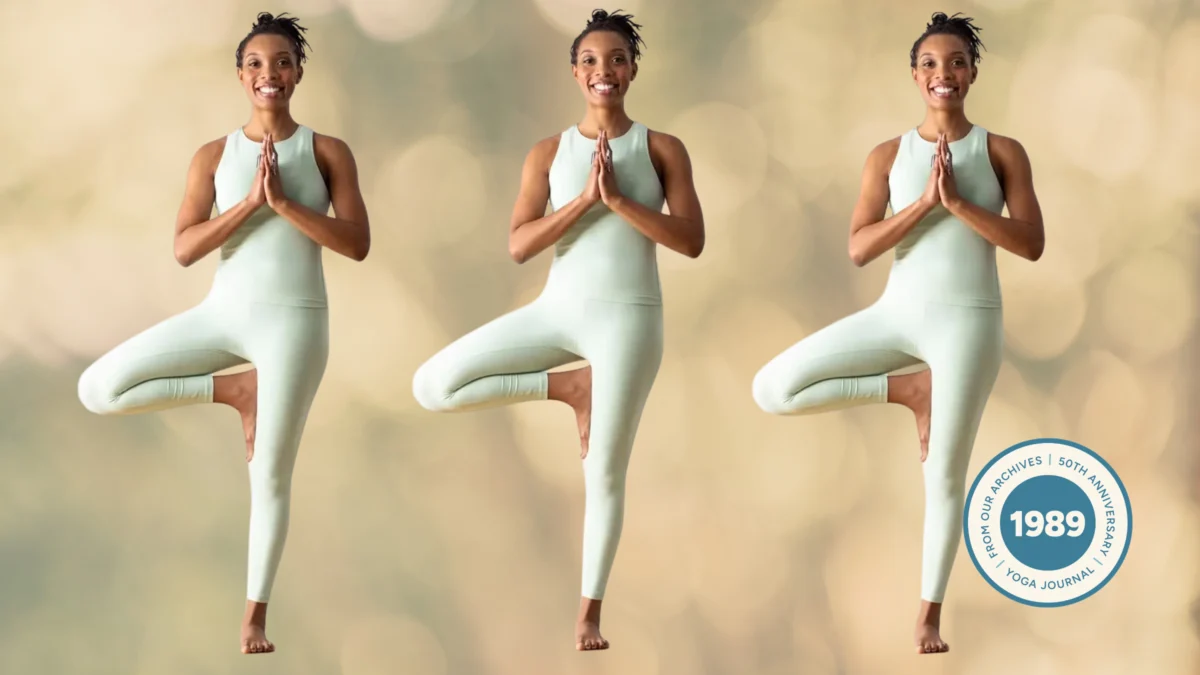
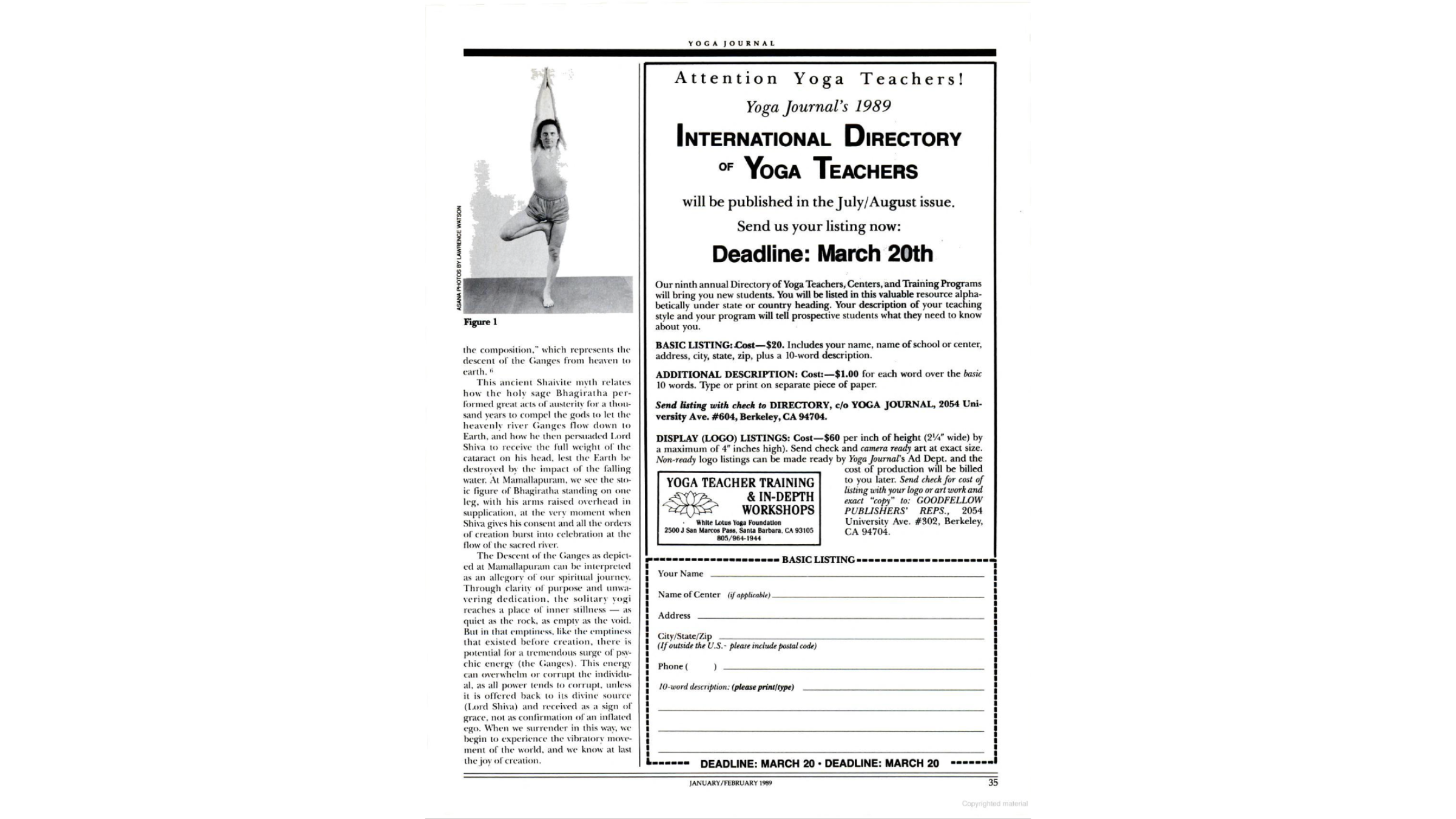
Editor’s Note: This feature is part of the Yoga Journal Archives series, a curated look back at the foundational practices that have shaped modern yoga. This article on Vrksasana (Tree Pose) was originally published in the January-February 1989 issue of Yoga Journal, offering timeless wisdom on the intersection of physical alignment and psychological fortitude.
The Philosophy of Discipline: Understanding Tapas
In the landscape of modern wellness, yoga is often marketed as a pursuit of relaxation or flexibility. However, whether we are engaging in the vigorous heat of Hatha Yoga or the quiet stillness of seated meditation, the practice is fundamentally an exercise in challenging our physical limits. By pushing against the boundaries of our endurance, we penetrate deep-seated psychological resistances and fears. In yogic philosophy, this transformative process is known as tapas.
Tapas is one of the five niyamas—the ethical observances that constitute the second limb of Patanjali’s eight-limbed path of yoga. According to the Yoga Sutras (II.1), three of these observances are particularly vital for the beginner: tapas (austerity or self-discipline), svadhyaya (self-study), and ishvara pranidhana (surrender to the divine).
The term tapas is linguistically rooted in the concept of heat, specifically the process of refining gold within a furnace to remove impurities. The legendary yoga master B.K.S. Iyengar famously noted that while tapas is traditionally translated as "austerity," its essence is better understood as a "burning desire." It is the internal flame that seeks to cleanse every cell of the body and every layer of the senses, cultivating a state of permanent purity and health. It is in this light that Iyengar referred to Hatha Yoga as "the science of will."
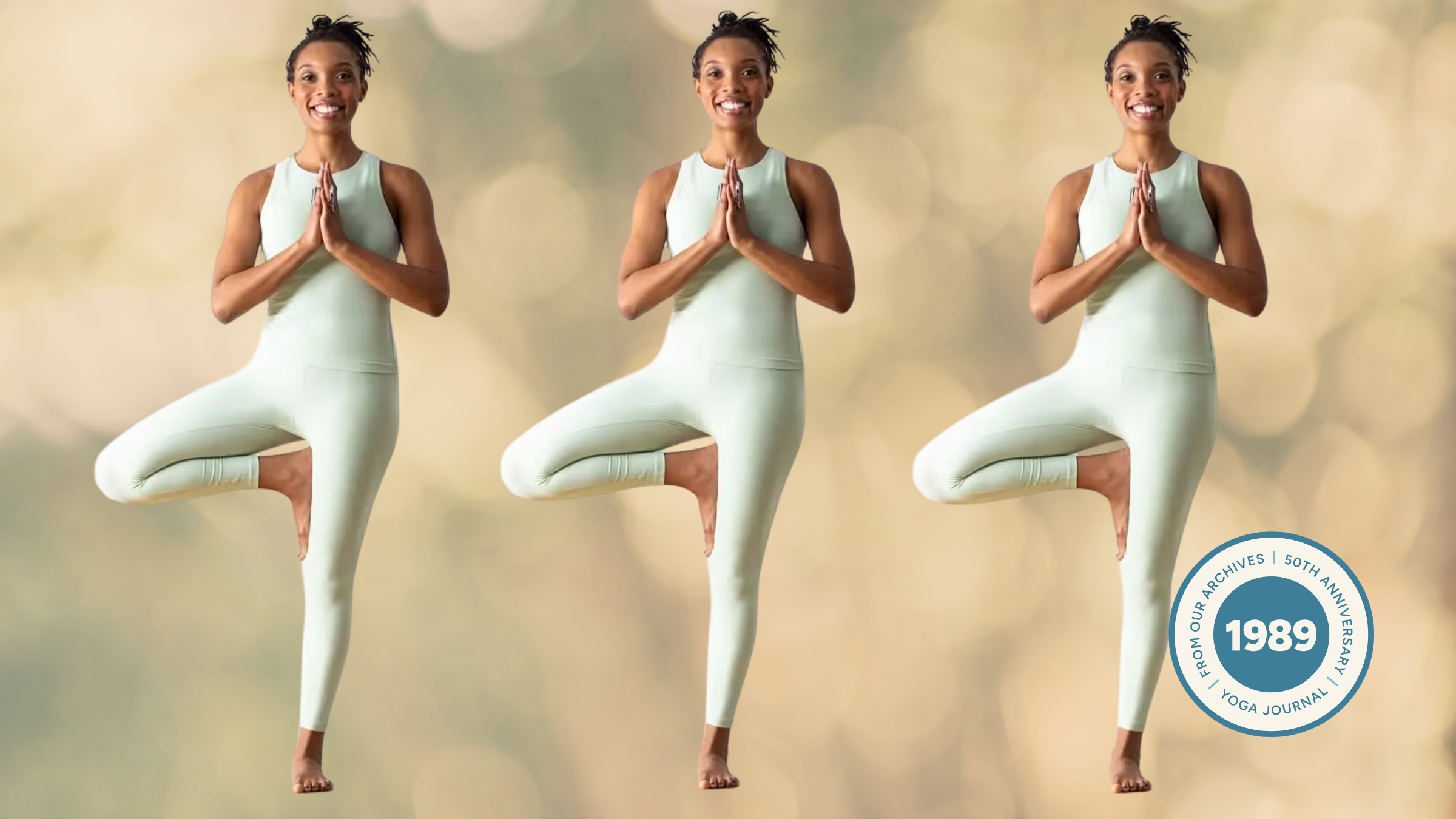
The Mechanics of Balance: Why the Mind Topples First
From a physiological standpoint, holding a posture is a masterclass in developing self-discipline. Mabel Todd, in her seminal work The Thinking Body, articulated the difficulty of standing still: "Walking, as we all know, is easier and less fatiguing than standing… In standing, there are actually many more small movements of more small parts cooperating. We must, moreover, impose our wills upon our bodies, since the attempt to stand still is not ‘natural’ and must be directed consciously."
When we move into a balancing pose like Vrksasana (Tree Pose), the requirement for conscious direction increases exponentially. The pose is a mirror: any apprehension, doubt, or fluctuation in attention manifests immediately as physical collapse. In a classroom setting, it is rarely the strength of the standing leg that fails first—it is the stability of the practitioner’s mind. Once the mind becomes clouded by hesitation, the arms waver, the shoulders lose their poise, and the "tree" topples.
Structural Foundation: The Role of the Inner Thighs
The physical stability required for Vrksasana begins not in the foot, but in the inner thighs (the adductors). If these muscles are weak or disengaged, the pelvis tends to drop onto the thighbone of the standing leg, forcing the weight onto the outer edge of the foot. This creates a precarious, unstable base. Strengthening and gaining awareness of the inner thighs is therefore the prerequisite for a successful and safe Tree Pose.
A Step-by-Step Guide to Practice
To begin, stand in Tadasana (Mountain Pose) with a wooden block placed lengthwise between your thighs. Avoid the urge to grip the block; instead, visualize lengthening the inner thigh muscles along the block’s surface, from the groin toward the inner knees. This action engages the iliopsoas (deep abdominal muscles), providing a stable foundation for the spine.
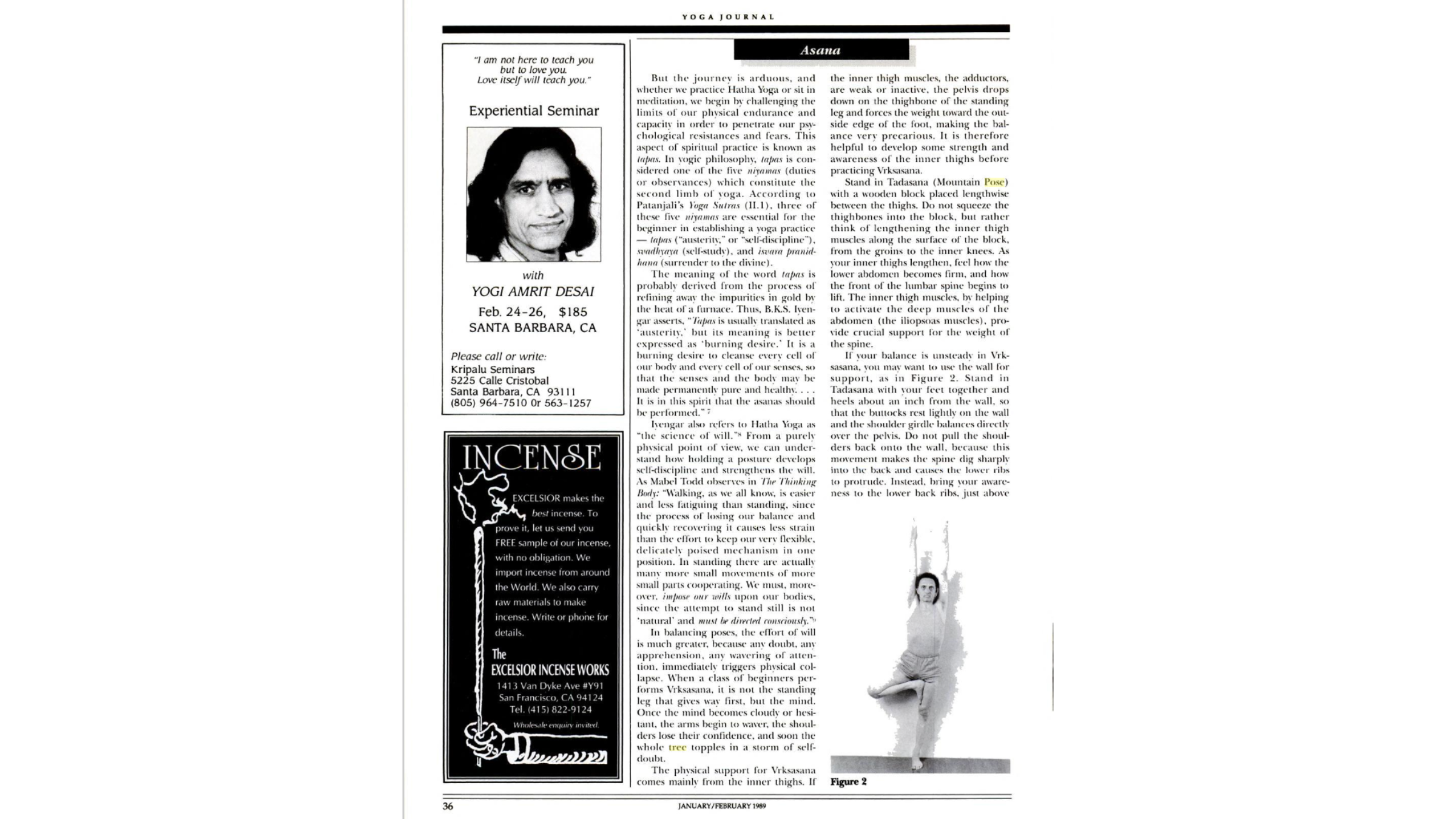
If you struggle with balance, use the wall for support. Stand with your heels about an inch away from the wall so that your buttocks rest lightly against it. Crucially, do not force your shoulders back, as this can cause the lower ribs to protrude and the lumbar spine to compress. Focus on broadening the back ribcage and lifting it toward the ceiling.
Once stable, shift your weight to the left foot, turn the right thigh out, and bring the right foot to the inner left thigh. Ensure the toes point downward. With your arms extended overhead, palms facing one another, stretch from the shoulder blades to the fingertips, maintaining the lift of the spine.
Advanced Variations and Structural Alignment
For practitioners looking to refine their technique, the "Wall Variation" is highly recommended. By standing with your side to the wall and allowing the bent knee to rest against it, you can isolate the action of the pelvis. This teaches the practitioner to prevent the pelvis from tilting forward, which often happens when one is struggling to balance.
Supporting Data: Prop-Based Stability
When the ankle or arch of the foot is weak, external support can be transformative. Using two 10-pound sandbags placed over the metatarsal area of the standing foot acts as a biofeedback tool. The weight helps the practitioner develop awareness of the foot’s connection to the earth. Remember: gripping the floor with your toes leads to narrow, unstable feet. Instead, press the spaces between the metatarsal bones into the floor, allowing the toes to spread and lengthen.
Implications for the Broader Practice
The lessons learned in Vrksasana are not limited to this single pose; they are universal principles of the standing series. The activation of the inner thighs is essential for Virabhadrasana II (Warrior II) and Utthita Parsvakonasana (Extended Side Angle Pose), where the inner thigh must lengthen to stabilize the knee and open the groin. In Ardha Chandrasana (Half Moon Pose), the inner thigh of the standing leg must move downward to anchor the pose.
The Integration of Stillness
As C.G. Jung once described the cosmic tree, the practitioner should aim to be "rooted in this world and growing up to heaven." Once you have practiced with props, it is essential to return to the center of the room. In this state, you can experience the wholeness of the posture.
When we hold the final pose, the firmness of the legs acts as the foundation, allowing the upper body to reach upward with grace. This is the synthesis of tapas. For the modern practitioner, this discipline is not a form of self-punishment, but a sanctuary. We renounce the clutter of our daily lives—the distractions and complications—to rediscover our true nature. Ultimately, the practice of tapas is not meant to stifle the senses, but to open them inward to the flow of energy, grace, and enduring joy.
By holding our ground in Vrksasana, we are not merely balancing our bodies; we are training our will to remain steady in the face of life’s inevitable storms. Whether you hold the pose for a few breaths or for "a thousand years," the objective remains the same: to find the center, to breathe, and to grow.