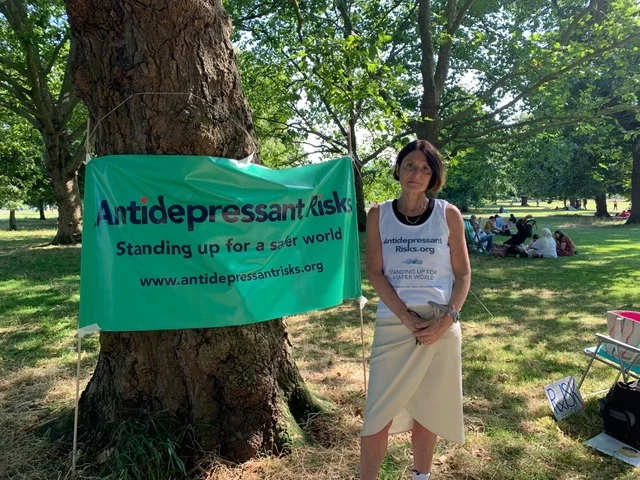
On July 29, a burgeoning global movement will observe "Prescribed Harm Day," an initiative dedicated to acknowledging the unintended but often devastating consequences of psychiatric medications. What began three years ago as a modest, informal gathering in London’s Hyde Park has evolved into a worldwide phenomenon, with "Stolen Lives" picnics and symposiums scheduled across multiple continents.
This movement, spearheaded by the non-profit organization Antidepressant Risks, seeks to address what many patients and advocates describe as a "vacuum of acknowledgment" regarding the long-term adverse effects, withdrawal syndromes, and permanent disabilities associated with antidepressants and other psychiatric drugs. As the initiative expands from the grassroots level to an international stage, it highlights a deepening rift between traditional psychiatric practice and a growing population of "expert-by-experience" patients demanding more rigorous informed consent.
Main Facts: From a London Park to a Global Stage
The 2024 observance of Prescribed Harm Day marks a significant professionalization of the movement. For the first time, the central event in London will include the "Stolen Lives London Talks," a structured symposium hosted in collaboration with the advocacy group A Disorder 4 Everyone. This event precedes the traditional picnic on Hampstead Heath and features a panel of guest speakers, including clinical experts, investigative journalists, and individuals with lived experience of medical harm.
The primary objectives of the Stolen Lives initiative are three-fold:
- Informed Consent: Advocating for a healthcare model where patients are fully briefed on the potential for long-term dependency and severe withdrawal before commencing treatment.
- Recognition of Legacy Effects: Raising awareness for conditions such as Post-SSRI Sexual Dysfunction (PSSD) and protracted withdrawal syndromes that can persist for years after medication cessation.
- Memorialization: Providing a physical space for families to remember those who have died due to adverse drug reactions or medication-induced suicidality.
The expansion of the "Global Picnic" concept reflects the decentralized nature of modern patient advocacy. Gatherings are currently confirmed in Michigan (USA), Corsica and Lyon (France), Vancouver (Canada), the Netherlands, and various locations across Australia. These events are designed to be low-barrier, community-led spaces where the "invisibility" of prescribed harm is countered by physical presence and shared narrative.
Chronology: The Evolution of a Movement
The trajectory of the Stolen Lives movement reflects the broader history of patient-led health activism, mirroring the "Nothing About Us Without Us" philosophy of previous decades.
2021: The Hyde Park Seed
On July 29, 2021, the founder of Antidepressant Risks organized a small picnic in Hyde Park. The event lacked formal programming or infrastructure. It was born out of a perceived necessity to provide a "safe space" for those whose experiences—ranging from severe akathisia (a state of extreme agitation) to the loss of a loved one—did not fit the prevailing medical narrative that these drugs are "safe and effective" for all. Participants lit candles and shared photographs of the deceased, establishing the "Stolen Lives" moniker.
2022–2023: Growth and Diversification
Over the following two years, the Hyde Park gathering grew through word-of-mouth and social media. The demographic of attendees shifted from solely affected patients to a broader coalition including bereaved family members, investigative journalists, and "renegade" clinicians who felt the current psychiatric model was failing to account for drug-induced harm. The focus expanded from simple support to a demand for systemic change in how psychiatric drugs are marketed and monitored.
2024: International Decentralization
Recognizing that the issues of informed consent and withdrawal are not confined to the UK’s National Health Service (NHS), Antidepressant Risks launched the Global Picnic framework. This shift acknowledges the universal nature of the pharmaceutical market. By providing a toolkit for local organizers, the movement has transitioned from a localized protest to a distributed global act of recognition.
Supporting Data: The Rising Tide of Prescribed Harm
The growth of the Stolen Lives movement is mirrored by a growing body of clinical data and policy shifts regarding psychiatric drug safety.
The Prevalence of Use
In the United Kingdom, NHS data reveals that antidepressant prescriptions have nearly doubled in the last decade, with over 8.6 million people in England alone receiving them in 2022/23. In the United States, the CDC reports that approximately 13% of adults over the age of 18 use antidepressants. As the volume of prescriptions increases, so does the statistical likelihood of adverse reactions.
The Withdrawal Debate
For decades, many clinical guidelines suggested that antidepressant withdrawal (often euphemistically termed "discontinuation syndrome") was mild and lasted only one to two weeks. However, a landmark 2019 systematic review published in Addictive Behaviors found that nearly half (46%) of people stopping antidepressants experienced withdrawal symptoms, with many describing them as "severe." This research was instrumental in the UK’s Royal College of Psychiatrists updating its position to acknowledge that withdrawal can be long-lasting and debilitating.
Post-SSRI Sexual Dysfunction (PSSD)
One of the most significant "legacy effects" highlighted by the Stolen Lives movement is PSSD. This condition involves persistent genital anesthesia, loss of libido, and erectile dysfunction that continues after the drug is stopped. In 2019, the European Medicines Agency (EMA) requested that manufacturers of SSRIs and SNRIs add a warning about persistent sexual dysfunction to their product information. Despite this, advocates argue that many prescribing physicians remain unaware of the risk, leading to a failure of informed consent.
Official Responses and Clinical Perspectives
The medical and pharmaceutical establishment’s response to the Stolen Lives movement and its underlying claims is complex, characterized by a mix of gradual policy updates and defensive skepticism.
Regulatory Bodies
The UK’s Medicines and Healthcare products Regulatory Agency (MHRA) and the US Food and Drug Administration (FDA) maintain that the benefits of antidepressants outweigh the risks for most patients. However, they have faced increasing pressure from patient advocacy groups to implement more "Black Box" warnings. In recent years, the MHRA has launched reviews into the risks of suicide and sexual dysfunction associated with certain antidepressants, though critics argue these reviews are often too slow to protect the current generation of patients.
Professional Bodies
The Royal College of Psychiatrists (RCPsych) has taken steps to improve guidance on "deprescribing"—the process of tapering patients off medication safely. Their 2020 guidance on "Stopping Antidepressants" was a significant concession to the patient movement, acknowledging that for some, tapering must be done over months or even years using "hyperbolic" (slowly decreasing) doses.
The Pharmaceutical Industry
Major pharmaceutical manufacturers generally maintain that their products are rigorously tested and that adverse effects are clearly listed in the patient information leaflets. However, the Stolen Lives movement argues that these leaflets often minimize the severity of withdrawal and fail to mention the possibility of permanent "legacy effects" like PSSD.
Implications: A New Era of Patient Advocacy
The rise of Prescribed Harm Day suggests a fundamental shift in the "social contract" between psychiatry and the public. The movement’s emphasis on "space" and "story" over clinical metrics points toward several long-term implications for the healthcare industry.
1. The Demand for "Deprescribing" Clinics
As awareness of withdrawal grows, there is an increasing demand for specialized "deprescribing" services. Current medical infrastructure is well-equipped to start patients on medication but lacks the resources to help them stop safely. The Stolen Lives movement highlights the "agony of withdrawal" as a public health crisis that requires dedicated clinical intervention.
2. Legal and Ethical Repercussions
The focus on "informed consent" opens the door for potential legal challenges. If patients can prove they were not warned about life-altering risks—such as PSSD or medication-induced suicidality—healthcare providers and manufacturers may face increasing litigation.
3. The Democratization of Medical Knowledge
The Global Picnic initiative demonstrates how digital communities are translating online discourse into physical action. By bypassing traditional institutional channels, these groups are creating their own "evidence base" through the collection of lived-experience narratives. This "citizen science" approach is increasingly challenging the hierarchy of medical knowledge.
4. Humanizing the Statistics
Perhaps the most profound implication of the Stolen Lives movement is the humanization of medical data. By gathering in parks with photos and candles, advocates are reminding the public that behind every statistic regarding "adverse events" is a human life—a "stolen life" that has been altered or ended by a medical intervention intended to help.
As July 29 approaches, the global community of those affected by prescribed harm prepares to step out of the shadows. Whether in a quiet garden in Corsica or the bustling environment of Hampstead Heath, the message remains the same: the current model of psychiatric care must evolve to prioritize safety, transparency, and the fundamental right of patients to know the risks before they take the first pill.
For more information about the Stolen Lives London Talks and Picnic, or to find resources on informed consent and antidepressant risks, visit AntidepressantRisks.org.