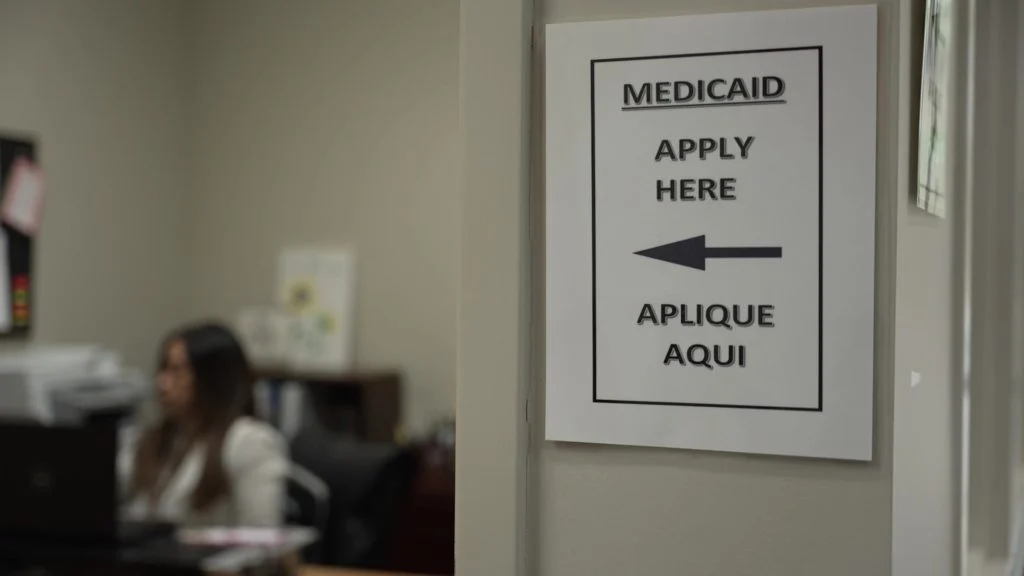
In the quiet offices of the Health Center Association of Nebraska (HCAN), a trend has emerged that is sounding alarms among healthcare advocates across the country. Typically, the organization facilitates the enrollment of approximately 15 new Medicaid applicants every month—a steady stream of individuals seeking a vital safety net. In May, that number plummeted to zero.
This total cessation of new enrollments follows Nebraska’s decision to become the first state to implement the federal administration’s stringent new work requirements for Medicaid recipients. As the state moves to align with federal mandates established under the "One Big Beautiful Bill Act," health advocates fear that the administrative hurdles and pervasive confusion are effectively barring eligible, vulnerable populations from receiving necessary medical care.
A Chronology of Implementation
The transformation of the Medicaid landscape began in earnest last summer when federal legislation mandated "community engagement requirements" for low-income and disabled recipients. While these requirements are slated to take full effect nationally by the start of 2027, Nebraska opted for an aggressive timeline, enacting the new rules on May 1, 2026—eight months ahead of the federal deadline.
The policy requires non-exempt Medicaid enrollees to prove they are engaged in work, volunteerism, or educational pursuits for at least 80 hours per month. Under the current structure, new applicants must demonstrate compliance or qualify for an exemption in the month immediately preceding their enrollment.
While the state has stated that enrollees whose yearly renewal falls in May or June would be spared, the administrative friction began almost immediately. The first major wave of re-enrollees facing the new requirements will arrive at the end of July, setting the stage for what many experts predict will be a massive disruption in coverage.
The Administrative Burden: Beyond the Paperwork
For Amy Behnke, CEO of the Health Center Association of Nebraska, the "silent" May is a direct consequence of the psychological and administrative barriers the new law has erected. "People aren’t coming in because they assume, with these new work requirements, they’re not eligible for Medicaid," Behnke explained. "Or they think it’s going to be too overwhelming or cumbersome to try to keep coverage."
The reality of the application process often fails to align with the simplicity suggested by government brochures. In one documented instance in Nebraska, an applicant attempting to renew their coverage was incorrectly disenrolled simply for reporting their status as unemployed—a status that, in many cases, should trigger an exemption or a review rather than immediate termination.
"That’s a really good example of when we say the rules and processes on paper may not look overly burdensome, but when we come to the application of it, that’s where we start to really see the bumps in the road," Behnke said.
The system’s inability to communicate effectively is a primary concern. Behnke’s organization has reported that community partners are struggling to access the state’s Department of Health and Human Services’ Spanish-language support line. Callers are frequently being routed to English services or disconnected entirely, effectively disenfranchising non-English-speaking residents from the very system designed to protect them.
The Federal Stance: Targeting "Fraud and Waste"
The shift in policy is driven by a federal directive aimed at curbing what the current administration characterizes as widespread fraud and waste within federal health programs. Following the issuance of new guidance by the Centers for Medicare & Medicaid Services (CMS) in June, Dr. Mehmet Oz, head of CMS, framed the stricter rules as a moral and economic necessity.
Dr. Oz has been vocal about his vision to restore what he describes as a "perverted" Medicaid system. Citing data from an American Enterprise Institute analysis, Dr. Oz suggested that millions of able-bodied Medicaid recipients are essentially idle, claiming they spend an average of 6.1 hours a day watching television. However, this interpretation has faced significant pushback. Fact-checkers, including those at KFF, have noted that such statistics often fail to accurately account for how nonworking Medicaid recipients—particularly those with hidden disabilities—actually spend their time, or the reality of the employment barriers they face.
Supporting Data: Lessons from the Past
The current implementation mirrors previous efforts in states like Arkansas and New Hampshire, which serves as a cautionary tale for policymakers. Dr. Ben Sommers, a professor of healthcare economics at the Harvard T. H. Chan School of Public Health, has spent years studying the impact of these policies.
"If you’re subjecting many people to a requirement to try to change the behavior of a very small number of people, it’s pretty easy to end up with the policy not working," Dr. Sommers noted.
When Arkansas attempted to implement similar work requirements in 2018, the results were sobering: 18,000 individuals lost their health insurance in just six months. Crucially, studies of that period found that 97% of the affected population was either already working or should have been exempt from the requirement. The "non-compliance" observed was not a result of laziness, but of an inability to navigate a complex, poorly communicated bureaucracy.
The data suggests that the burden of these requirements falls heavily on those least capable of meeting them:
- Communication Gaps: A significant percentage of those subject to requirements are often unaware of the rules or unsure if they apply to them.
- The Exemption Trap: Even when individuals are legally exempt—due to pregnancy, disability, or being a primary caregiver—the lack of automated data sharing between state agencies means they are often treated as noncompliant.
- The "Tax Return" Analogy: Dr. Sommers compares the frequent reporting requirements to filing income taxes multiple times a year. For those without reliable internet access, stable housing, or transportation, such a burden is often insurmountable.
Implications for the Future
The Congressional Budget Office (CBO) estimates that the new federal mandate will save the government approximately $326 billion over the next decade. However, this fiscal "saving" comes at a human cost: an estimated 5 million people are projected to lose coverage annually between 2029 and 2034.
The variation in how states choose to implement these rules will likely determine the severity of the coverage gap. States that prioritize automated verification—using existing wage data, Social Security information, and student enrollment records—may mitigate some of the losses. Conversely, states that rely on manual documentation will likely see a surge in disenrollment among those who are eligible but cannot clear the bureaucratic hurdles.
The definition of "medically frail" remains a major point of contention. While Nebraska allows for nearly 300 diagnostic codes to qualify as medically frail, the system is hindered by rigid data collection. For example, if a patient visits a clinic for a routine cough, the system may only log that primary code, ignoring chronic, pre-existing conditions like diabetes or anxiety that would qualify them for an exemption. Furthermore, the state’s requirement to look back over 12 months of claims means that patients who have not visited a doctor in the past year—often due to lack of insurance—find themselves ineligible for the very exemptions that should protect them.
Conclusion: A Heavy Lift
As Nebraska moves forward, the "heavy lift" described by Behnke serves as a precursor to a national challenge. For the 72,000 Nebraskans currently enrolled in the state’s Medicaid expansion, the coming months will be a period of profound uncertainty.
The promise of a more "efficient" Medicaid system is currently being weighed against the reality of a system that may be inadvertently stripping health coverage from millions of vulnerable Americans. As HCAN waits for its first post-implementation applicant, the broader question remains: can a program designed to be a safety net function effectively when it is designed with the primary intent of being a filter?
For now, the silence in the enrollment offices of Nebraska serves as a stark, unanswered question for the rest of the nation.