









WASHINGTON, D.C. — In the high-velocity landscape of the nation’s capital, where the rhythm of life is often dictated by legislative calendars and the relentless churn of the 24-hour news cycle, it often takes a literal act of nature to force a collective pause. In September 2026, that pause arrived not in the form of a political shift, but in the sudden, thunderous descent of a local landmark: an ancient oak tree in the north end of Dupont Circle.
What began as a routine casualty of a late-summer storm has evolved into a profound case study in urban psychology and community resilience. The fallen oak, once a silent witness to over half a century of D.C. history, has become the site of a spontaneous, grassroots memorial, sparking a city-wide conversation about visibility, gratitude, and the essential nature of human connection in an increasingly digital age.
Main Facts: The Fall of a Neighborhood Sentinel
The incident occurred during a night of torrential rain and high-velocity winds that swept through the District in mid-September 2026. While the storm was brief—lasting only a few hours—it carried enough force to cause widespread power outages and school cancellations due to downed lines. However, for the residents of the Dupont Circle neighborhood, the most significant loss was found at the park’s northern edge.
The victim was a massive oak tree, a fixture of the area for more than 55 years. Standing tall above the surrounding benches and walkways, the tree provided more than just shade; it served as a navigational anchor and a psychological constant for generations of Washingtonians.
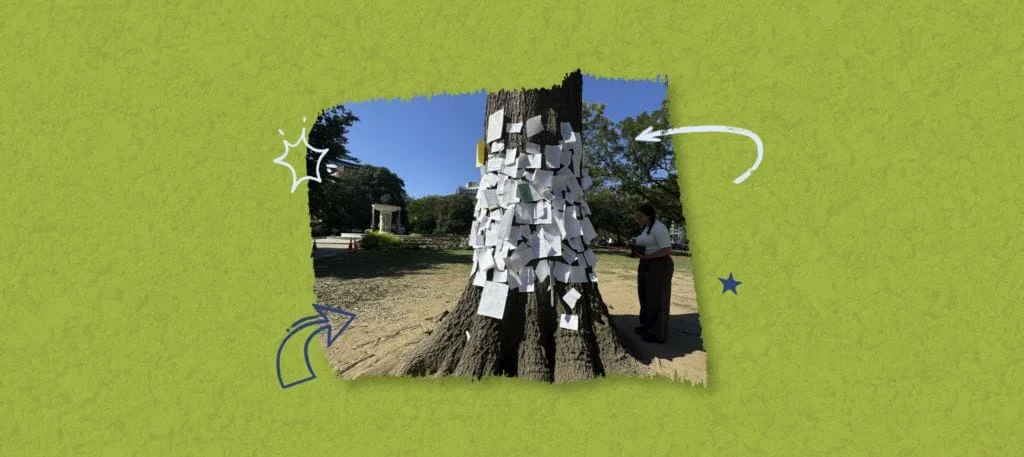
In the wake of the storm, the tree was reduced to a 15-foot stump. Its massive trunk now lies in the soil, its root system—described by onlookers as "knobs and bulging grooves like limbs hugging the soil for dear life"—exposed to the elements. What remained was a jagged reminder of the fragility of the urban canopy. Yet, almost immediately, the community transformed this site of destruction into a "memorial tree," covered in handwritten notes, sketches, and tokens of appreciation.
Chronology: From Canopy to Community Catalyst
The transformation of the Dupont Oak from a fallen log to a community forum happened with remarkable speed, following a timeline that reflects the neighborhood’s deep emotional investment in its green spaces.
The Life of the Oak (1970s – 2026)
For over five decades, the oak stood as a centerpiece of the North Dupont landscape. It witnessed the evolution of the neighborhood from the post-civil rights era through the gentrification of the 1990s and into the tech-integrated society of the 2020s. To many, it was a "halfway marker" on the walk home or a sanctuary for "lazing underneath" during humid D.C. afternoons.

The Storm of September 2026
The storm hit with a suddenness typical of the Atlantic coast’s "fickle, thunderous summers." While most residents slept through the "wicked wind and pelting rain," the saturation of the soil combined with a localized microburst proved too much for the aging giant. By dawn, the tree had snapped, leaving the north end of the circle looking fundamentally altered.
The Emergence of the Memorial
The first note appeared within 24 hours of the storm. Tacked to the rough bark of the remaining stump, it posed a philosophical question that resonated with passersby: “When you’re falling in Dupont and there’s nobody around, did you ever even crash or even make a sound?”
This single act of "micro-advocacy" for the tree’s memory triggered a chain reaction. Within days, dozens of notes adorned the stump. The conversation expanded to include children’s drawings, expressions of grief, and promises of intentionality. The site became a destination, drawing a diverse cross-section of the city—men in business suits, parents with strollers, teenagers, and elders—all stopping to read, reflect, and talk to one another.
Supporting Data: The Science of Trees and Social Cohesion
The emotional response to the Dupont Oak is supported by a growing body of research regarding the intersection of urban forestry and mental health. According to data cited by mental health advocates and ecological researchers, the relationship between humans and oak trees is deeply rooted in cultural and emotional history.
The Psychological Benefit of Urban Canopies
Studies published in the Journal of Environmental Psychology indicate that "third places"—spaces that are neither home nor work—are vital for mental well-being. Large, old-growth trees in urban parks act as natural "anchors" for these spaces. The loss of such a tree can trigger a form of "solastalgia," a term coined to describe the distress caused by environmental change in one’s home environment.
Community as an Ecosystem
Ecologists often point out that a tree is not merely an "environment" but an "ecosystem." This concept was mirrored in the social response in Dupont Circle. The "memorial tree" facilitated what sociologists call "weak tie" interactions—the brief, friendly exchanges between strangers that are essential for reducing feelings of urban isolation. By sharing stories of the tree, residents moved from being "strangers" to being part of a shared narrative.
Mental Health Trends in 2026
The response in Dupont Circle occurs against a backdrop of heightened awareness regarding mental health. Organizations like Active Minds have noted that in a society "built for efficiency and grit," moments of "quiet interruption" are increasingly rare. The spontaneous memorial provided a "dopamine hit" of a different kind—one rooted in genuine connection rather than digital validation.

Official Responses: A Call for Intentionality
Mental health advocates and community leaders have pointed to the Dupont Oak as a poignant reminder of the need for "visibility" in our relationships.
Representatives from Active Minds, a leading non-profit dedicated to mental health advocacy, emphasized that the tree’s fall serves as a metaphor for the human condition. "In a world of finite time and infinite possibilities, we often find ourselves cycling between pushing the envelope and playing catch up," the organization noted in a recent statement. "The tree reminded the neighborhood that we are only strangers as long as we don’t see one another."
The advocacy group further linked the event to their broader mission of student and community wellness. They highlighted that just as the tree required a storm to be truly "seen" by the rushing public, many individuals in our community struggle in silence until a crisis occurs. The notes on the tree—ranging from "praise and thanks" to "well wishes"—mirror the type of supportive environment that mental health institutes strive to build in schools and workplaces.
Local arborists and city planners have also weighed in, noting that while the loss of the tree is a blow to the city’s canopy goals, the "stump memorial" provides a unique opportunity to rethink how we value urban nature. There are currently no immediate plans to remove the stump, as city officials have recognized its newfound role as a community bulletin board and site of collective healing.
Implications: The Power of the Mundane
The story of the Dupont Oak suggests that the "mundane" elements of our lives—a tree, a park bench, a routine walk—hold the potential to become profound conduits for community health. The event has raised several key implications for the future of urban living and mental health advocacy:
1. The Value of "Third Places"
The spontaneous gathering around the stump underscores the desperate need for physical spaces that encourage "pausing." In an era of remote work and digital social circles, the physical presence of a shared landmark provides a necessary grounding.
2. Visibility and Mental Health
The adage "to be loved is to be known" or "to be loved is to be seen" has become a mantra for the Dupont memorial. This highlights a shift in mental health advocacy toward "visibility"—encouraging people to check in on one another before the "storm" hits. As seen in other Active Minds initiatives, such as the 988 Suicide and Crisis Lifeline awareness campaigns, systemic change often begins with simple, visible reminders of support.

3. Gratitude as a Practice
The notes left on the oak suggest a collective desire to manage relationships with "gratitude and intentionality." The event has prompted many Washingtonians to reconsider their "chaotic hustle" and find value in the moments of "quiet interruption" that break through the noise of daily life.
4. Legacy and Advocacy
Just as the loss of a friend can inspire a student to join a Mental Health Advocacy Institute, the loss of the Dupont Oak has inspired a neighborhood to advocate for its own social cohesion. The transition from grief to action—whether it is writing a note or checking on a neighbor—is a vital component of resilience.
Conclusion: "And the Tree Was Happy"
As the 2026-2027 academic and legislative year begins, the stump in Dupont Circle remains a testament to a neighborhood’s heart. It stands as a reminder that we do not have to wait for a storm to appreciate what we have.
The final note tacked to the tree, a reference to Shel Silverstein’s The Giving Tree, simply reads: "And the tree was happy." In its life, the oak provided shade and oxygen; in its death, it provided something perhaps even more vital for the modern age: a reason to stop, a reason to look up from our screens, and a reason to speak to the person standing next to us.
The Dupont Oak may no longer tower over the circle, but its roots—now exposed and weathered—have managed to bind the community more tightly than ever before. In the end, the tree reminded us that we are part of an ecosystem that requires care, visibility, and, above all, the willingness to be interrupted by the beauty of the mundane.
For those seeking to contribute to the ongoing conversation about community and mental health, Active Minds encourages residents to share their stories and participate in local advocacy initiatives. Because, as the Dupont Oak taught us, we are only strangers until we choose to see one another.