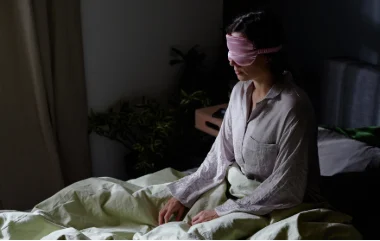












For millions of people worldwide, the night is not a sanctuary of restorative rest, but a cycle of interrupted breathing and physiological stress. Obstructive Sleep Apnea (OSA) remains one of the most underdiagnosed chronic conditions in modern medicine. While symptoms like loud snoring, daytime fatigue, and witnessed breathing pauses are common indicators, many individuals remain unaware that they are struggling with a medically significant sleep disorder.
To bridge the gap between patient suspicion and clinical diagnosis, medical professionals often utilize a powerful, efficient screening tool known as the STOP-BANG questionnaire. This article explores how this simple assessment serves as a critical first step in the journey toward better sleep health.
Main Facts: Understanding the STOP-BANG Framework
At its core, the STOP-BANG questionnaire is a validated, eight-question screening tool designed to stratify patients based on their risk of developing moderate to severe obstructive sleep apnea. It is favored by clinicians because it is non-invasive, quick to administer, and relies on a mix of patient-reported symptoms and basic anthropometric data.
The acronym "STOP-BANG" represents the eight distinct risk factors associated with OSA:
- S (Snoring): Do you snore loudly (loud enough to be heard through closed doors)?
- T (Tired): Do you often feel tired, fatigued, or sleepy during the daytime?
- O (Observed): Has anyone observed you stop breathing or choking/gasping during your sleep?
- P (Pressure): Do you have or are you being treated for high blood pressure (hypertension)?
- B (BMI): Is your Body Mass Index greater than 35 kg/m²?
- A (Age): Are you older than 50 years?
- N (Neck circumference): Is your neck circumference greater than 16 inches (40 cm)?
- G (Gender): Are you male?
Each "yes" answer equates to one point, resulting in a total score ranging from zero to eight. A score of three or higher is the traditional clinical threshold that suggests an increased risk for OSA, prompting further investigation by a medical professional.
The Chronology of Sleep Medicine and Screening
The history of sleep medicine has evolved from observing "Pickwickian syndrome" in the mid-20th century to the sophisticated, data-driven diagnostic landscape we see today. Before the advent of standardized tools like STOP-BANG, clinicians often relied solely on subjective patient history, which proved inconsistent across different healthcare settings.
The STOP-BANG tool was developed by Dr. Frances Chung and her colleagues at the University Health Network. It gained widespread prominence in the late 2000s as researchers sought a reliable way to screen surgical patients. Because patients with undiagnosed OSA are at a significantly higher risk for postoperative complications—including airway obstruction and respiratory failure—the need for a rapid, accurate pre-surgical assessment became paramount.
Since its introduction, the questionnaire has transitioned from a specialized tool for anesthesiologists to a standard primary care screening instrument. Its adoption represents a paradigm shift: moving away from waiting for severe symptoms to appear, and toward proactive identification of at-risk populations before long-term cardiovascular and metabolic damage occurs.
Supporting Data: Why Screening Matters
The implications of untreated sleep apnea extend far beyond simple tiredness. Obstructive Sleep Apnea occurs when the muscles in the back of the throat fail to keep the airway open during sleep. This leads to repeated "apneic events," where oxygen levels in the blood drop, and the brain is forced to trigger a brief arousal to restart breathing.
The Clinical Impact
Research consistently shows that OSA is a major contributor to systemic health issues:
- Cardiovascular Risk: Chronic hypoxia (low oxygen) and the stress response associated with repeated awakenings are linked to hypertension, arrhythmias, heart failure, and stroke.
- Metabolic Dysfunction: There is a strong correlation between OSA and insulin resistance, which can exacerbate or lead to Type 2 diabetes.
- Cognitive and Mental Health: Daytime somnolence, mood disturbances, and impaired concentration significantly diminish the quality of life and increase the risk of workplace or driving accidents.
Data from large-scale studies suggest that the STOP-BANG questionnaire has a high sensitivity—meaning it is excellent at identifying those who truly have the condition. While its specificity (the ability to correctly identify those without the condition) is lower than a formal sleep study, its primary utility is as a "gatekeeper" to ensure that those who need care are correctly funneled into the diagnostic pathway.
Official Responses and Medical Standards
The American Academy of Sleep Medicine (AASM) and other global health bodies emphasize that while the STOP-BANG questionnaire is a robust screening tool, it does not constitute a medical diagnosis.
According to medical reviewers, the tool acts as a "yellow light" in the diagnostic process. A high score suggests that the patient has a high pre-test probability of OSA, which justifies the cost and effort of more definitive testing. Conversely, a low score does not automatically rule out sleep apnea, particularly in patients who may have atypical symptoms or different anatomical risk factors.
The medical consensus is clear: if the questionnaire indicates a high risk, the patient must consult with a healthcare provider. The provider will then perform a physical examination—often checking the size of the tonsils, the structure of the jaw, and the upper airway—before ordering a diagnostic test.
Implications: The Path to Diagnosis and Treatment
Once a patient is identified via the STOP-BANG questionnaire, the diagnostic journey generally moves toward objective measurement. This usually takes one of two forms:
1. In-Lab Polysomnography (Sleep Study)
This is the "gold standard" of sleep testing. The patient spends the night in an accredited sleep center, where technicians monitor brain activity, heart rate, oxygen levels, breathing patterns, and eye movements. This provides a comprehensive look at the architecture of the patient’s sleep.
2. Home Sleep Apnea Testing (HSAT)
For many patients, portable monitoring devices are now an appropriate alternative. These devices allow patients to monitor their breathing and oxygen levels in their own bedrooms. While less comprehensive than an in-lab study, HSAT is highly effective for patients with a high clinical suspicion of moderate to severe OSA.
The Importance of Accreditation
When seeking treatment, it is vital to engage with centers accredited by the AASM. Accreditation ensures that the facility meets rigorous standards for patient safety, equipment calibration, and the interpretation of data by board-certified sleep medicine physicians.
Once diagnosed, treatment is highly effective. The most common intervention is Continuous Positive Airway Pressure (CPAP) therapy, which uses a gentle stream of pressurized air to keep the airway open. Other options include oral appliance therapy (custom-fitted dental devices), positional therapy, or, in specific cases, surgical interventions to open the airway.
Conclusion: Taking Control of Your Health
The beauty of the STOP-BANG questionnaire lies in its simplicity. It empowers individuals to take the first step toward reclaiming their health. If you find yourself checking off boxes related to loud snoring, morning fatigue, or hypertension, do not dismiss these as mere inconveniences. They are signals from your body that your sleep health may be compromised.
Identifying sleep apnea early is not just about feeling more refreshed the next day; it is about protecting your heart, your metabolism, and your long-term cognitive health. If your questionnaire score suggests a risk, reach out to your primary care physician. By transforming these eight simple questions into a conversation with your doctor, you are choosing a path toward deeper, more restorative sleep—and a healthier, more vibrant life.
Disclaimer: This information is for educational purposes only. The STOP-BANG questionnaire is owned by Dr. Frances Chung and UHN. If you believe you are at risk for sleep apnea, please consult a qualified healthcare provider for a formal evaluation. For more information on licensing or to access an interactive version of the tool, visit www.stopbang.ca.