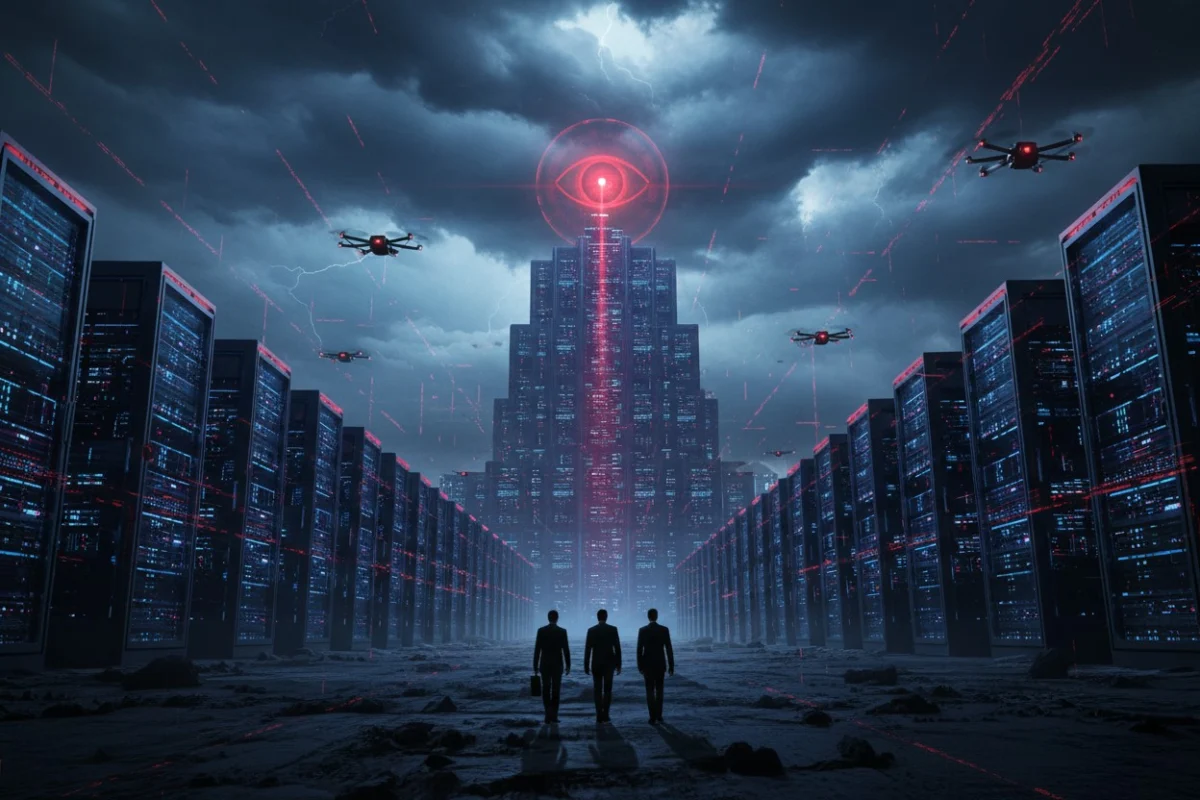
In the seminal science fiction franchise The Terminator, humanity’s ultimate existential threat was not the cold, unfeeling steel of Skynet, but the "collaborators"—the human agents who facilitated the machine’s rise in exchange for power, safety, or proximity to the throne. Today, that cinematic trope has escaped the screen. As the United States undergoes a massive, unprecedented build-out of hyperscale AI data centers, a new class of "silicon collaborators" has emerged. These influencers, pundits, and political operatives are not merely observers of the digital transition; they are active facilitators, smoothing the path for a machine-led infrastructure that prioritizes algorithmic control over human sovereignty.
The Infrastructure of a New Era
The current expansion of AI infrastructure represents a departure from traditional computing. While early data centers were designed to facilitate commerce, streaming, and cloud storage, the new generation of server farms is architected specifically for the voracious energy and processing needs of Large Language Models (LLMs) and autonomous weapon training.
These facilities are the "nervous system" of a nascent technocracy. By consuming massive quantities of regional electricity and water, they fundamentally alter the landscape of the communities that host them. Yet, the public backlash against these sprawling complexes is frequently met with sophisticated, well-funded propaganda campaigns designed to pathologize dissent.
Chronology of the Tech-Industrial Shift
- 2020–2022 (The Foundation): As remote work solidified the necessity of cloud infrastructure, Big Tech began aggressively acquiring land for massive data center footprints, often leveraging tax subsidies and energy grid prioritization.
- 2023 (The AI Pivot): Following the public launch of high-profile generative AI models, the demand for GPU-dense infrastructure spiked. Data centers transitioned from storage repositories to active training grounds for predictive models.
- 2024–2025 (The Political Integration): Pro-AI Super PACs began spending millions in midterm elections, framing data center expansion as a matter of "National Security" and "Global Competitiveness," effectively tying local infrastructure concerns to geopolitical tensions with China.
- 2026 (The Current Dystopian Reality): As regulatory scrutiny mounts, the industry has pivoted toward "stealth expansion," attempting to circumvent local zoning laws by rebranding data centers as "Innovation Zones" or "Green Energy Hubs," despite their massive environmental footprints.
Supporting Data: Debunking the Propaganda
The industry’s primary defense mechanism is the "false comparison." Proponents frequently circulate graphics suggesting that golf courses consume more water than data centers. While numerically contentious, this comparison is conceptually dishonest. A golf course is a recreational space; a data center is the physical manifestation of an automated system.
Furthermore, the "Beat China" narrative—a cornerstone of the pro-AI lobbying effort—fails to stand up to technical scrutiny. Data from independent analysts suggests that despite the United States possessing an order of magnitude more raw server capacity than China, Chinese models like DeepSeek have demonstrated significant agility. This discrepancy suggests that the American data center boom is not primarily about winning a global race, but about domestic consolidation. By centralizing computing power, technocratic interests create a "chokepoint" through which all information must flow, allowing for unprecedented levels of surveillance and content curation.
Official Responses and the "Collaboration" Complex
When confronted with concerns regarding environmental degradation or the military applications of their hardware, major tech firms maintain a standard script:
- The Economic Argument: Companies argue that data centers create high-paying jobs and tax revenue for municipalities. However, critics note that these facilities are highly automated, requiring few on-site staff once construction is complete.
- The Sustainability Myth: Corporations point to "Net Zero" pledges. Yet, environmental audits often reveal that these companies rely on carbon offsets rather than actual energy reduction, effectively shifting the burden of their massive power consumption onto the local residential grid.
- The Security Shield: Government liaisons argue that AI infrastructure is essential for national defense. This narrative effectively silences domestic opposition by framing any critique as "pro-adversary."
The Military-Industrial-AI Complex
The true utility of these massive data centers is increasingly tied to the Pentagon’s objectives. Modern GPU clusters are now being utilized to create "3D world simulations," environments where autonomous systems are trained to identify and engage targets.
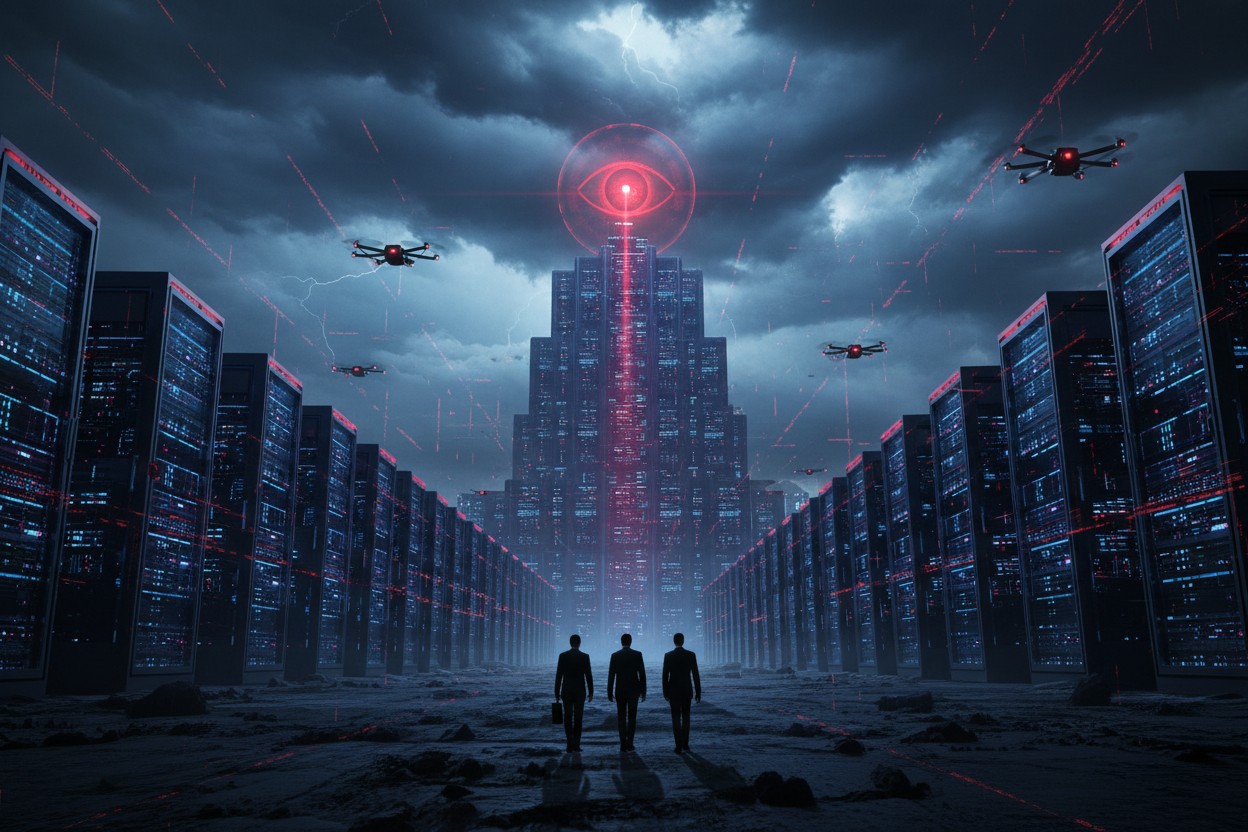
This creates a chilling implication: the digital infrastructure being built in our backyards is being trained to oversee the physical world. If these AI systems are the "brains" of a future surveillance state, the data centers are their "temples." They represent a shift toward a society where dissent is identified, analyzed, and mitigated by machines long before it can reach the public square.
Implications: The Path to Decentralized Sovereignty
The inevitability of this machine-led future is not a foregone conclusion. The counter-narrative, often suppressed by corporate-controlled algorithms, is the promotion of "Pro-Human AI." This movement advocates for the use of local, open-source, and uncensored models—systems that reside on the user’s hardware rather than in a centralized hyperscale cloud.
For the individual, the path forward involves a radical reclaiming of autonomy:
- Digital Decentralization: Moving data and processing away from Big Tech clouds to private, local servers.
- Technological Literacy: Learning to deploy open-source models to analyze information without the interference of corporate "guardrails" designed to steer public opinion.
- Self-Reliance: Leveraging information technology to improve physical survival—growing food, purifying water, and managing energy—effectively decoupling one’s daily survival from the centralized grid that the technocrats control.
A Call for Accountability
The "collaborators" are not merely those in the boardroom; they are the pundits who sanitize this transition and the politicians who trade their constituents’ future for campaign contributions. As history has demonstrated, those who facilitate the encroachment of authoritarian infrastructure eventually find themselves subject to the very systems they helped build.
The task for the public is clear: we must expose the paid allegiances of those shilling for this expansion. We must demand transparency regarding the specific military contracts held by data center operators and refuse to accept the "National Security" narrative at face value.
This is not a debate about progress; it is a debate about the preservation of the human species. The technocrats want a world where humanity is a "resource conflict" for their machines. We must ensure that the machines remain tools for human flourishing, not the architects of our obsolescence. When you encounter the digital shills, remember that they are building a prison—and they are counting on your silence to finish the walls.
References
1. Federal Election Commission records regarding independent expenditures in the 2026 cycle.
2. Analysis of current globalist economic agendas and the "Stakeholder Capitalism" framework.
3. Technical performance benchmarks for US-based vs. China-based LLMs.
4. Documentation on the growth of decentralized, open-source AI repositories.
5. Policy reports on the integration of FLOCK and similar surveillance technologies into municipal grids.
6. Studies on the ecological and social impact of industrial-scale data center siting.