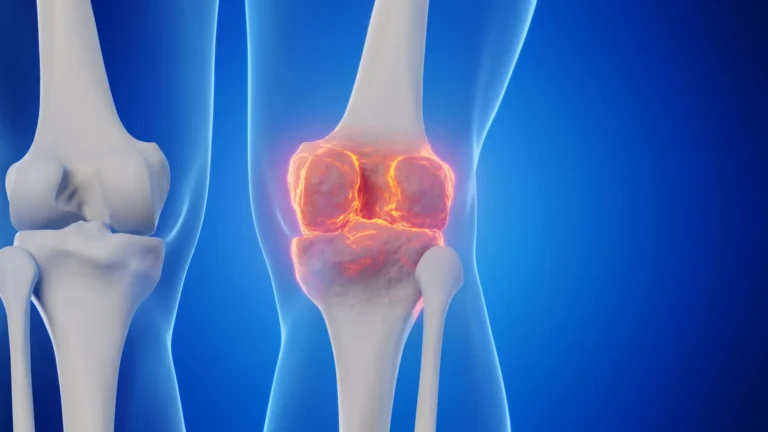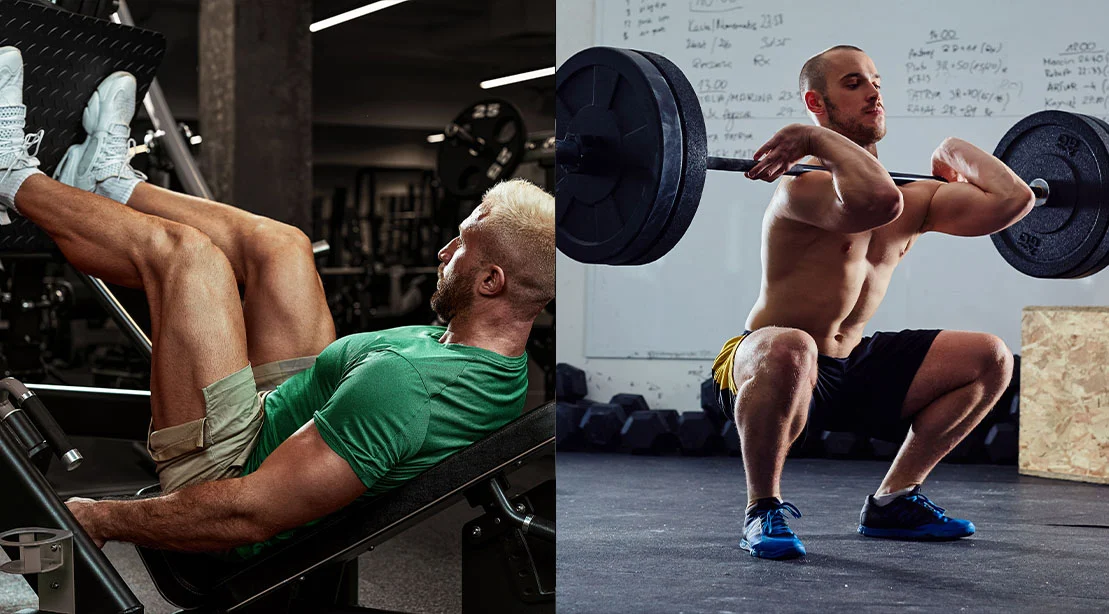
For decades, the fitness industry has operated under a rigid orthodoxy: the barbell back squat is the "King of Exercises." Walk into any commercial gym or hard-nosed powerlifting basement, and you will inevitably hear the mantra: “If you want big legs, you have to squat.” It is a rite of passage, a badge of honor, and for many, a recurring nightmare.
But is this devotion to the barbell justified, or is it a stubborn adherence to outdated dogmas that prioritize tradition over biomechanical reality?
For a vast population of beginners, the barbell squat may actually be the most inefficient—and potentially dangerous—way to stimulate muscle growth. This is not because the squat is inherently "bad," but because it demands a rare convergence of anatomical advantages, technical proficiency, and structural resilience that few beginners possess.
The Anatomy of the Debate: Main Facts
The fitness industry often loves absolutes. We are told that squats are mandatory, deadlifts are the gold standard, and the bench press determines one’s worth as a lifter. However, the biological reality is far less romantic.
Not everyone is built to squat.
This is not a matter of opinion or a lack of "toughness." Scientific literature examining hip joint structure, femur length, pelvic geometry, and muscle origin/insertion points has repeatedly demonstrated that human biomechanics vary significantly. While some individuals are engineered for optimal squatting—possessing shorter femurs, neutral pelvic tilts, and exceptional ankle mobility—others are fundamentally constrained by their skeletal framework.
When a lifter with long femurs and limited ankle dorsiflexion attempts a standard back squat, they are forced into a deep forward lean to maintain their center of gravity. This shifts the mechanical demand away from the quadriceps and onto the lumbar spine. For these individuals, squatting is not merely a training stimulus; it is a high-stakes negotiation with future orthopedic issues.
A Chronology of the "Squat King" Narrative
To understand why the squat occupies such a sacred place in fitness, we must look at the evolution of weight training.
The Mid-20th Century: The Rise of the Big Three
In the 1950s and 60s, the "Big Three" (Squat, Bench, Deadlift) became the foundation of athletic development. Because specialized machinery was rare, the barbell was the only available tool for overload. Coaches and early bodybuilders codified the squat as the ultimate test of strength.
The 1980s and 90s: The Era of "No Pain, No Gain"
During this period, the philosophy of "functional training" gained steam. The barbell squat was marketed not just as a muscle builder, but as a "functional" necessity. Any lifter who struggled with the movement was told to "push through" or "fix their mobility," often leading to chronic lower back and knee pathologies.
The Modern Era: The Machine Revolution
Today, we exist in a post-industrial fitness landscape. The advent of high-end biomechanical engineering—pendulum squats, belt squats, hack squats, and leverage-based machines—has changed the game. These tools allow for high-intensity, high-volume leg training that isolates the target musculature while removing the spinal compression and stability requirements of the barbell.
Supporting Data: Biomechanics and Injury Risk
The risk-to-reward ratio of the barbell squat is a subject of ongoing clinical interest. According to studies published in journals such as the Journal of Strength and Conditioning Research, the lower back is often the limiting factor in heavy squatting. When the spinal erectors fatigue before the quadriceps, the lifter is no longer performing a "leg exercise"; they are performing a high-risk spinal stability exercise.
The Kinetic Chain Problem
Squatting requires a synchronized effort from the entire kinetic chain. For a beginner, the cognitive load of maintaining thoracic extension, bracing the core, tracking the knees, and managing the weight is immense. When technical failure occurs—which is common in novices—the load is transferred directly to the lumbar discs.
Conversely, the leg press effectively "removes" the spine from the equation. Because the back is supported against a pad, the lifter can focus entirely on muscular output. Research indicates that when spinal stabilization is removed, the activation of the vastus lateralis and medialis (the quadriceps) can be just as high, if not higher, than in a free-weight squat, without the associated risks of spinal shear force.
Official Perspectives: The "Squat Police" vs. The Pragmatists
The debate over squatting often pits traditionalist powerlifting coaches against modern physiotherapists and strength researchers.
The Traditionalist Argument
Proponents of the barbell squat argue that it is a "foundational movement pattern." They suggest that even if a beginner struggles, they should be coached through it to improve their overall "athleticism" and "coordination." They maintain that the squat forces the body to learn how to stabilize under load, which is a vital skill for long-term health.
The Pragmatic/Clinical Argument
Many modern strength coaches and physical therapists have shifted their stance. Their perspective is simple: Training should be efficient, not masochistic. If a beginner’s goal is hypertrophy (muscle growth) or general strength, the barbell back squat is not a requirement. They argue that if a movement causes pain or forces the body into compromised positions, it is objectively a "bad" movement for that specific individual.
Implications: The New Path Forward for Beginners
If the barbell squat is not the king, what should the new training hierarchy look like? The implications for the modern lifter are clear: prioritize structural health and mechanical tension over ego-driven exercise selection.
1. Earn Your Progression
Beginners should view the barbell squat as an end-goal, not a starting point. Start with machine-based variations—leg presses, belt squats, and hack squats—to build foundational leg strength. Once the muscles are developed, the lifter can gradually introduce the Smith machine, which provides a fixed path, allowing for depth control without the instability of a free-hanging bar.
2. The "Safety First" Protocol
If you decide to incorporate barbell squats, do so with a strict set of safety protocols:
- Neutral Spine: Never compromise spinal alignment for depth.
- Control the Eccentric: The "bounce" at the bottom of a squat is a common source of injury. Control the weight on the way down.
- Forget "Ass to Grass": Depth should be determined by your anatomy, not by social media trends. If your hips are not built for deep squats, forcing them will lead to hip impingement.
3. Redefining Success
The question is not "Can I squat?" but rather, "What is the safest and most effective way for me to train my legs?" For the vast majority of people, the answer involves a variety of machines that provide the same, if not better, hypertrophy stimulus with a fraction of the spinal risk.
Conclusion: A Legacy of Longevity
There is an irony in the obsession with the "king of exercises." Many of the same people who insisted on the necessity of the barbell squat twenty years ago are now the very individuals seeking hip replacements and spinal fusion surgeries.
True strength is not measured by the weight on the bar during a single session, but by the ability to continue training consistently for decades. If you can build world-class legs using a leg press while sparing your lower back from unnecessary wear and tear, you aren’t "skipping" a hard workout—you are being a smart athlete.
The squat can be an excellent tool, but it is not a religious requirement. It is a piece of metal, not a measurement of your worth. Train hard, train smart, and leave the ego at the door. Your joints will thank you in twenty years.