By Global Affairs Desk
August 24, 2026
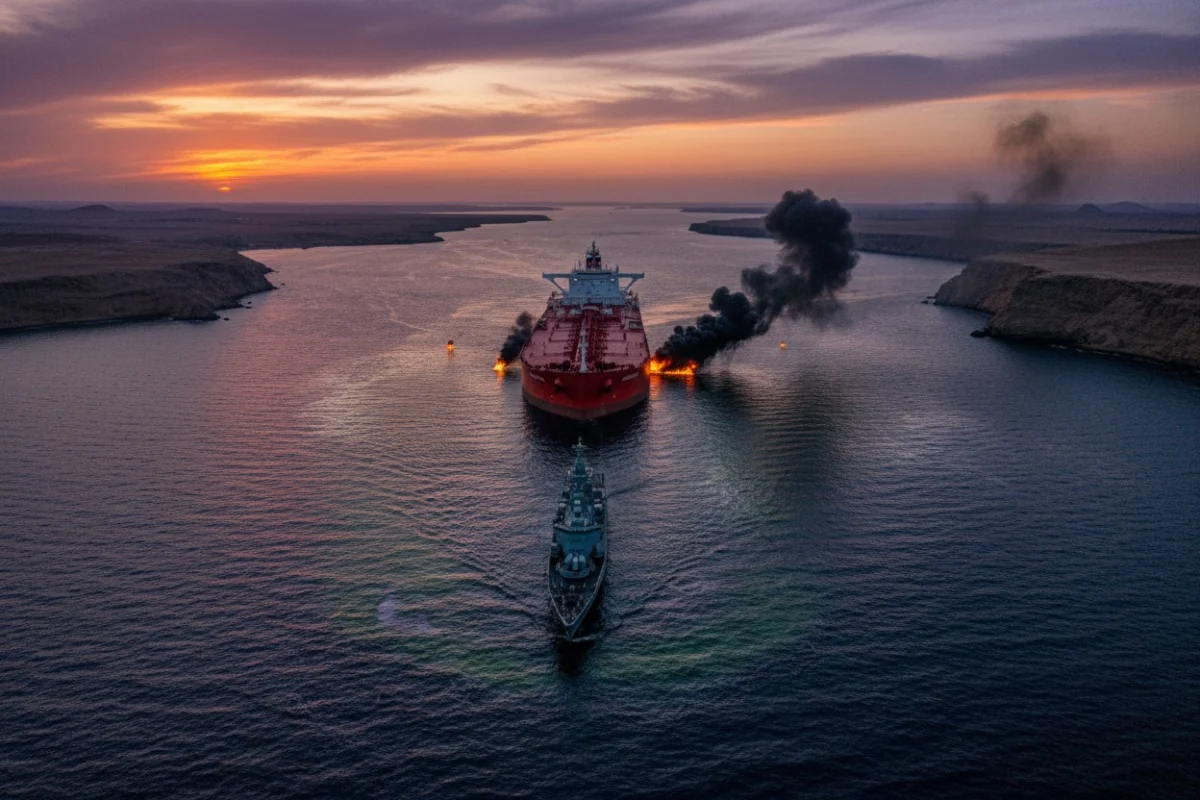
The geopolitical architecture of the Middle East teetered on a knife’s edge this week as Tehran issued a stark, uncompromising ultimatum to its neighbors. On August 23, 2026, Iranian leadership declared that any regional cooperation with a newly intensified United States pressure campaign would result in the total closure of the Persian Gulf to oil exports.
The threat, broadcast across state media, was unequivocal: "Not a single drop of oil" will transit the Gulf if neighboring states align with Washington’s efforts to cripple the Iranian economy. This escalation comes as U.S. Treasury Secretary Scott Bessent prepares to roll out what he describes as "the greatest coordinated economic isolation in the history of the world," aimed at severing the financial lifelines of the Islamic Republic.
The Brink of Economic Warfare
The U.S. strategy, colloquially dubbed "Operation Economic Fury," represents a multi-pronged assault on Iran’s ability to generate revenue. The administration of President Donald Trump has been working behind the scenes to pressure Gulf Cooperation Council (GCC) states to tighten the noose on Tehran.
Treasury Secretary Bessent, framing the situation as an "economic D-Day," has called upon Washington’s traditional allies to shutter all commercial avenues with Iran. The U.S. is not merely relying on sanctions but is actively targeting the infrastructure Iran has used to maintain its economic relevance. Notably, the U.S. has imposed aggressive sanctions on the newly formed "Persian Gulf Strait Authority," an Iranian entity tasked with managing and tolling maritime traffic through the chokepoint.
Iran’s response has been characteristically bellicose. Major General Ali Abdollahi, Chief of Staff of the Iranian Armed Forces, warned that any regional state offering logistics or military support to U.S. operations would be viewed as a direct participant in hostilities. Mohsen Rezaei, secretary of Iran’s Supreme National Security Council, took the rhetoric further, labeling countries that join the U.S. "economic war" as enemies, effectively painting a target on their backs.
Chronology of the 2026 Maritime Escalation
The current standoff is the culmination of a deteriorating security environment in the Persian Gulf that has been unfolding throughout 2026:
- March 2026: Iran intensifies maritime aggression, targeting commercial shipping in the Persian Gulf and the Gulf of Oman, signaling a departure from previous, more restrained postures.
- April 2026: A two-week blockade of the Strait of Hormuz sends global crude prices soaring past $100 per barrel, triggering an International Energy Agency (IEA) warning that the crisis is surpassing the severity of the 1970s energy shocks.
- May–July 2026: Iran begins restricting transit through the Strait to vessels flying flags of nations it deems "friendly," specifically China and Russia, effectively creating a selective maritime zone.
- August 2026: U.S. officials initiate "Operation Economic Fury." In response, Saudi Arabia, Turkey, and Pakistan sign a joint defense pact on August 15, signaling a realignment of regional powers against the dual threats of Iranian aggression and economic instability.
- August 23, 2026: Iran issues its "zero-drop" ultimatum, threatening to seal the Strait entirely if regional states cooperate with the U.S. economic campaign.
The Strategic Importance of the Strait of Hormuz
The Strait of Hormuz is more than a waterway; it is the world’s most critical energy artery. Approximately 20% of the world’s total oil consumption—and a significant portion of its Liquefied Natural Gas (LNG)—passes through this narrow gap. As historian Lewis Dartnell has noted, this route has been central to global trade for millennia, but its modern dependence on oil makes it the most volatile geographic point on the planet.
IRGC commander Mohammad Reza Naqdi has repeatedly emphasized that the concentration of oil and gas production in the Gulf makes the Strait irreplaceable. While the U.S. has attempted to mitigate this by rerouting traffic through an Omani corridor, intelligence reports from ZeroHedge suggest that these measures have only partially offset the impact of Tehran’s maritime interdiction.
The Iranian military has shifted toward a new "offensive doctrine," with Yadollah Javani, head of the IRGC’s political bureau, warning that the U.S. and its allies should "anticipate strategic surprises." This suggests a departure from traditional asymmetric warfare toward more complex, multi-domain operations.
The Shadow Market: How Oil Still Flows
Despite the rhetoric of a total blockade, the reality on the water is more nuanced. Data from TankerTrackers.com reveals that a sophisticated shadow fleet of at least 56 vessels is currently engaged in covert ship-to-ship transfers. This "shuttle system" allows oil from Arab nations to circumvent the primary chokepoints and navigate the Iranian blockade.
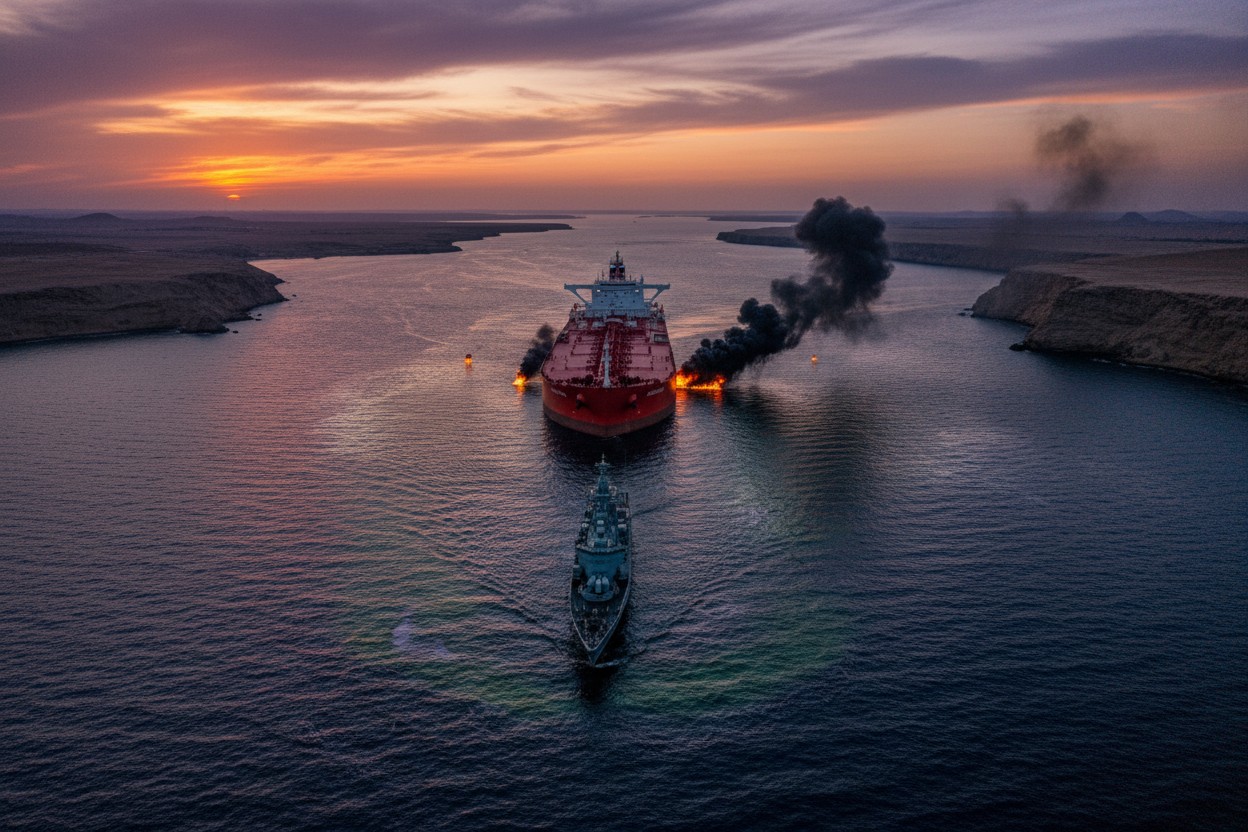
Tomer Raanan, a senior maritime intelligence analyst at Lloyd’s List, notes that while the blockade has disrupted standardized shipping lanes, the market is finding ways to bleed oil out of the region. However, this comes at an astronomical cost. Supertanker owners, facing extreme risk, are now demanding upwards of $510,000 per day to operate in the region.
Meanwhile, the United Arab Emirates has taken a proactive stance by announcing an $8 billion gas expansion project, which includes plans for a pipeline designed to bypass the Strait of Hormuz entirely, effectively neutralizing Iran’s most potent geopolitical lever.
Official Responses and Regional Realignment
The silence from the major Gulf Arab states regarding Iran’s latest threat is telling. Diplomatic sources suggest that the GCC nations are caught in a pincer movement: they are under intense pressure from Washington to isolate Tehran, yet they fear the immediate military consequences of an Iranian response.
According to reports cited by the Times of Israel, the Gulf states are increasingly looking toward Beijing. They are testing whether China, which relies heavily on Gulf energy, can use its economic leverage to compel Tehran to maintain the flow of oil. However, this reliance on external mediation underscores the weakening security architecture of the region.
The August 2026 defense agreement between Saudi Arabia, Turkey, and Pakistan marks a significant shift. By forming a collective defense pact, these nations are signaling that they can no longer rely solely on the U.S. "security umbrella" and must instead build local coalitions to deter Iranian aggression.
Economic Implications: The Cost of Global Energy
The economic fallout of the current standoff is being felt from the gas pumps in the American Midwest to the manufacturing hubs of East Asia. In the United States, gasoline prices have hovered around $4 per gallon, a figure the administration is desperate to keep from rising further.
Vice President JD Vance recently articulated the administration’s hierarchy of needs, stating that preventing a nuclear-armed Iran is Washington’s second priority, trailing only the imperative of keeping energy prices affordable for the American public. To manage the domestic strain, the White House has begun issuing Jones Act waivers, allowing for greater flexibility in domestic energy transport to alleviate potential shortages.
However, the international community remains skeptical of a purely economic solution. The International Energy Agency has warned that if the Strait remains restricted or closed for an extended period, the resulting inflationary pressure could trigger a global recession, as the energy crisis fundamentally alters the cost of production and transport worldwide.
Conclusion: The Path Forward
The standoff at the Strait of Hormuz remains a high-stakes game of chicken between two determined powers. While the U.S. seeks to use economic strangulation to force a change in Tehran’s regional behavior, Iran is doubling down on its capacity to project force across the global energy supply chain.
As the "economic D-Day" approaches, the global market remains on edge. The combination of military threats, the emergence of a shadow oil-transfer fleet, and the shifting defense alliances in the region suggests that the status quo is unsustainable. Whether the crisis concludes through back-channel diplomacy involving Beijing, or through a kinetic escalation that could redefine the 21st-century energy landscape, the world is watching the Persian Gulf with mounting anxiety.
For now, the ships continue to pass—but they do so at a price that reflects the extreme volatility of a region where the margin for error has all but evaporated.