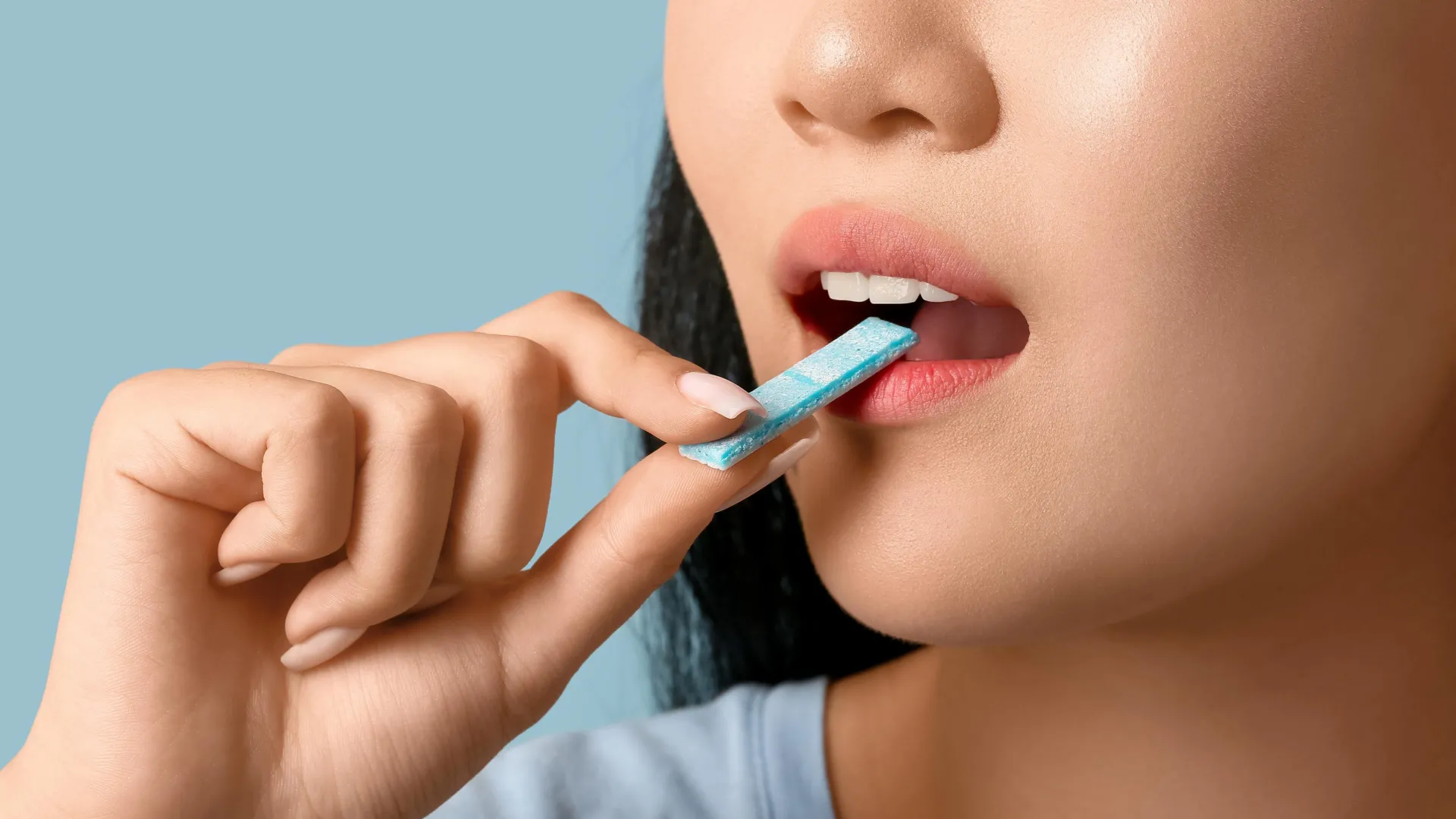
In a counterintuitive twist that challenges conventional nutritional wisdom, researchers at King’s College London have discovered that the path to a healthier heart might occasionally involve a piece of sugary chewing gum. While sugar is almost universally vilified in the context of cardiometabolic health, a new study published in the British Journal of Clinical Pharmacology suggests that when paired with nitrate-rich vegetables like beetroot, spinach, and kale, the acidity provided by sugary gum may actually catalyze a significant improvement in blood pressure regulation.
This finding does not serve as a license to indulge in confectionery, but rather as a profound "proof of concept" regarding the intricate chemistry occurring within our mouths. The study illuminates how the oral microbiome acts as a gatekeeper for the cardiovascular benefits of our diet, and how simple environmental shifts—such as a change in salivary pH—can dramatically alter how our bodies process nutrients.
The Biological Mechanism: The Nitrate-Nitrite-Nitric Oxide Pathway
To understand the gravity of this discovery, one must first look at the silent chemical factory inside the human mouth. Dietary nitrate, found in abundance in leafy greens and root vegetables, is biologically inert in its initial form. When we ingest these vegetables, the nitrate is absorbed into the bloodstream and then secreted back into our saliva via the salivary glands.
Once in the mouth, commensal bacteria—specifically those residing on the tongue—act as a critical conversion mechanism. These bacteria reduce the nitrate into nitrite. This nitrite is then swallowed and absorbed, eventually being converted into nitric oxide, a potent vasodilator. Nitric oxide signals the smooth muscles surrounding blood vessels to relax, causing the vessels to widen. This process, known as vasodilation, reduces vascular resistance and, consequently, lowers blood pressure.
For years, scientists have understood that this conversion is the limiting step. If the oral environment is not optimized for these specific bacteria, the body cannot fully capitalize on the nitrate provided by a healthy diet. The research team at King’s College London, led by Dr. Andrew Webb, hypothesized that the acidity of the saliva might be the "missing switch" that could either accelerate or hinder this bacterial conversion.
A Chronology of the Investigation
The study was designed as a rigorous, crossover investigation to determine if modulating oral pH could directly influence systemic cardiovascular markers.
Phase 1: Establishing the Hypothesis
The researchers began by questioning the relationship between pH levels and nitrate reduction. Previous studies conducted by the same team had observed that grapefruit juice—which possesses its own unique chemical profile—actually inhibited the conversion of nitrate to nitrite by reducing salivary acidity. This led the team to ask the inverse question: Could increasing the acidity of the saliva stimulate the bacteria to work more efficiently?
Phase 2: The Controlled Experiment
Healthy volunteers were recruited for a crossover study. In the first arm, participants consumed a standardized shot of nitrate-rich beetroot juice, followed by the consumption of sugar-containing bubble gum (Hubba Bubba®). In the second arm, participants repeated the protocol but substituted the sugary gum for a sugar-free, xylitol-based alternative (Wrigley’s Extra®).
The researchers monitored the participants over a three-to-six-hour window, collecting repeated samples of both saliva and blood, while continuously tracking changes in systolic and diastolic blood pressure. A "washout" period of at least one week was observed before participants swapped conditions to eliminate carry-over effects.
Phase 3: Data Synthesis
Upon analyzing the samples, the results were stark. The sugary gum group exhibited a consistent 1.4-point drop in salivary pH, indicating a more acidic oral environment. This acidity correlated with a 45% increase in nitrite concentrations within the mouth and a 25% increase in circulating nitrite levels in the blood.
The physiological impact was immediate: participants who chewed the sugary gum saw their systolic blood pressure drop by nearly 3 mmHg and diastolic blood pressure fall by almost 2 mmHg compared to those who chewed the sugar-free gum.
Supporting Data and the Role of Salivary Acidity
The significance of these findings lies in the scale of the systemic response. A 3 mmHg reduction in systolic blood pressure, while seemingly modest, is clinically relevant at a population level. If such a reduction could be sustained, it could theoretically lower the risk of stroke and heart disease significantly.
The study also confirmed a long-standing suspicion: the duration of exposure matters. Dr. Webb noted that the sustained contact time provided by chewing gum—as opposed to a sugary drink which is swallowed quickly—is likely why the gum proved so effective. By keeping the sugar in the mouth for an extended period, the acidity levels remained depressed long enough to influence the bacterial nitrate reduction process.
However, the data also serves as a warning. While the study proves that sugar can have a transient positive effect on nitrate metabolism, it does not erase the metabolic burden of sugar consumption. The researchers were careful to frame these results as a specific interaction between food chemistry and oral microbiology rather than a general endorsement of sugar intake.
Official Responses: A Delicate Balance
The researchers were quick to temper public excitement with clinical caution. Dr. Andrew Webb, Clinical Senior Lecturer in the School of Cardiovascular & Metabolic Medicine & Sciences at King’s College London, emphasized the nuances of the findings.
"Whether and how the acidity of the saliva in the mouth impacts the conversion of the inactive nitrate to the more active nitrite is a fundamental question," Dr. Webb stated. "However, this process has not been studied much. We are certainly not recommending that people start chewing sugary gum as a health strategy. The dental risks and the metabolic impact of frequent sugar consumption are well-documented and far outweigh these short-term gains."
Co-author Dr. Charlotte Mills of the University of Reading echoed these sentiments. "Our findings provide a proof of concept," she explained. "We have identified that the oral environment can be manipulated to improve the uptake of dietary nitrate. The challenge now is to identify alternative, ‘tooth-friendly’ strategies that can achieve this same acidic shift without the downsides of refined sugar."
Implications: The Future of Athletic Performance and Beyond
The implications of this research extend far beyond the general population, particularly into the world of elite sports. Dietary nitrate has become a staple of athletic performance nutrition; cyclists, runners, and triathletes frequently use beetroot juice to improve oxygen efficiency and delay fatigue.
If athletes can enhance the "nitrate-to-nitrite" conversion rate by simply altering the pH of their oral environment, it could lead to better performance outcomes from the same dietary intake. The research team is now shifting their focus toward developing methods that could optimize this process for athletes—perhaps through specialized, non-cariogenic (non-tooth-decaying) lozenges or chewing gums that mimic the acidic effect of sugar without the harmful side effects.
The "Culinary Tradition" Hypothesis
Dr. Webb also touched upon an interesting cultural observation. He noted that the traditional European culinary practice of finishing a meal with a sweet dessert—often fruit-based—might have inadvertently provided a secondary benefit. If a meal contains nitrate-rich salad or vegetables, following it with something that alters salivary pH could potentially optimize the cardiovascular benefits of the starter and main course.
"The classic culinary tradition of following a meal containing nitrate-rich vegetables with a sweet dessert may have unknowingly supported this nitrate-to-nitrite conversion," Dr. Webb suggested.
Moving Toward Long-Term Solutions
The roadmap for future research is clear. The team intends to:
- Recruit Athletes: Conduct larger-scale studies specifically looking at the intersection of exercise performance, nitrate metabolism, and salivary pH.
- Develop "Safe" Alternatives: Work with food scientists to engineer delivery mechanisms—such as chewing gums or oral sprays—that provide the necessary acidity without the sugar, effectively "hacking" the oral microbiome for cardiovascular health.
- Broaden Clinical Application: Investigate whether this mechanism can be utilized to help individuals with mild hypertension or those at risk of cardiovascular decline.
Ultimately, this study serves as a reminder that the human body is a complex ecosystem. Our health is not just the sum of the nutrients we consume, but also the product of the complex interactions between our diet, our resident bacteria, and the chemical environments we create within ourselves. While a stick of bubble gum is unlikely to replace blood pressure medication, the science behind why it worked provides a promising new frontier in metabolic health research.