Vince McMahon is widely recognized as the architect of modern professional wrestling, a man who took a fragmented, regional industry and synthesized it into a multi-billion-dollar global entertainment juggernaut. His ability to turn "larger-than-life" characters into household names is the stuff of business legend. However, not every pivot in the McMahon playbook resulted in gold. Thirty-five years after the inception of the World Bodybuilding Federation (WBF), the venture stands as a cautionary tale—a fleeting, expensive, and ultimately embarrassing footnote in the history of the fitness industry.
As McMahon navigates a contemporary landscape defined by intense controversy and legal scrutiny regarding his conduct within the WWE, it is worth looking back at the early 1990s, a decade where his hubris led him to believe that the "sports entertainment" formula could be transplanted into the world of professional bodybuilding. The WBF was intended to be the ultimate disruption; instead, it imploded after just two pay-per-view events.
The Audacity of the Invasion: Disrupting the Olympia
In the late 1980s, the bodybuilding world was firmly under the hegemony of Joe and Ben Weider, the founders of the International Federation of Bodybuilding and Fitness (IFBB). To McMahon, the IFBB was simply another regional promotion waiting to be conquered.
The opening salvo of this "muscle war" occurred at the 1990 Mr. Olympia in Chicago. McMahon, a lifelong fan of the sport, arrived not as a guest, but as an insurgent. He famously hired 1980s icon Tom Platz to act as a consultant and talent scout, signaling a direct challenge to the Weider brothers. In a move that displayed his penchant for spectacle, McMahon used the Olympia—the most prestigious stage in the sport—as his own press room.
The strategy was simple: gain free publicity by disrupting the industry’s flagship event. The takeover reached a surreal crescendo when a cohort of models was paraded through the venue, draped in sashes emblazoned with the WBF logo. By simultaneously announcing a high-end supplement line and a flagship lifestyle magazine, McMahon made his intentions clear: he didn’t just want to participate in bodybuilding; he wanted to own it.
The Financial "Arms Race": Luring the Elite
One of the primary ways McMahon attempted to topple the IFBB was by disrupting the labor market. Traditionally, professional bodybuilders were forced to rely on prize money, magazine sponsorships, and erratic endorsement deals. McMahon introduced a model that was unheard of in the industry: guaranteed, high-salary, long-term contracts.
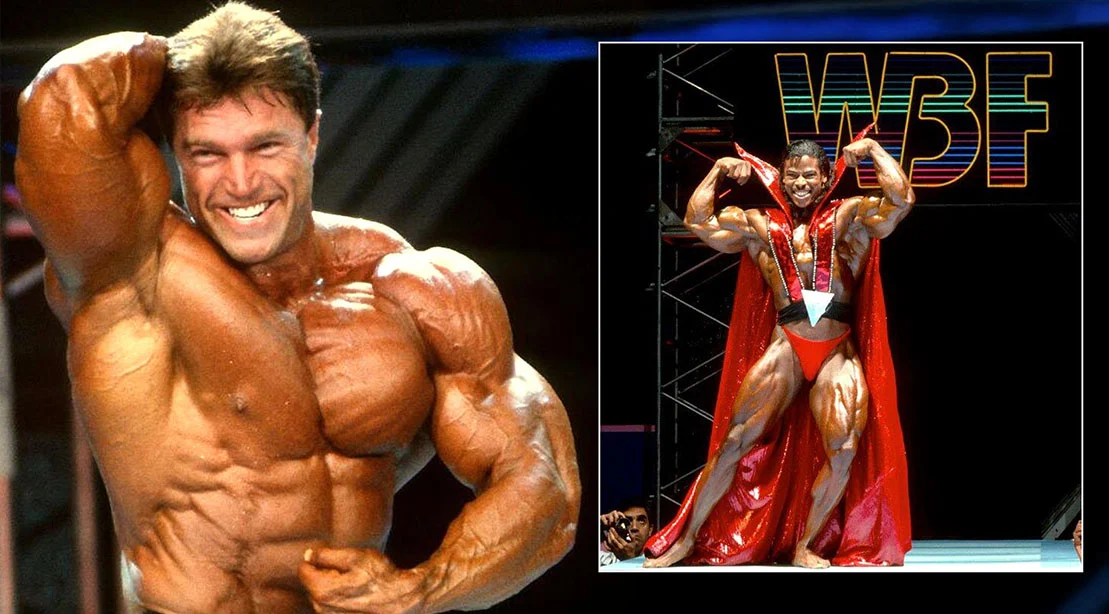
Some athletes were reportedly offered upward of $400,000 per year—a staggering sum for the era. The lure was irresistible. Major IFBB stars, including Gary Strydom, Mike Christian, Aaron Baker, Berry DeMey, and Jim Quinn, defected to the WBF.
The perks were equally unprecedented. WBF athletes were treated like traveling royalty, with first-class travel and luxury accommodations that far exceeded the standard treatment for even the most prominent WWE Superstars. This created a paradoxical internal tension: the bodybuilding division was essentially being subsidized by the success of the wrestling side, leaving financial analysts and industry critics questioning the long-term sustainability of the model. On June 15, 1991, the inaugural WBF Championship proved that the talent pool was indeed elite, with Gary Strydom taking the crown, but the foundation was already beginning to crack under the weight of its own overhead.
The Ferrigno Factor: The Signing That Never Was
Perhaps the most significant missed opportunity in the WBF’s short life was the recruitment of Lou Ferrigno. As the star of The Incredible Hulk and the seminal documentary Pumping Iron, Ferrigno was the only man capable of bridging the gap between niche bodybuilding fans and the mainstream public.
McMahon secured Ferrigno with a reported two-year, $900,000 contract—an astronomical figure that underscored the desperation of the WBF to find a marketable face. Yet, Ferrigno never stepped onto a WBF stage. The collapse of this relationship was inextricably linked to the legal pressures surrounding the WWE at the time. As federal authorities began scrutinizing steroid use in professional wrestling, McMahon felt compelled to introduce drug testing in the WBF to distance himself from the controversy.
For Ferrigno, who had built his career in an era of "anything goes" supplementation, the prospect of rigorous drug testing was a deal-breaker. He ultimately walked away, guest-posing for the Weiders instead, which served as a massive public relations blow to the WBF.
Chronology of a Collapse
The downfall of the WBF was a rapid, cascading failure that unfolded over a mere 24-month period:
- 1990: McMahon makes a surprise appearance at the Mr. Olympia in Chicago, effectively declaring war on the IFBB.
- June 15, 1991: The first WBF Championship takes place. While the production values are high, the "sports entertainment" style of presentation fails to resonate with traditional bodybuilding purists.
- Late 1991: The introduction of mandatory drug testing leads to the exodus of star talent and a visible decline in the size and conditioning of the remaining athletes.
- Early 1992: The WBF attempts to pivot, recruiting WCW wrestler Lex Luger to add star power. The plan fails when Luger suffers a severe motorcycle accident just days before the second show.
- June 15, 1992: After the second WBF Championship draws a dismal 3,000 pay-per-view buys, McMahon calls Ben Weider to concede defeat, effectively dissolving the company.
The "Flex to Flop" Implications
The failure of the WBF was not merely a loss of capital—estimated at over $15 million—but a fundamental misunderstanding of the target audience. McMahon attempted to apply the narrative-driven, cartoonish sensibilities of the WWE to a sport that, at its core, is a subjective judging competition.
Fans of bodybuilding valued the nuance of posing and the aesthetic pursuit of perfection. They did not necessarily want the over-the-top, rock-concert theatrics that the WBF imposed on the stage. Furthermore, the drug testing policy, while ethically and legally necessary for McMahon, stripped the athletes of the very "superhuman" look that the WBF marketing machine had promised.
The industry’s reaction to the WBF’s death was nothing short of ruthless. At the 1993 IFBB Night of Champions, the bodybuilding establishment took a victory lap. Dorian Yates, one of the sport’s icons, appeared on stage dressed as a preacher, standing over tombstones marked with the WBF logo. Former WBF defectors were seen "resurrecting" themselves back into the IFBB, signaling the total reintegration of the sport under the Weider banner.
Legacy and Lessons Learned
In hindsight, the World Bodybuilding Federation was a vanity project that lacked a coherent identity. It tried to be both a legitimate competitive body and a theatrical spectacle, and in doing so, it alienated both groups.
The WBF debacle taught McMahon a valuable lesson about brand extension: not every successful formula is universal. His pivot to professional football years later with the XFL would face similarly rocky roads, proving that his expertise in the squared circle did not automatically translate to other athletic disciplines.
Today, the WBF is remembered as a fascinating relic of 90s excess. It highlights a period where Vince McMahon’s ambition was matched only by his lack of patience. For the bodybuilding community, it remains a reminder that the sport’s identity is deeply rooted in the traditions established by the IFBB, and that no amount of money or marketing can force a culture to change its DNA. The "titan" may have been able to change wrestling, but he learned the hard way that when it comes to the world of iron, some things are simply not for sale.