











EDITOR’S NOTE: This story includes discussion of suicide. If you or someone you know needs help, the national suicide and crisis lifeline in the U.S. is available by calling or texting 988.
PLYMOUTH, Mass. — The quiet coastal town of Plymouth, Massachusetts, remains anchored in the shadow of a tragedy that has polarized public opinion and forced a national conversation regarding the intersection of severe mental illness, maternal healthcare, and criminal culpability. As the murder trial of Lindsay Clancy enters its second week, the courtroom has become a repository for the intimate, fractured thoughts of a woman who, according to her defense, was a devoted mother overtaken by a catastrophic psychiatric collapse.
The trial, which has already included harrowing testimony and a jury visit to the home where three young children lost their lives in 2023, turned its focus Monday toward the private documentation of Clancy’s mental decline. Through her personal diaries and medical records, the court is being asked to determine whether the defendant was a calculating perpetrator or a victim of postpartum psychosis—a rare, severe condition that can strip a person of their reality.
The Evidence of a Descent: Insights from the Diary
The courtroom atmosphere was heavy on Monday as both the prosecution and the defense read from the journals Clancy maintained in the months leading up to the tragedy. The entries provide a haunting, step-by-step account of a mother struggling to reconcile her identity with the suffocating pressures of postpartum life.
In a November 18, 2022, entry, Clancy wrote with desperate clarity: "I’m so desperate to get a mental break from taking care of everyone that my mind is trying to find something physically wrong with me."
The writing reveals a woman caught in a loop of anxiety, particularly regarding her 8-month-old son, Callan. She documented an obsession with his sleep schedules, a profound sense of failure regarding her inability to breastfeed, and a mounting fear that she was fundamentally "broken." She described a "crazy brain fog" and an inability to plan, noting that she felt like she was "living moment to moment."
These entries are central to the defense’s argument: that Lindsay Clancy was not a woman planning a crime, but a woman pleading for a way out of a mental prison. Defense attorney Kevin Reddington read a poignant, simple line from her notes: "I want help. I want to be well."
A Chronology of Crisis: From Medication to Tragedy
The legal narrative centers on the timeline between late 2022 and January 2023. According to the defense and ongoing civil litigation, the three months preceding the deaths were marked by a "shifting lineup" of psychiatric medications, including various antidepressants, sleep aids, and antipsychotics.
- Late December 2022: Clancy sought help at a specialized postpartum depression program. Her medical records suggest that clinicians noted her symptoms might be exacerbated by her medication regimen, yet she was discharged after just one day with instructions to taper off an antipsychotic drug.
- December 31, 2022: Fearing for her stability, Clancy checked herself into a psychiatric hospital for several days.
- January 2023: Following her discharge, she returned to the care of her psychiatrist. Her final recorded appointment occurred on January 23—a 17-minute consultation.
- January 24, 2023: According to her defense, this was the day the "commanding voice" manifested, telling her to "kill the children so you can kill yourself." That evening, she requested her husband, Patrick, run errands—an act the prosecution characterizes as a deliberate effort to clear the house for the killings.
When Patrick Clancy returned home, he encountered a scene of unspeakable horror. He discovered his wife on the ground outside the home—having survived a jump from a second-story window—and his three children, Callan, Dawson, and Cora, in the basement, strangled with exercise bands.
The Prosecution’s Stance: Intent vs. Illness
While the defense focuses on the medical failure to properly diagnose and treat Clancy’s bipolar disorder, the prosecution maintains that the law must remain focused on the actions taken. Prosecutor Shanan Buckingham has been explicit in her opening statements, urging the jury to avoid turning the trial into a broad debate about the shortcomings of the American mental health system.
"This is not a public debate about women’s mental health and how the medical system treats women," Buckingham stated. The prosecution’s theory is that regardless of her underlying struggles, Clancy possessed the agency to carry out the killings. They point to the specific, goal-oriented nature of the evening—sending her husband away—as evidence of intent.
If convicted of murder, Clancy faces the mandatory sentence of life in prison without the possibility of parole. Conversely, if the jury finds her not criminally responsible due to mental disease or defect, she would be committed to a state-run mental health facility for treatment, rather than a prison.
Medical Malpractice and Systemic Failure
The trial is running parallel to civil litigation brought by both Lindsay and Patrick Clancy against their former medical providers. These lawsuits allege that the clinicians failed to recognize the severity of her condition, provided inadequate oversight, and ignored clear indicators that she was a danger to herself and her children.
Medical experts have long debated the complexities of postpartum psychosis. Unlike postpartum depression, which affects roughly 10–15% of mothers, postpartum psychosis is rarer, occurring in approximately 1 to 2 per 1,000 deliveries. It is considered a psychiatric emergency, often characterized by hallucinations, delusions, and a total loss of touch with reality. The defense argues that the doctors involved in her care missed the warning signs of a bipolar disorder that had been masked by the wrong cocktail of medications.
The providers named in the lawsuits have, in their initial responses, contested these claims, maintaining that they acted within the standard of care and that Clancy never communicated a clear, specific intent to harm her children to them.
The Human Toll and the Lingering Questions
The emotional weight of the proceedings is perhaps best captured by the testimony of Patrick Clancy. Having lost his three children and seen his wife irrevocably altered, his testimony was a harrowing highlight of the trial’s first week. He recounted the 911 call he made from the scene, his voice cracking as he relayed the horror to the dispatcher: "She killed the kids!"
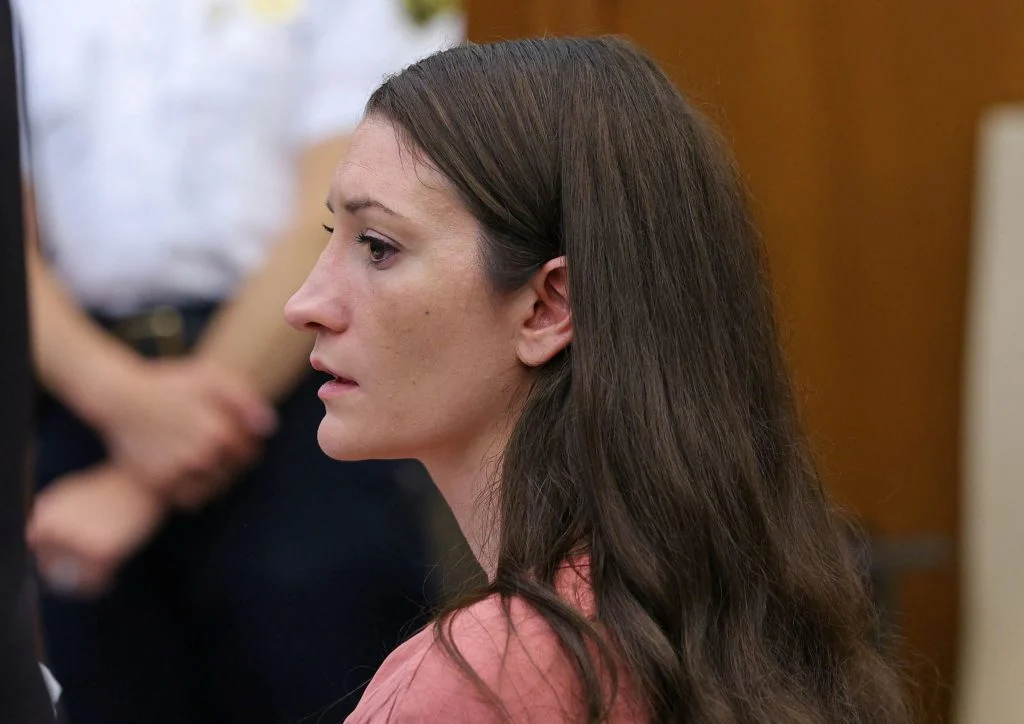
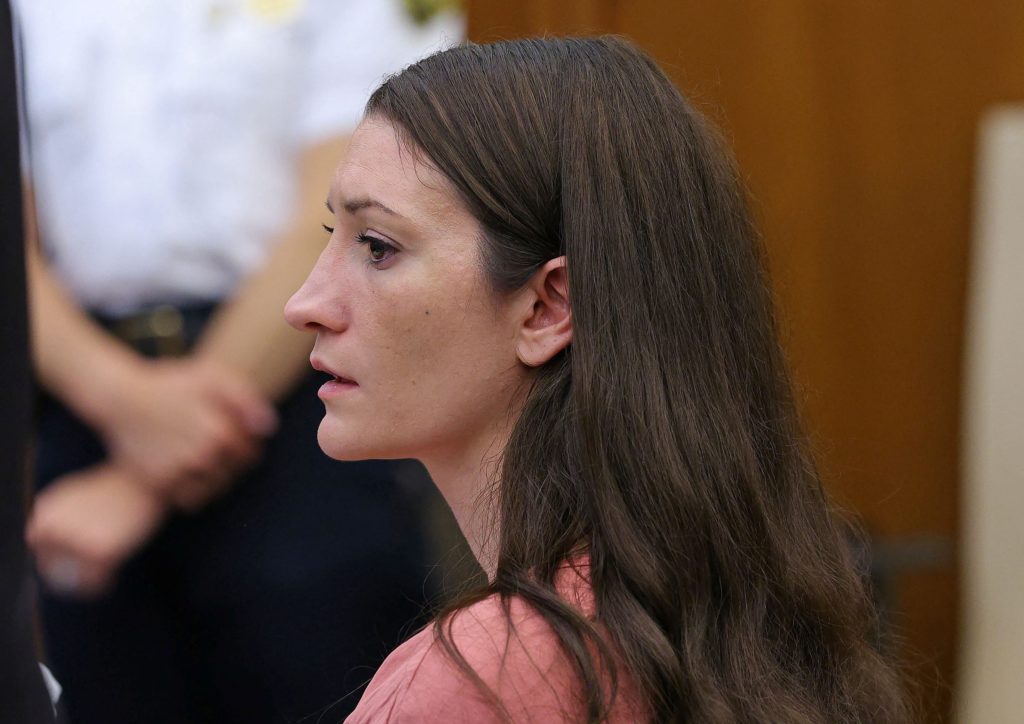
For the jury, the challenge is to reconcile the mother who wrote of her love and desperation to "be well" with the woman who committed the act. Lindsay Clancy, who remains paralyzed from the waist down as a result of her fall, watched the proceedings from the defense table, frequently overcome with emotion.
Testimony from Dr. Jhilam Biswas, a forensic psychologist at Brigham and Women’s Hospital, provided a glimpse into the immediate aftermath. When asked how she felt shortly after the incident, Clancy’s response was a singular, chilling word: "Horrified." She did not ask about her legal defense or the nature of her injuries immediately; she asked where her family was and if she could see them.
Implications: A Trial for the Future
The outcome of the Clancy trial will likely serve as a landmark case in the Massachusetts judicial system regarding the "not guilty by reason of insanity" plea in the context of postpartum psychiatric crises.
As the trial continues, the public is left to grapple with uncomfortable questions: Is the medical system equipped to identify the thin line between post-childbirth anxiety and a psychotic break? Can the law distinguish between a mind corrupted by illness and a mind capable of malice?
As the jury hears the remaining evidence, they are tasked with weighing the clinical history against the devastating physical reality of the crime. For the residents of Plymouth and the broader public, the trial of Lindsay Clancy is not just a murder case; it is a profound examination of motherhood, mental health, and the devastating cost of a system that may have failed to see the danger hidden behind a nursery door.