











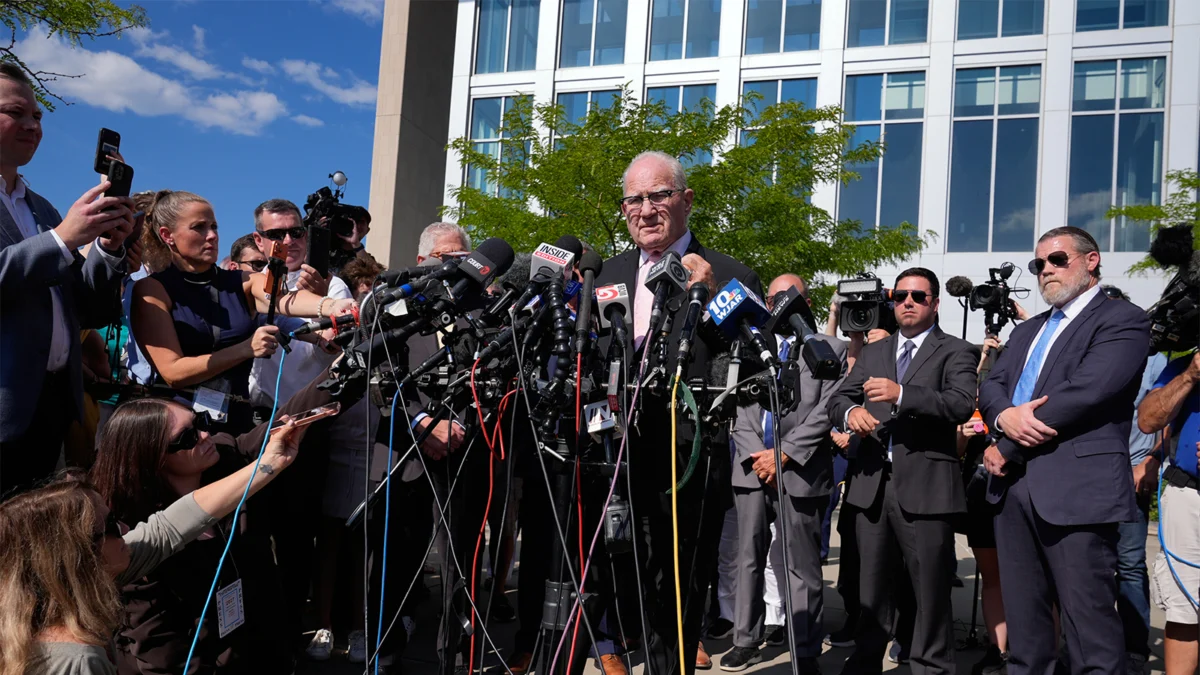
The legal proceedings surrounding Lindsay Clancy, the former labor and delivery nurse accused of strangling her three young children in 2023, have taken a jarring and unexpected turn. In a maneuver that has stunned legal observers and the public alike, the defense has shifted from an insanity defense—which dominated the recent, high-profile trial—to a claim that the prosecution has failed to meet its burden of proof to even establish that Clancy committed the acts in question.
This development follows a trial that ended in a hung jury on September 4, where the panel was deadlocked 11 to one in favor of acquittal, specifically citing the defense’s argument that Clancy suffered from severe postpartum psychosis. As the case sits in a state of suspended animation, the question of whether a retrial will occur remains unanswered, leaving the community and the legal system to grapple with the intersection of criminal culpability and severe maternal mental health crises.
Chronology of a Tragedy
The events that shattered the Clancy family unfolded on the evening of January 24, 2023, at their home in Duxbury, Massachusetts. According to evidence presented at trial, Lindsay Clancy’s husband, Patrick, had left the residence to pick up takeout and medication for their children, a window of time the prosecution contends was calculated and intentional.
Upon his return, Patrick discovered his wife in the backyard, having sustained severe injuries from a fall in an apparent suicide attempt. Inside the home, he found their three children—5-year-old Cora, 3-year-old Dawson, and 8-month-old Callan—strangled with exercise bands. The emergency responders who arrived at the scene testified to the gruesome nature of the discovery, describing a home that had been transformed into a crime scene within minutes.
For the duration of the trial, the defense did not contest the physical facts of the deaths. Instead, attorney Kevin Reddington focused on the medical reality of postpartum psychosis, a rare but devastating condition. The defense argued that Clancy was in a state of dissociative delusion, rendering her incapable of understanding the wrongfulness of her actions. The jury’s near-unanimous vote for acquittal reflected the complexity of this defense, suggesting that the public and the legal system are deeply conflicted over how to treat mothers who commit horrific acts while suffering from acute psychiatric episodes.
A Striking Legal Pivot: Challenging the Foundation
During a court hearing on Tuesday, September 10, the defense strategy underwent a radical transformation. Kevin Reddington formally moved for an acquittal, arguing that there is insufficient evidence to prove that Lindsay Clancy was the person who killed her children.
"This entire case is based on speculation," Reddington told Judge William Sullivan. He challenged the state to produce a confession or direct evidence, noting that upon waking in the hospital, Clancy possessed no memory of the event. By questioning the fundamental link between his client and the deaths, Reddington has effectively pivoted away from the insanity defense, signaling a desire to have the case dismissed entirely on procedural and evidentiary grounds.
The Prosecution’s Rebuttal
The prosecution, led by District Attorney Timothy Cruz and his team, has dismissed the defense’s new stance as "laughable." In filings submitted to the court, the state maintains that the evidence of premeditation is clear. They argue that Clancy’s actions—specifically, her orchestration of her husband’s departure from the home—demonstrate a level of planning and awareness that contradicts the claim of a spontaneous psychotic break.
The prosecution’s narrative remains centered on the concept of agency: that despite her mental health struggles, Clancy understood the nature and consequences of her actions. For the state, the case is not merely about a medical diagnosis, but about holding an individual accountable for the systematic termination of three lives.
The Jury Deadlock and the "Holdout" Juror
The mistrial declared on September 4 has birthed its own legal drama. The jury’s 11-1 split was characterized by significant internal friction. Reports emerged during deliberations that the lone juror favoring a conviction, Michael Desronvil, had allegedly refused to engage with the legal instructions regarding reasonable doubt.
The defense has filed motions seeking to dismiss the case, citing the conduct of this juror as a fundamental flaw in the trial process. However, Desronvil has defended his position, stating through legal counsel that he acted according to his conscience and his interpretation of the evidence. In a rare public statement, Desronvil told Fox News that the attention surrounding his identity is misplaced, urging the public to refocus on the memory of the three children rather than the mechanics of the jury room.
Implications for Maternal Mental Health
The Clancy case has become a focal point for a national conversation regarding maternal mental health. The presence of supporters outside the courthouse, many wearing pink in solidarity, underscores the widespread belief among advocates that the legal system is ill-equipped to handle the nuances of postpartum psychosis.
The Medical Context
Postpartum psychosis affects approximately one to two in every 1,000 births. It is a medical emergency characterized by hallucinations, delusions, and a profound detachment from reality. Medical experts who testified for the defense described the condition as a "brain fire" that can strip a person of their ability to distinguish right from wrong.
However, the legal system relies on the M’Naghten rule or similar standards of "criminal responsibility," which often struggle to integrate medical evidence of psychosis into the rigid framework of "guilt." Critics of the current legal process argue that by treating these cases as standard criminal homicides, the state ignores the biological reality of the illness, potentially criminalizing a medical pathology.
Official Responses and Future Uncertainty
As of this writing, Judge William Sullivan has not issued a ruling on the defense’s motion for acquittal. The future of the case hangs in a delicate balance. The Plymouth County District Attorney’s office has several paths forward:
- A Second Trial: The state could attempt to retry the case, hoping for a different jury composition and perhaps a different outcome.
- Lesser Charges: The prosecution could pursue secondary charges, such as manslaughter or second-degree murder, which might be more palatable to a jury hesitant to hand down a first-degree murder conviction.
- Dismissal: The state could choose to drop the charges, perhaps acknowledging the evidentiary challenges or the potential for a repeat of the recent mistrial.
District Attorney Timothy Cruz has remained stoic, stating only that the priority remains the pursuit of justice for the three children. "We are going to do what we can for the children," Cruz stated outside the courtroom. "That is what this case is about."
Conclusion: A System in Conflict
The Lindsay Clancy case serves as a harrowing case study of the limits of the American judicial system. When the law encounters the complexities of mental illness, the results are rarely satisfying for any party involved. The defense’s move to challenge the evidence itself suggests a lack of faith in the insanity defense’s ability to secure an acquittal, while the prosecution’s persistence highlights the state’s duty to account for the loss of human life.
Regardless of the legal outcome, the case has already left an indelible mark on the public consciousness. It forces a confrontation with the uncomfortable reality that some tragedies are born from medical catastrophes that the courtroom is arguably unsuited to adjudicate. As the judge deliberates on whether to move forward with a second trial, the legal community and the public watch with bated breath, waiting to see if this chapter of the Clancy tragedy will reach a conclusion or continue to drift in the purgatory of legal debate.
If you or someone you know is struggling with mental health or thoughts of self-harm, please reach out for help. The National Suicide and Crisis Lifeline is available 24/7 by dialing 988 in the United States.