
For many adults entering their sixties, the physical changes in the upper arms—often characterized by a loss of skin elasticity and a reduction in muscle mass—can be a source of frustration. However, as a Certified Strength and Conditioning Specialist (CSCS), I am here to debunk the myth that arm definition is solely a young person’s game. The truth is that your muscles remain receptive to strength training regardless of your age. With the right approach, you can significantly improve arm firmness, functionality, and confidence without ever stepping foot in a commercial gym.
The Physiology of Arm Changes After 60
The primary driver of the "arm jiggle" experienced by many seniors is a combination of sarcopenia (the natural, age-related loss of muscle mass) and the thinning of the dermal layer of the skin. As collagen production slows, the skin loses its structural support, making the underlying muscle tone more apparent.
Research indicates that even in late adulthood, the human body retains the capacity for hypertrophy—the growth of muscle cells—provided the stimulus is sufficient and nutritional intake is adequate. By shifting the focus from "spot reduction" to "muscle building," you provide the necessary foundation to fill out the arm, effectively tightening the appearance of the limb from the inside out.
The "Low-Friction" Home Workout Philosophy
The greatest barrier to consistent exercise after 60 is often the logistical hurdle of commuting to a gym. Home workouts eliminate this "friction." By utilizing minimal equipment—a set of resistance bands, a pair of moderate dumbbells, and a sturdy chair—you can execute a high-impact, professional-grade routine in less than 30 minutes.
Chronology of a Successful Routine
Consistency is the currency of fitness. To see meaningful changes, aim for three to four sessions per week. This frequency allows for sufficient stimulus while ensuring 48 hours of recovery time between intense bouts, which is critical for tissue repair after 60.
- Warm-up (5 minutes): Gentle shoulder rolls, arm circles, and marching in place to increase blood flow.
- The Core Six (20 minutes): Execution of the exercises detailed below.
- Cool-down (5 minutes): Static stretching, focusing on the triceps, chest, and biceps.
The Core Six: Targeted Exercises for Firmness
1. Band Curls: The Foundation of Bicep Definition
Resistance bands provide "accommodating resistance," meaning the tension increases as you move through the range of motion. This is gentler on the joints than heavy, fixed-weight iron.
- Target: Biceps and forearms.
- Technique: Stand on the center of the band. With palms facing forward, curl the handles toward your shoulders. Keep your elbows "glued" to your ribcage.
- Volume: 2–3 sets of 10–15 reps.
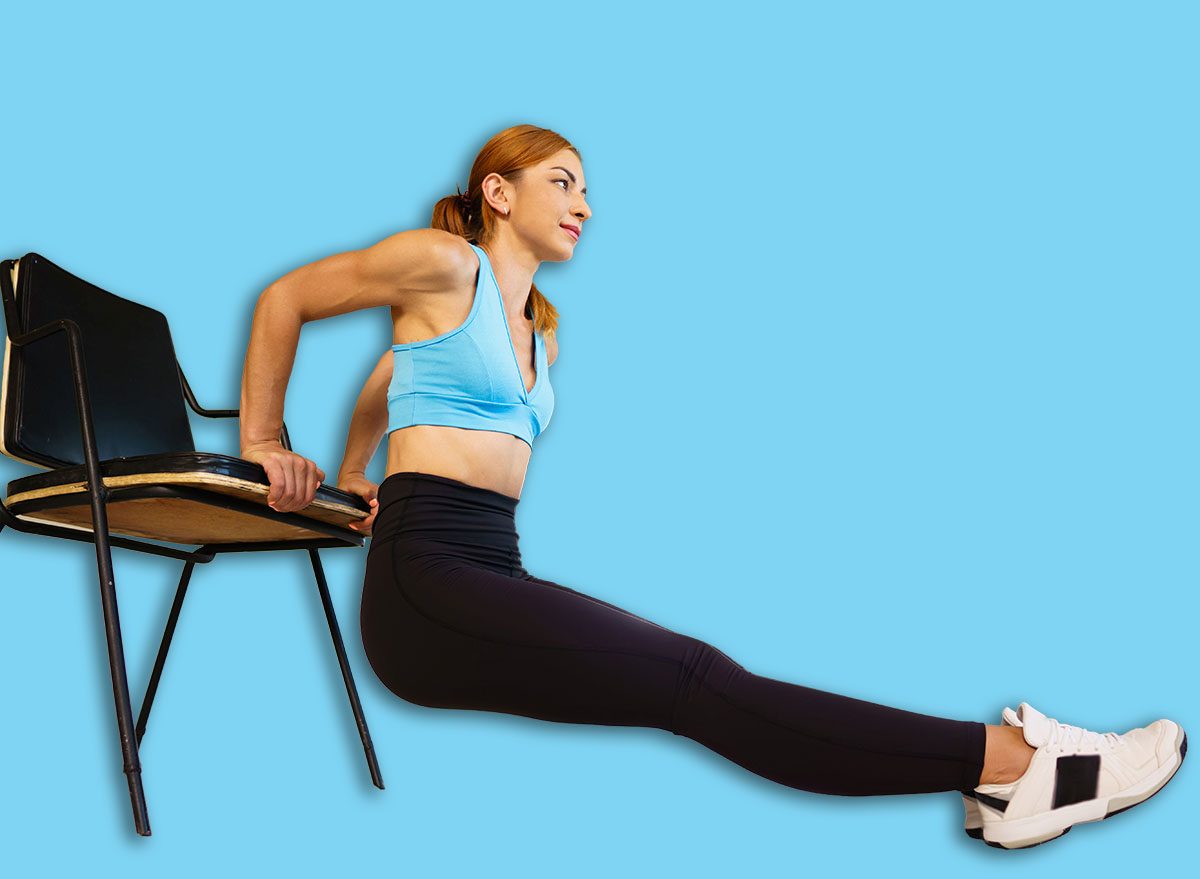
2. Chair Dips: The Tricep Powerhouse
The triceps make up two-thirds of your upper arm mass. Strengthening this area is the most effective way to address the underside "jiggle."
- Target: Triceps, anterior deltoids, and chest.
- Technique: Use a sturdy, non-slip chair. Place your hands on the edge, extend your legs, and lower your hips toward the floor by bending the elbows.
- Volume: 2–3 sets of 6–10 reps.
3. Incline Push-ups: Multi-Joint Efficiency
By performing push-ups against a kitchen counter or a sturdy table, you reduce the load on your shoulders while keeping the tension high on the triceps and chest.
- Target: Chest, shoulders, triceps, and core stability.
- Technique: Maintain a straight line from heels to head. Lower your chest to the surface and press back up with control.
- Volume: 2–3 sets of 8–12 reps.
4. Dumbbell Lateral Raise: Sculpting the Shoulders
Defined shoulders create a visual "frame" that makes the entire arm look more athletic and toned.
- Target: Lateral deltoids.
- Technique: Stand tall, holding light dumbbells. Lift the weights out to your sides until they reach shoulder height. Avoid swinging the weights; the movement should be slow and deliberate.
- Volume: 2–3 sets of 10–12 reps.
5. Single-Arm Dumbbell Row: Postural Support
You cannot have aesthetic arms if your posture is hunched. The row builds the upper back, pulling the shoulders back and enhancing your overall silhouette.
- Target: Latissimus dorsi, rhomboids, and biceps.
- Technique: Support yourself on a chair with one hand. Use the other hand to pull the dumbbell toward your hip, keeping the elbow tight to the body.
- Volume: 2–3 sets of 8–12 reps per side.
6. Standing Shoulder Press: The Finishing Touch
This compound movement ties the upper body together, ensuring the shoulders and triceps work in tandem.
- Target: Shoulders, triceps, and upper chest.
- Technique: Press the dumbbells from shoulder height to full extension overhead. Keep your core tight to protect the lower back.
- Volume: 2–3 sets of 8–10 reps.
Supporting Data and Nutritional Implications
Strength training is only one half of the equation. According to recent gerontology studies, protein intake is the most significant dietary factor for maintaining muscle mass in the aging population.
- Protein Synthesis: Aim for 1.2 to 1.5 grams of protein per kilogram of body weight. Incorporating lean sources like Greek yogurt, eggs, chicken, or plant-based proteins post-workout helps initiate the repair process.
- Hydration: Skin elasticity relies heavily on systemic hydration. Proper water intake ensures that connective tissues remain supple.
- Recovery: Overtraining leads to cortisol spikes, which can actually encourage fat storage in the midsection and arms. If you feel excessively sore, prioritize active recovery like walking or light stretching.
Expert Perspective: Why Form Matters
"The most common mistake I see in clients over 60 is sacrificing form for ego," says the CSCS expert. "When you lift with momentum—swinging the weights or bouncing during dips—you are training your tendons to do the work rather than your muscles. To change the shape of your arms, you must put the muscle under ‘time under tension.’ Move slowly. Focus on the squeeze at the top of the movement. Your arms will feel the difference by the end of the first week."
Implications for Long-Term Health
Beyond the aesthetic benefits, these exercises provide functional independence. Being able to push yourself out of a chair, carry groceries, or lift a suitcase is the definition of "active aging." By committing to this simple home routine, you are not just firming your arms; you are investing in your long-term mobility and structural integrity.
Remember, the goal is not to become a bodybuilder overnight. It is to build a body that feels capable, looks toned, and supports your lifestyle for decades to come. Start light, stay consistent, and let the science of progressive overload do the heavy lifting for you.
References
- National Center for Biotechnology Information (PMC4643425): The role of resistance training in muscle hypertrophy and maintenance in the elderly.
- Journal of Aging and Physical Activity (PMC6533109): Home-based interventions and their efficacy in improving functional outcomes for adults aged 60+.