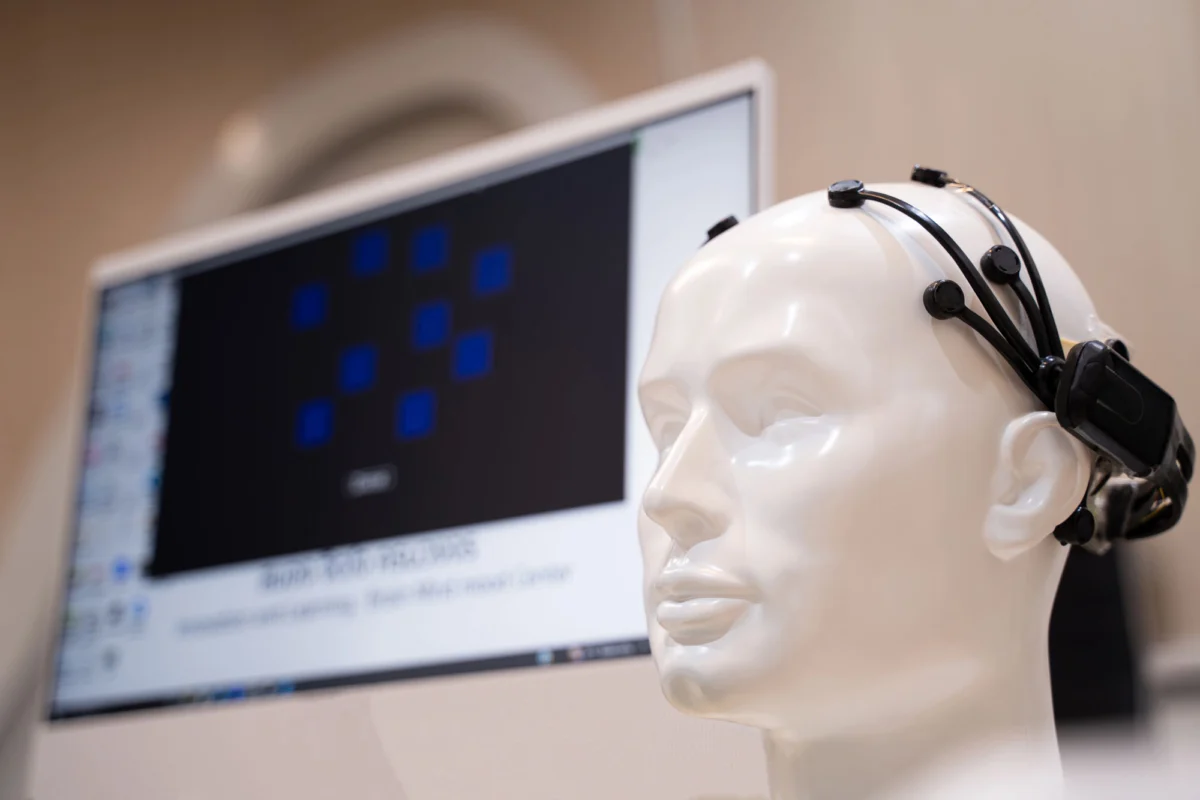
In a move that has sparked both hope for trauma survivors and alarm among medical transparency advocates, the U.S. Food and Drug Administration (FDA) recently granted marketing authorization for Modius Spero, a first-of-its-kind neuromodulation device designed to treat Post-Traumatic Stress Disorder (PTSD) in adults. Developed by the medical technology firm Neurovalens, the device represents a burgeoning frontier in "electroceuticals"—non-invasive hardware intended to alter neurological function.
However, beneath the celebratory headlines lies a significant evidentiary void. While the manufacturer claims the device is a breakthrough, neither the FDA nor Neurovalens has released the comprehensive clinical trial data necessary to verify these claims. As the device prepares to enter the market with a price tag exceeding $2,000, critics are questioning the rigor of the regulatory process and the media’s role in echoing corporate narratives without independent verification.
Main Facts: A "Breakthrough" Cloaked in Secrecy
The Modius Spero is a transcranial nerve stimulation (TNS) device. It is designed to be used at home for 30 minutes daily, delivering low-level electrical stimulation through the scalp to the brain. The goal is to modulate the neural circuits associated with the "fight or flight" response, which is often chronically overactive in individuals suffering from PTSD.
The central controversy revolves around the "marketing authorization" granted via the FDA’s de novo pathway. Unlike the rigorous "Premarket Approval" (PMA) required for high-risk (Class III) life-sustaining devices, the de novo pathway is used for novel devices of low-to-moderate risk (Class II) that do not have a "substantially equivalent" predecessor on the market.
While the FDA’s decision allows Neurovalens to sell the device, the public is currently forced to rely on a single, vague metric provided in a company press release: that "two-thirds of participants using Modius Spero reported a clinically meaningful improvement in PTSD symptoms." Crucially, the underlying data—specifically the performance of the "active" group compared to the "sham" (placebo) group—remains shielded from public and peer review.
Chronology: From Clinical Trial to Market Authorization
The journey of Modius Spero from a conceptual prototype to an authorized medical treatment followed a timeline that has left many researchers frustrated by a lack of transparency.
- Trial Commencement and Design: The clinical trial (identified as NCT05242367 on ClinicalTrials.gov) was designed as a randomized, double-blind, sham-controlled study. Its primary objective was to evaluate the reduction in PTSD symptoms using the Clinician-Administered PTSD Scale (CAPS-5), the gold standard for PTSD assessment.
- Study Completion (Early 2024): The study reportedly concluded in early 2024. Despite federal requirements and ethical standards encouraging the timely reporting of results, the "Results" tab on the ClinicalTrials.gov registry remains empty.
- FDA Submission and Authorization (Late 2024): Neurovalens submitted its data to the FDA under the de novo classification. In late 2024, the FDA granted marketing authorization, officially categorizing it as a "transcranial nerve stimulation device for the treatment of PTSD symptoms."
- Media Saturation: Following the FDA’s decision, major healthcare news outlets, including MedPage Today and Becker’s Hospital Review, published articles on the device. However, these reports largely mirrored the language of the Neurovalens press release, failing to note the absence of published peer-reviewed data.
- Commercial Rollout: Neurovalens has announced plans to market the device to the general public, with a specific focus on the veteran population. Distribution to veterans is projected to begin as early as July 2026, with the device priced as a premium medical intervention.
Supporting Data: The "Two-Thirds" Enigma
The figure of "two-thirds improvement" has become the primary marketing pillar for Modius Spero. In the world of clinical science, however, a percentage in isolation is statistically meaningless without a comparative baseline.
The Placebo Problem
In studies involving neuromodulation and mental health, the placebo effect (or "sham" effect) is notoriously high. Patients often report feeling better simply because they are using a high-tech device and receiving regular attention from clinicians. Without knowing the improvement rate of the group that wore a "sham" headset (one that looks identical but delivers no current), it is impossible to determine if Modius Spero has a biological effect or a purely psychological one. If 60% of the sham group improved, the "two-thirds" (66%) success rate of the active group would be statistically insignificant.
Unanswered Questions
The lack of a published study leaves several critical questions unanswered:
- The "Meaningful" Threshold: How did the researchers define "clinically meaningful improvement"? Was it a 10-point drop on the CAPS-5 scale, or a 20-point drop?
- Dropout Rates: How many participants found the daily 30-minute electrical stimulation intolerable and left the study? High attrition rates can skew results toward "success" by only counting those who stayed.
- The Blinding Factor: Was the "blind" successful? In electrical stimulation trials, participants can often feel a tingling sensation. If the sham group felt nothing, they would know they were in the control group, potentially neutralizing the placebo effect and biasing the results.
- Safety and Side Effects: Beyond efficacy, the public lacks data on adverse events. Did any participants experience increased anxiety, skin irritation, headaches, or—more critically—an exacerbation of suicidal ideation?
Official Responses and Regulatory Context
The FDA’s stance on medical devices is often misunderstood by the public. While the FDA "approves" drugs based on substantial evidence of both safety and efficacy, the "clearance" or "authorization" of Class II devices often hinges more heavily on safety.
The "Safe but Not Necessarily Effective" Doctrine
Experts like Dr. Katya Rubia, a lead investigator in neuromodulation studies, have noted that FDA regulatory authorization is not a guarantee of a device’s clinical utility. "The FDA attempts to approve devices based on safety, not efficacy," Rubia has stated regarding similar devices. "The main take-home message is that regulatory approval doesn’t mean a device works. It means it’s safe."
This sentiment is echoed by former FDA reviewer Erick Turner, who has pointed out that the agency has a history of allowing interventions with "questionable efficacy" into the market. Once a device is granted authorization, the threshold for rescinding that status is incredibly high, even if subsequent independent studies show no benefit over a placebo.
Corporate and Media Narrative
Neurovalens maintains that its technology is a "world-first" and a vital tool for a population that has often been underserved by traditional pharmacology. However, the company has not provided a timeline for when the full study will be published in a peer-reviewed journal.
Meanwhile, the media has faced criticism for a "journalistic failure." By repeating the "two-thirds" figure without questioning the lack of data, outlets like MedPage Today have been accused of acting as an extension of the company’s PR department. Some reports even erroneously used the term "FDA Approval," which carries a higher burden of proof than the "Marketing Authorization" actually granted.
Implications: Hope, Profit, and the Veteran Community
The implications of authorizing a $2,000 device without transparent data are profound, particularly regarding the ethics of marketing to vulnerable populations.
Targeting the Veteran Population
Veterans are the primary demographic for PTSD treatments. This group often suffers from treatment-resistant symptoms and may be desperate for any alternative to the side effects of psychiatric medications. By aiming for a 2026 rollout specifically for veterans, Neurovalens is positioning itself to tap into government-funded healthcare budgets (such as the VA). If the device is eventually found to be no more effective than a placebo, millions of taxpayer dollars could be spent on what amounts to an expensive "high-tech" sugar pill.
The Erosion of Informed Consent
Informed consent is the bedrock of modern medicine. For a doctor to recommend a treatment, they must be able to explain the risks and the likelihood of success. Without the trial data, doctors cannot fulfill this duty. They are being asked to trust the "word" of a corporation that has a vested financial interest in the device’s success.
The Precedent of the Monarch eTNS
This is not an isolated incident. The source text points to the Monarch eTNS device, authorized for ADHD in children. Despite receiving FDA clearance, subsequent independent research suggested the device was ineffective. The precedent suggests a "loophole" where devices can reach the market based on flimsy, private data and remain there indefinitely, regardless of their actual clinical performance.
Conclusion: A Call for Scientific Accountability
The authorization of Modius Spero highlights a systemic tension between the speed of innovation and the necessity of scientific transparency. While the potential for a non-drug treatment for PTSD is undeniably exciting, the refusal to release comparative data undermines the credibility of the neuromodulation field.
For the survivors of trauma, "hope" is a precious commodity. Selling that hope for $2,000 per unit without providing the evidence to back it up is a gamble that shifts all the risk onto the patient and all the reward to the manufacturer. Until the clinical trial results for NCT05242367 are published in full, including the outcomes of the sham-control group, the medical community and the public should approach the Modius Spero with a healthy dose of skepticism. Transparency is not just a bureaucratic requirement; in the treatment of mental health, it is a clinical necessity.