











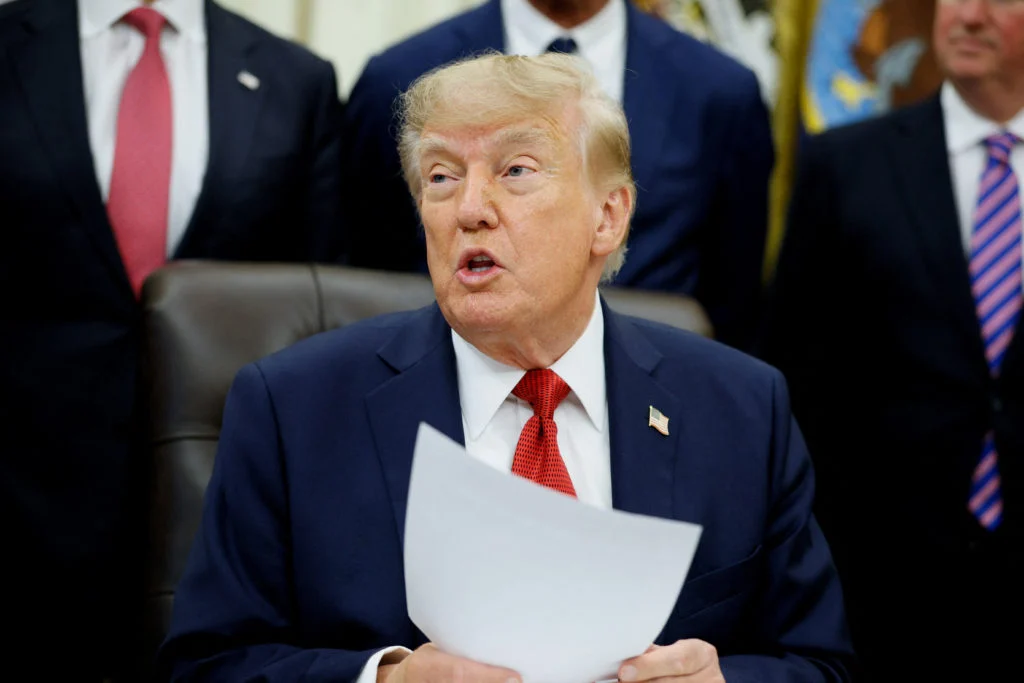
WASHINGTON — In a high-stakes move aimed at reshaping the landscape of American healthcare ahead of the upcoming midterm elections, President Donald Trump announced on Friday that all 50 states have agreed to participate in a new pharmaceutical pricing initiative. The program, officially titled the "GENEROUS" (Global Equity in Negotiation of Essential Relief and U.S. Savings) model, is designed to align Medicaid drug prices with the lower rates found in other developed nations, effectively adopting a "Most Favored Nation" (MFN) pricing structure.
Standing in the Oval Office, flanked by Health and Human Services (HHS) Secretary Robert F. Kennedy Jr. and Centers for Medicare & Medicaid Services (CMS) Administrator Dr. Mehmet Oz, President Trump framed the policy as a pivotal victory for American taxpayers. "This one thing alone should win us the midterms," the President declared, signaling that the administration intends to make prescription drug affordability the central pillar of its campaign platform this autumn.
However, as the administration touts projected savings of $529 billion over the next decade, the announcement has triggered a firestorm of skepticism. Independent policy analysts and congressional critics argue that the lack of public disclosure regarding the specific deals struck with pharmaceutical companies makes it impossible to verify these massive savings, leading to accusations that the policy may be more political theater than substantive reform.
The GENEROUS Model: How It Works
At its core, the GENEROUS model represents a radical shift in how the U.S. government procures medication for the Medicaid population. Under the existing system, pharmaceutical prices in the United States are often significantly higher than in Europe, Canada, or Japan, where government-run health systems exert more aggressive bargaining power.
The GENEROUS model mandates that the net price of selected high-cost drugs—those often accounting for the largest share of Medicaid expenditures—be indexed to the lowest price charged by the manufacturer in a peer group of affluent nations. By leveraging the combined purchasing power of all 50 states, the administration asserts it can force drug manufacturers to lower their prices to stay within the Medicaid market.
Proponents within the administration argue that this will not only provide a massive windfall for state budgets—which currently struggle under the weight of rising healthcare costs—but will also ensure that low-income Americans have more reliable access to life-saving treatments. "Every state will have the ability to use those extra billions of dollars to invest in other healthcare improvements or something else," Trump stated, emphasizing the potential for state-level reinvestment.
Chronology of the Policy Shift
The road to the GENEROUS model has been marked by a series of executive actions and intense negotiations:
- September 2025: President Trump signs an executive order establishing the framework for an MFN policy, declaring the U.S. would no longer tolerate paying more for medicine than other countries.
- January 2026: Following the expiration of key Affordable Care Act (ACA) subsidies—a move that saw insurance premiums rise—the administration faces mounting pressure to address the cost-of-living crisis.
- May 2026: The White House releases a preliminary report estimating that new pharmaceutical deals could save the government $529 billion over ten years.
- August 2026: HHS Secretary Robert F. Kennedy Jr. leads a final round of negotiations with major pharmaceutical executives to secure the participation of all 50 states in the rollout.
- September 18, 2026: Official announcement of the GENEROUS model in the Oval Office.
The Transparency Gap: Supporting Data and Skepticism
The administration’s claim of $529 billion in savings remains the most contentious aspect of the program. Because the terms of the private deals between the White House and pharmaceutical companies are shielded by "commercial sensitivity" clauses, independent auditors have been unable to conduct a cost-benefit analysis.
Kush Desai, a White House spokesman, defended the secrecy, noting that previous negotiations—such as those under the Inflation Reduction Act during the Biden administration—also utilized confidentiality to protect sensitive industry data. "Experts now poking holes at the Trump administration for also not wanting to disclose commercially sensitive information should be regarded as either an idiot or partisan hack," Desai stated.
However, policy experts like Kathy Hempstead, a senior adviser at the Robert Wood Johnson Foundation, warn that this lack of transparency poses a significant barrier to long-term legislative success. "He is saying Congress should codify all of his MFN arrangements," Hempstead noted. "But it’s kind of unreasonable because it’s not clear what Congress would actually do. No one knows what is in these deals."
Hempstead further pointed out the "durability problem." Because these price cuts are tied to executive-level deals rather than permanent legislation, there is no guarantee that the lower prices will persist once a new administration takes office, or even if the current administration loses its negotiating leverage with the pharmaceutical industry.
Official Responses and Political Fallout
The political reaction to the GENEROUS model has been largely polarized along partisan lines. Republican allies of the President have lauded the move as a bold "America First" intervention that directly addresses the pocketbook issues plaguing the average voter. Conversely, critics argue the timing is purely electoral, intended to distract from the expiration of ACA subsidies earlier this year, which caused a significant spike in the cost of private health insurance for millions of Americans.
There is also a growing chorus of advocates who argue that the policy, while welcome, is insufficient. JD Hayworth, a former congressman and current spokesperson for the Pharmaceutical Reform Alliance, acknowledged the progress but urged caution. "This represents meaningful progress, but that progress remains incomplete," Hayworth said. "We have millions of Americans who aren’t on Medicaid or Medicare who are still paying through the nose for their prescriptions. This doesn’t help them."
Economists point out that the U.S. pharmaceutical market is highly complex. Factors such as the competitive landscape of a specific treatment class, patent protections, and the opaque role of Pharmacy Benefit Managers (PBMs) all influence the final price at the pharmacy counter. By focusing solely on Medicaid, the GENEROUS model addresses only one segment of the healthcare ecosystem, leaving the private insurance market largely untouched.
Implications for the Future of Healthcare
The implementation of the GENEROUS model marks a potential turning point in the U.S. government’s relationship with the pharmaceutical industry. By explicitly adopting foreign pricing benchmarks, the administration has effectively signaled that the era of "unregulated" drug pricing in the U.S. may be coming to a close.
Long-term Economic Impacts
If the projected $529 billion in savings materializes, the impact on state budgets could be transformative. States that have historically struggled to maintain Medicaid coverage levels during economic downturns may find themselves with a new cushion of funding. However, there is a lingering fear that pharmaceutical companies might look to recoup lost revenue by raising prices in the private insurance market, a phenomenon known as "cost-shifting."
Legislative Obstacles
For the GENEROUS model to become a permanent fixture of U.S. law, the administration will need to secure support from a Congress that is currently deeply divided. With the midterms looming, the legislative outlook is uncertain. If the administration gains a stronger majority, it may push to codify these deals into federal law. If not, the program could remain in a state of administrative limbo, vulnerable to legal challenges from pharmaceutical companies or reversal by future executives.
The Patient Perspective
For the average patient, the immediate impact may be negligible. Medicaid recipients already benefit from nominal co-payments, meaning the primary beneficiary of the GENEROUS model is the government itself—state and federal—rather than the individual patient. However, if the savings are passed down through the healthcare system, it could lead to increased coverage for additional drugs that were previously deemed "too expensive" for inclusion on state formularies.
As the nation moves toward the November elections, the GENEROUS model will undoubtedly remain a focal point of debate. Whether it stands as a landmark achievement in lowering costs or as a case study in opaque, election-year politics remains to be seen. What is clear, however, is that the issue of drug pricing remains one of the most potent and volatile elements of the American political discourse.