






VATICAN CITY — In a development that has captured the attention of the global Catholic community, Pope Leo XIV is set to undergo surgery this week to remove a localized nodule in his lung. The procedure, marking the first major medical event of his 17-month papacy, has been described by Vatican officials as a precautionary measure, following the discovery of the mass at an “extremely early stage.”
The 71-year-old pontiff, who has maintained a reputation for physical fitness since his election, is scheduled to be admitted to Rome’s Agostino Gemelli Polyclinic on Tuesday. While the Vatican has remained tight-lipped regarding the specific day of the operation, it has projected a recovery timeline of approximately one week. As the world watches, the announcement has prompted a broader conversation about the health of the leader of the world’s 1.3 billion Catholics and the logistical realities of governing the Holy See from a hospital bed.
The Medical Context: Understanding Lung Nodules
A pulmonary nodule is defined as a small, abnormal growth, typically measuring less than three centimeters in diameter. While the term can incite immediate alarm, medical professionals emphasize that these findings are common and can range from benign scar tissue to malignant tumors.
“The key here is the early detection,” explains Dr. Stephen Liu, a leading lung cancer expert at Georgetown’s Lombardi Comprehensive Cancer Center. “If a nodule is identified at this stage, the prognosis is often excellent. In many cases, surgical intervention is the only treatment required, effectively curing the condition.”
The Vatican has stressed that the discovery was the result of a "routine" medical check-up rather than a reaction to any symptomatic illness. This detail is crucial; it suggests that the pontiff’s medical team is operating from a position of proactive management rather than crisis response. For a man of 71, Leo is widely considered to be in robust health, a factor that oncologists suggest will play a significant role in his anticipated swift recovery.
The Gemelli Legacy: "Vatican III"
Pope Leo XIV will be treated at the Gemelli hospital, a facility that has become inextricably linked with the history of the modern papacy. Formally known as the Agostino Gemelli Polyclinic, the institution is a nonprofit Catholic teaching hospital under the umbrella of the Catholic Sacred Heart University.
The hospital is so deeply integrated into the papal experience that St. John Paul II famously dubbed it “Vatican III,” treating the facility as a secondary home during his frequent bouts of ill health. The 10th floor of the hospital is famously reserved for the pontiff, housing a fully equipped medical suite, an administrative office, and a private chapel, ensuring that the spiritual and executive duties of the papacy can continue, albeit in a constrained environment.
For the public, the location serves as a stark reminder of recent history. Leo’s predecessor, Pope Francis, spent significant time at the Gemelli, including a period during his final illness in early 2025. The familiarity of the surroundings is expected to provide a measure of comfort to Leo and his staff as they navigate the upcoming week.
Chronology of Events and Upcoming Schedule
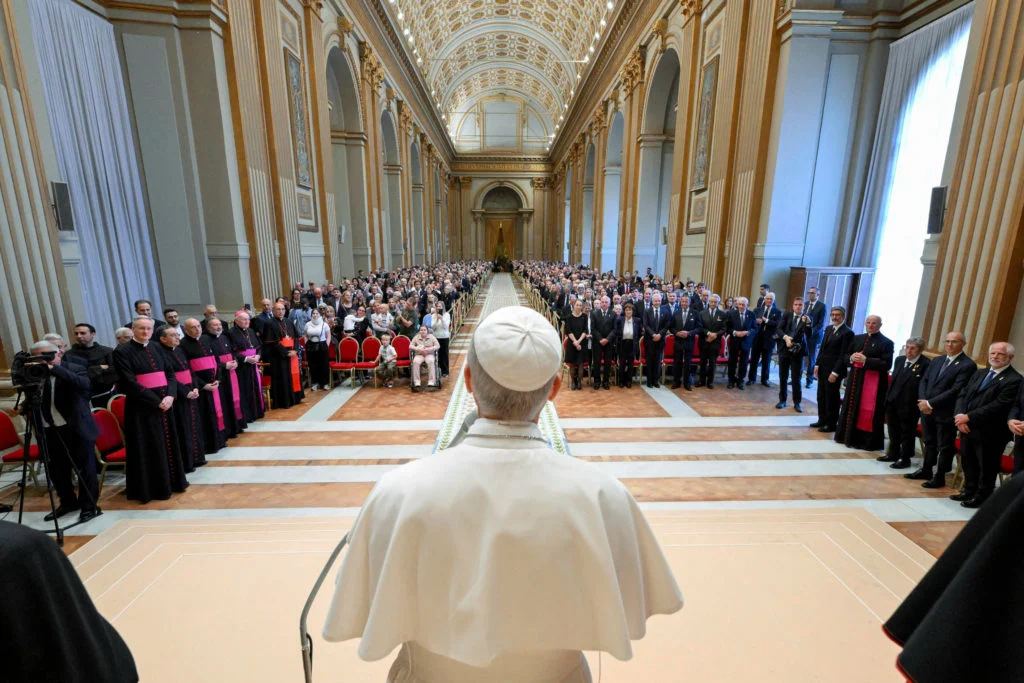
Despite the looming surgery, the Pope’s calendar remained remarkably full in the lead-up to his admission. On Monday, he held a series of high-level audiences and administrative meetings, projecting an image of business as usual.
The Immediate Week Ahead:
- Tuesday: Admission to the Gemelli Polyclinic in the late morning.
- Mid-week: Scheduled surgical removal of the lung nodule.
- Wednesday: A previously scheduled public Mass intended to conclude a weeklong conference on family ministry. As of Monday evening, the Vatican had not confirmed if the Pope would be physically present or if a delegate would be appointed to lead the service in his stead.
The November Itinerary:
Perhaps the most significant question lingering over the operation is the feasibility of the Pope’s upcoming apostolic journey. Leo is slated to travel to Uruguay, Argentina, and Peru from November 6–17. The trip is an ambitious undertaking, featuring a dozen flights, two helicopter transfers, and, in the case of Peru, significant altitude changes that could pose challenges for a patient recovering from thoracic surgery.
While the Pope expressed his firm intention to fulfill these travel commitments during his Sunday remarks, medical experts suggest that his post-operative progress will be the final arbiter. The Vatican’s silence on potential cancellations suggests they are waiting for the pathology results following the surgery before making a formal adjustment to his travel plans.
Governing from the Hospital: Legal and Practical Realities
A unique facet of the Roman Catholic Church is the absence of formal, codified rules regarding a temporary "transfer of power" during a Pope’s incapacitation. Unlike secular governments that utilize vice-presidents or acting heads of state, the Vatican maintains that the Pope retains full sovereign authority even if he is sedated or unconscious during a procedure.
Historically, this has functioned through the delegation of authority. A team of high-ranking Vatican officials, including the Secretary of State, continues to manage the day-to-day operations of the Holy See. During the lengthy hospitalizations of both John Paul II and Francis, the machinery of the Vatican did not grind to a halt; rather, laws were signed, appointments were confirmed, and diplomatic correspondence was handled via trusted aides who traveled between the hospital and the Vatican.
However, the modern era of longer papal lifespans and complex medical treatments has led to calls for a formalization of these procedures. Canon law experts have long argued that the Church needs a more transparent protocol for times when a pontiff is physically unable to communicate his will, though such reforms remain a distant possibility in the current administration.
Strengthening the Hierarchy: A Strategic Transition
In a move that may prove critical for the Church’s future, Leo XIV spent his final days before the operation finalizing key leadership changes. On Friday, he officially appointed Filipino Cardinal Luis Antonio Tagle as the new Dean of the College of Cardinals.
The role of the Dean is of immense symbolic and practical importance. As the presiding officer of the College of Cardinals, the Dean is responsible for leading the funeral rites of a deceased pope and overseeing the closed-door meetings that precede a conclave. By appointing Cardinal Tagle—a widely respected and relatively younger figure—to replace the 92-year-old Cardinal Giovanni Battista Re, Leo has ensured a degree of stability in the event of a future transition.
In a poignant letter released Sunday, Leo thanked Cardinal Re for his years of service, specifically noting his role during the transition following the death of Pope Francis. “I do not think I am mistaken in saying that you, Your Eminence, have been and remain one of the Holy See’s best-known and most esteemed servants,” Leo wrote.
This administrative housekeeping suggests a leader who, while facing his own health crisis, is focused on the long-term continuity of the institution.
Implications and Public Sentiment
The news of the surgery has triggered an outpouring of well-wishes from global leaders and the faithful alike. For a papacy that has focused on themes of transparency and service, the handling of this medical event is being viewed as a litmus test for Leo’s leadership style. By disclosing the surgery publicly and maintaining a high level of transparency, the Pope has sought to avoid the rumors and uncertainty that have characterized papal illnesses in past centuries.
As Tuesday approaches, the eyes of the world turn to the Gemelli hospital. The success of the surgery will not only determine the health of the 71-year-old leader but will also set the tone for the remainder of his term. Whether he returns to his desk in a few days or requires a longer convalescence, the Church is clearly operating under the assumption that the "American Pope"—as he is sometimes dubbed—remains fully at the helm.
For now, the Vatican insists that the focus remains on a successful procedure and a quiet recovery. In the words of one Vatican spokesperson, "The Pope is in good spirits, focused on his prayers and the work ahead." As the medical team prepares to remove the nodule, the global Catholic community remains in a state of prayerful anticipation, waiting for the first signs that the Holy Father is once again on the mend.