After a tumultuous period that saw the healthcare giant grapple with spiraling medical costs and significant leadership upheaval, CVS Health appears to have finally regained control of its insurance division, Aetna. According to CVS CEO David Joyner, the company has successfully navigated the turbulent landscape of medical spending, signaling a long-awaited period of stability for investors and policyholders alike.
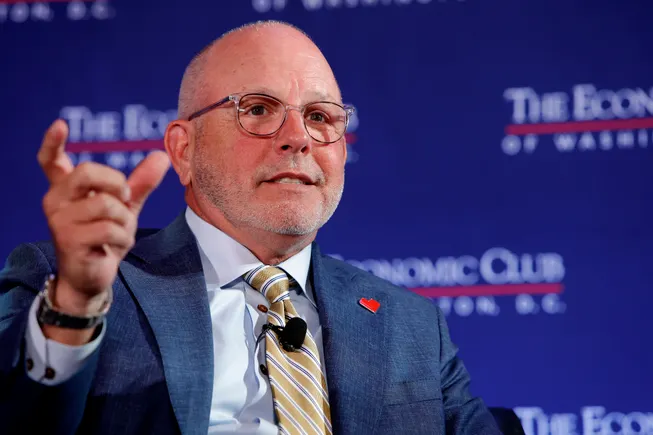
Speaking at an event hosted by the Economic Club in Washington, D.C., on Thursday, Joyner struck a tone of cautious optimism. "We’ve got, I think, our arms around how to project and predict where healthcare costs are going, and making sure we’re pricing our products accordingly," Joyner stated. His remarks, arriving just weeks before the company’s second-quarter earnings call, serve as a critical inflection point for a firm that has spent the last two years fighting to correct a mismanaged expansion strategy.
The Anatomy of a Crisis: Chronology of the Aetna Slump
The path to stability has been arduous. The challenges began in late 2023, as national insurers faced an unexpected surge in healthcare utilization—particularly among seniors enrolled in privatized Medicare Advantage (MA) plans.
2023–2024: The Medicare Advantage Gamble
In a bid to capture greater market share, CVS had aggressively expanded its Medicare Advantage benefits, hoping to attract a larger member base. However, this strategy proved to be a high-stakes gamble that failed to account for a sharp rise in post-pandemic medical consumption. As utilization rates climbed, the costs of covering these members ballooned, far outpacing the premiums the company had set.
The financial fallout was swift and severe. In 2024, Aetna reported a staggering $984 million operating loss, a stark contrast to the $3.9 billion in income the division generated the previous year. This performance drag was so significant that it effectively slashed CVS’s total net income in half, triggering a crisis of confidence among shareholders.
Late 2024: The Leadership Pivot
As the company’s financial performance flatlined, the CVS board made a decisive move to replace then-CEO Karen Lynch. David Joyner, a company veteran who had successfully led the pharmacy benefit manager (PBM) arm, Caremark, was tapped to take the helm. Joyner’s primary mandate was clear: stabilize the Aetna division and restore operational discipline to the company’s insurance arm.
2025: Strategic Retrenchment
Under Joyner’s leadership, 2025 marked the beginning of a deliberate, if painful, turnaround. The company launched an aggressive effort to "rejig" its MA business. This involved a twofold approach: slashing non-essential benefits and exiting unprofitable geographic markets. These structural changes allowed Aetna to return to profitability, reporting an operating income of $1.8 billion for the year. The company further signaled its commitment to cost-containment by exiting the Affordable Care Act (ACA) market entirely for 2026.
Supporting Data: From Deficit to Discipline
The financial data underscores a company that is moving from a defensive posture to one of measured growth. After a disastrous 2024, the operational performance of 2026 has provided the market with the evidence it craved.
- 2024 Performance: $984 million operating loss for Aetna; total net income for CVS cut by 50%.
- 2025 Recovery: A return to the black with $1.8 billion in operating income for the insurance division.
- 2026 Trajectory: Following a strong first-quarter report in May, CVS raised its 2026 revenue and earnings guidance. The company’s stock price has responded accordingly, currently trading at levels not seen since 2022.
The success of these measures relies on what executives describe as a "disciplined approach" to bid pricing. By accurately forecasting medical trends and ensuring that benefit structures are aligned with the realities of modern medical utilization, CVS has managed to mitigate the risks that caught them off-guard in the previous cycle.
Beyond the Balance Sheet: The Challenge of Policy Uncertainty
While internal operational efficiency has improved, Joyner admits that the horizon is not entirely clear. For the CEO, the most significant threat to CVS’s future is no longer just managing member medical costs—it is the unpredictable regulatory environment in Washington, D.C.
The Role of Advocacy and Education
Joyner has become a familiar face on Capitol Hill, having testified four times in his three years at the company. His role is dual: defending the company’s business model while attempting to educate lawmakers on the drivers of healthcare inflation. "I spend a lot of my time, both at the federal level and in the states, trying to help educate and also describe what are the real drivers of healthcare costs," Joyner noted.
The PBM Controversy
Central to this legislative friction is Caremark, the company’s pharmacy benefit manager. As the American public continues to clamor for lower prescription drug costs, CVS has faced intense scrutiny regarding the role of PBMs in the drug supply chain. Lawmakers have accused PBMs of inflating costs through complex rebate systems, leading to a series of high-stakes hearings.
The political pressure to reform the pharmaceutical industry is immense. Whether it is through antitrust investigations or new legislation aimed at transparency, CVS finds itself at the center of a national debate that could fundamentally alter its business model, regardless of how well it manages its medical loss ratios.
Implications for Investors and the Market
The turnaround at Aetna serves as a bellwether for the broader managed care industry. For investors, the takeaway is that the "COVID-era" forecasting errors that plagued the entire sector are beginning to normalize.
Restoring Credibility
The market is currently rewarding CVS for its transparency and its willingness to make difficult cuts. The fact that the stock is trading at a two-year high suggests that Wall Street has bought into the "Joyner doctrine" of operational rigor. However, the reliance on high-margin, stable-growth models in Medicare Advantage remains a double-edged sword. As the population ages, the demand for these services will grow, but so will the pressure on insurers to provide high-quality care at a price that the federal government—and their own balance sheets—can sustain.
The Road Ahead
As CVS approaches its August 5th earnings call, all eyes will be on the company’s projections for the remainder of 2026. If the company can maintain its current trajectory, it will serve as a template for other insurers looking to recalibrate after the market shocks of the early 2020s.
Yet, the "policy risk" Joyner identified remains the wild card. The intersection of corporate strategy and public policy is where the next chapter of the CVS story will be written. Whether it is through potential reforms to PBM operations or shifts in federal Medicare funding, the company must navigate a legislative landscape that is increasingly hostile to the traditional PBM-insurer conglomerate model.
Conclusion
CVS Health has successfully weathered the storm of its own making. By scaling back an overly ambitious expansion and refocusing on disciplined underwriting, the company has stabilized its insurance division and regained the trust of the investment community. However, the path forward requires more than just internal efficiency; it requires a masterful navigation of the political currents that seek to redefine the value of healthcare providers in the United States.
As David Joyner prepares for his next appearance before Congress and his upcoming quarterly earnings report, he does so with a firmer grip on the company’s internal levers—but with the full weight of the U.S. healthcare reform debate resting on his shoulders. The "turnaround" is in its early stages, and the coming months will reveal whether this stability is a durable foundation or merely a temporary respite in a rapidly changing industry.