In a groundbreaking discovery that bridges the gap between evolutionary biology and modern oncology, researchers at Nagoya University have identified a crucial mechanism that may determine the success or failure of cancer immunotherapy. The study, published in the journal Nature Communications, centers on complement C3—an ancient immune molecule that predates the emergence of blood circulation in complex organisms.
While C3 is primarily known for its systemic role in fighting infections, the Nagoya University team has revealed that its power lies in its geography. When produced locally within the tumor microenvironment, C3 acts as a biological gatekeeper, preventing immunosuppressive cells from infiltrating and sabotaging the body’s defenses. This finding challenges the traditional focus on systemic immunity and opens new doors for treating patients whose cancers have historically resisted immunotherapy.
The Evolutionary Origins of a Modern Cancer Fighter
To understand the magnitude of this discovery, one must look back hundreds of millions of years. Complement C3 is one of the most evolutionarily conserved proteins in the animal kingdom, appearing in primitive organisms such as jellyfish and sponges long before the development of specialized circulatory systems.
In modern humans, the vast majority of C3 is synthesized in the liver and secreted into the bloodstream. Once in circulation, it serves as a frontline sentinel of the innate immune system, tagging pathogens for destruction and orchestrating inflammation. Because of this well-documented systemic role, clinical researchers have long prioritized circulating levels of proteins when evaluating immune health.
However, the team at Nagoya University, led by Assistant Professor Yuki Miyai, suspected that the "oldest" parts of our immune system might be performing "new" tricks in the context of cancer. By investigating the specific role of C3 produced by cancer-associated fibroblasts—the structural cells that surround a tumor—the researchers shifted the focus from the bloodstream to the tumor site itself.
Chronology of the Discovery: From Mice to Clinical Reality
The path to this discovery was characterized by a meticulous series of experiments designed to isolate the source of C3.
The Mouse Model Phase
The research team first sought to distinguish between liver-derived (systemic) C3 and tumor-derived (local) C3. By utilizing sophisticated mouse models, the team was able to selectively deplete C3 sources.
When the researchers reduced liver-produced C3 by 90%, they observed that an immunotherapy drug—specifically an anti-PD-1 antibody—remained just as effective as it was in control mice. This confirmed that systemic C3 was not the primary driver of therapeutic efficacy.
The results shifted dramatically when the team inhibited the fibroblasts within the tumor from producing C3. Even though systemic levels remained high (with only a 9% decrease in total body C3), the immunotherapy lost its potency. The loss of local C3 production rendered the tumors resistant to the treatment, highlighting that the "neighborhood" of the tumor is more influential than the general circulation.
Validation in Human Lung Cancer
To ensure these findings were not merely a phenomenon of laboratory mice, the researchers analyzed clinical samples from human lung cancer patients. The correlation was striking. Patients who exhibited higher levels of C3 within the tissue surrounding their cancer cells demonstrated significantly better treatment outcomes and longer survival rates.
Crucially, the data showed that approximately 50% of patients with high local C3 levels responded positively to immunotherapy, whereas none of the patients with low local C3 levels saw a favorable response. Once again, C3 levels in the blood showed no meaningful correlation with clinical success, reinforcing the hypothesis that local synthesis is the critical variable.
The Mechanism: Blocking the Gatekeepers of Immunosuppression
The question remained: exactly how does local C3 tip the scales in favor of the immune system? The researchers discovered that the mechanism involves the breakdown of C3 into a fragment known as iC3b.
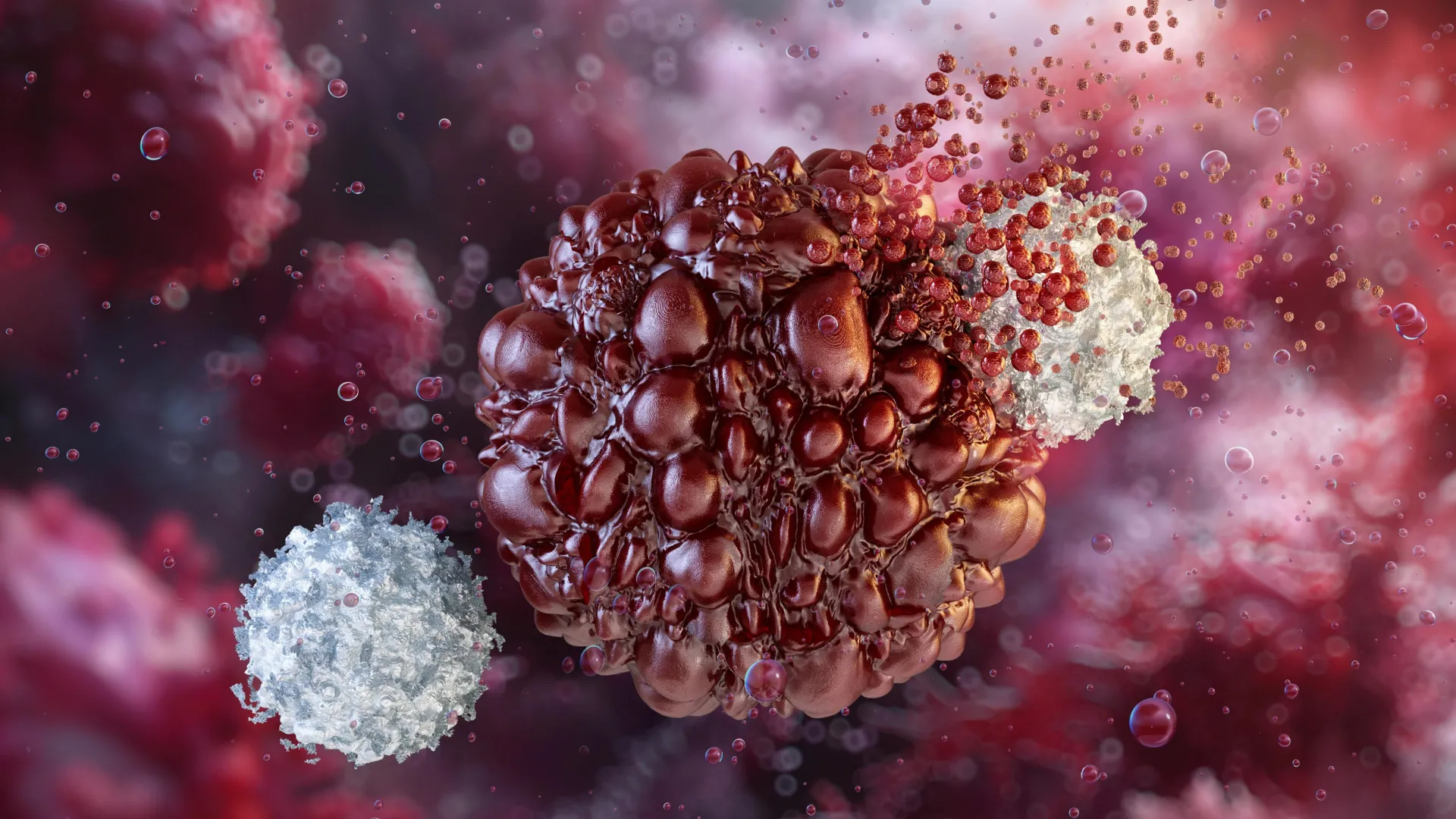
Within the tumor microenvironment, iC3b functions as a tactical barrier. Its presence prevents the infiltration of immunosuppressive myeloid cells. These myeloid cells are essentially "saboteurs" that the tumor recruits to dampen the immune response, effectively creating a shield that prevents T-cells—the body’s "hunter" cells—from identifying and attacking the malignancy.
By keeping these myeloid cells at bay, locally produced C3 ensures that the tumor microenvironment remains "visible" to the immune system. This allows immunotherapies, which are designed to unleash T-cells, to function as intended. Without this local C3, the myeloid cells congregate, the tumor becomes invisible, and the immunotherapy drug essentially has no target to work with.
Official Responses and Expert Perspective
The implications of this study are being discussed widely in the oncology community. In a statement regarding the findings, Yuki Miyai emphasized the paradigm shift this research represents: "What determined the efficacy of the immunotherapy treatment was not the C3 in the blood, but the local C3 produced at the tumor site. When this C3 breaks down, it forms a fragment called iC3b that stops harmful myeloid cells from entering the tumor. As a result, immunotherapy is more likely to work."
The scientific community has lauded the study for its granular approach to the tumor microenvironment. By moving beyond the "systemic" view of immunology, the researchers have identified a potential biomarker that could drastically improve patient stratification. If clinicians can measure C3 levels in biopsy samples, they may be able to predict which patients will respond to anti-PD-1 therapy and which will require supplemental strategies.
Implications for Future Cancer Therapy
The findings from Nagoya University do more than explain why some patients fail to respond to treatment; they provide a clear roadmap for intervention.
Overcoming Resistance
The team’s most promising experiment involved testing a drug designed to mimic the action of iC3b. By artificially blocking the entry of immunosuppressive myeloid cells, the researchers were able to restore the efficacy of immunotherapy in tumors that were previously resistant. This suggests that for patients who lack the ability to produce sufficient C3 locally, "synthetic" or pharmacological versions of this blockade could be the key to unlocking treatment.
Precision Medicine and Biomarkers
This research provides a powerful new tool for oncologists. Currently, identifying responders to immunotherapy is a complex and often imprecise process. Integrating the measurement of local C3 expression into diagnostic workflows could allow for a more personalized approach. Patients with low local C3 could be identified early and perhaps offered combination therapies that address the myeloid cell infiltration directly.
Expanding the Scope
Beyond cancer, the researchers are optimistic that their work on C3 will shed light on other biological processes. The regulation of inflammation and the complex mechanisms involved in wound healing are both heavily reliant on the complement system. Understanding how tissues independently modulate their own immune response could have profound implications for treating chronic inflammatory diseases and improving surgical recovery outcomes.
Looking Ahead: The Road to Clinical Trials
The next phase of the research, as outlined by the Nagoya team, will focus on two critical fronts: increasing C3 levels within tumor tissues and optimizing the timing of administration.
While the prospect of increasing C3 is enticing, researchers must balance this with the potential for systemic inflammatory side effects. Future studies will likely explore targeted delivery mechanisms, such as nanoparticles or modified cells, that can deliver C3 or its fragments specifically to the tumor site, sparing the rest of the body from unnecessary immune activation.
As this research progresses, it stands as a testament to the idea that the most effective cancer treatments may not be the newest inventions, but rather the harnessing of ancient, evolutionary mechanisms that have been quietly working within our cells for eons. By learning to "speak the language" of the tumor microenvironment, modern medicine may finally be able to dismantle the barriers that have long protected cancer from the body’s most effective weapon: its own immune system.