








Boulder, CO & Antwerp, Belgium – In a significant breakthrough that promises to redefine the landscape of stroke recovery, new collaborative research from the University of Colorado Boulder (CU Boulder) and the University of Antwerp has shed critical light on why a substantial number of stroke patients fail to regain full neurological function, even after the initial life-threatening clot has been successfully removed. The study, published in the esteemed journal PNAS, reveals a previously unappreciated mechanism: the insidious formation of persistent micro-clots, driven by the protein von Willebrand factor (vWF) and exacerbated by the body’s inflammatory response, which can continue to damage brain tissue long after primary intervention.
This groundbreaking discovery offers a compelling explanation for the long-standing medical enigma known as "no reflow" – a phenomenon where, despite clear major vessels, blood flow to the brain remains compromised, hindering recovery. More importantly, it points to novel therapeutic targets that could dramatically improve outcomes for millions of stroke survivors worldwide.
The Silent Sabotage: Micro-Clots After Major Intervention
Every day, approximately 21,000 individuals globally experience an ischemic stroke, a devastating event where a blood clot obstructs blood flow to the brain, starving neurons of vital oxygen and leading to rapid cell death. The past few decades have witnessed remarkable advancements in acute stroke care, primarily through clot-busting medications like tissue plasminogen activator (tPA) and sophisticated mechanical thrombectomy procedures that physically extract large clots. These interventions have revolutionized emergency treatment, significantly reducing mortality and disability for many.
Yet, despite these triumphs, a sobering reality persists: up to 50% of patients who undergo successful primary clot removal never achieve full neurological recovery. They often endure long-term disability, ranging from minor impairments to severe functional limitations, profoundly impacting their quality of life and imposing immense burdens on healthcare systems and caregivers. The question of why this happens has perplexed clinicians and researchers for decades, leaving a critical gap in our understanding of stroke pathophysiology.
"We now have a way to explain why so many of these patients are not seeing neurological improvements," stated Debanjan Mukherjee, an assistant professor of mechanical engineering at CU Boulder and a co-author of the study. "Our findings also point to a new potential target for therapeutics that could be extremely impactful for stroke patients."
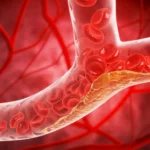
The research posits that the brain’s own intricate defense mechanisms, designed to protect against injury, can paradoxically backfire in the post-stroke environment. The study meticulously details how residual micro-clots form in the brain’s smaller vessels, essentially creating a secondary wave of damage that undermines the benefits of clearing the primary obstruction.
The Mystery Behind ‘No Reflow’ Unraveled
The clinical phenomenon of "no reflow" has been a source of immense frustration for neurologists and interventional radiologists. After a large clot is removed and the major artery is visibly patent, imaging often reveals areas of the brain that still lack adequate perfusion. The underlying causes of this persistent microvascular dysfunction have remained largely elusive, fueling a desperate search for answers.
To embark on this complex investigation, Dr. Mukherjee, whose expertise lies in the physics of blood flow, joined forces with Dr. Frederik Denorme, an assistant professor of biology at the University of Antwerp, whose research focuses on the intricate biological processes that unfold "life after the clot." This interdisciplinary collaboration proved crucial, merging insights from fluid dynamics with cellular and molecular biology.
"The dogma used to be that you just need to get rid of that blood clot and then all problems should be solved," explained Dr. Denorme. "We now know that is not the case." Indeed, the statistics paint a stark picture: only about 1 in 10 surviving stroke patients recover completely, while 25% experience minor impairments, and a staggering 50% grapple with moderate to severe disabilities. These figures underscore the urgent need for a deeper understanding of post-stroke complications.
A Glimpse Inside the Brain: Real-Time Observations
The research team initiated their inquiry by turning to sophisticated animal models, specifically mice, to observe the immediate aftermath of stroke and clot removal. Utilizing a cutting-edge technique called intravital microscopy, they gained unprecedented, real-time insights into blood flow dynamics and cellular behavior within the brain during the crucial hour following endovascular thrombectomy. This procedure, mirroring human clinical practice, involves threading a specialized tool through a blood vessel to physically extract an obstructive clot.
What they witnessed was nothing short of astonishing. While blood flow did indeed resume post-procedure, it did so in a chaotic, erratic manner. Instead of a smooth, steady stream, the researchers observed blood flowing haphazardly, in fits and starts, and even reversing course at certain points. "We saw it with our own eyes. Blood that was flowing left all of a sudden flowed right and vice versa," Dr. Denorme recounted, highlighting the remarkable and unexpected nature of these observations.
This erratic flow pattern was particularly prevalent in the brain’s smaller vessels, areas that are critical for delivering oxygen and nutrients to delicate neural tissue. A closer examination revealed that as the brain attempted to divert blood around the original obstruction, these tiny clots began to form precisely where these haphazard, redirected channels converged. This suggested that the abnormal hemodynamics themselves might be triggering a secondary thrombotic event.
Unmasking the ‘Jekyll and Hyde’ Protein: Von Willebrand Factor
To delve deeper into the mechanics of these secondary clots, Dr. Mukherjee’s FLOWLab at CU Boulder recreated these complex scenarios using advanced computer simulations. His lab, renowned for its work in simulating blood flow in 3D artificial brains, was able to isolate the physical forces at play. These computational models, coupled with subsequent in-vitro experiments, unequivocally pointed towards a prime suspect: von Willebrand factor (vWF).
Von Willebrand factor is a fascinating and multifaceted protein, primarily known for its essential role in hemostasis – the body’s natural process of stopping bleeding. In its normal, resting state, vWF exists as a tightly coiled ball of string within blood vessels. It remains dormant until it receives distress signals from the body, typically in response to vascular injury, prompting it to unfurl, stretch out, and initiate the formation of blood clots to seal wounds.
However, in the context of a brain experiencing an ischemic stroke, something entirely different triggers this unfolding. Dr. Mukherjee explained, "If there is some kind of fluid motion induced after the clot is removed, it can stretch out that ball into an extended thread that attracts platelets, forms new clots and blocks flow even after the original culprit clot is gone." This phenomenon, driven by the altered shear stress from the chaotic post-recanalization blood flow, transforms vWF from a protective agent into a detrimental one – a true "Jekyll and Hyde" protein. The intense shear forces generated by the turbulent and redirected blood flow literally pull the vWF molecules apart, exposing binding sites that rapidly recruit platelets, leading to the aggregation of new micro-clots within the compromised microvasculature.
The ‘Perfect Storm’: Inflammation’s Deadly Alliance
Compounding this mechanical activation of vWF, the study also revealed a crucial inflammatory component. The brain’s inherent inflammatory response to the stress and injury of a stroke interferes with the body’s natural safeguards that normally keep vWF’s clotting efforts in check. Specifically, the enzyme ADAMTS13 is responsible for cleaving (cutting) overly long vWF strands, preventing excessive clot formation. However, inflammation, particularly elevated levels of pro-inflammatory cytokines, can impair ADAMTS13 activity. This creates what the authors aptly describe as "a perfect storm" of collateral damage: mechanically activated vWF coupled with an impaired regulatory mechanism, resulting in unchecked micro-clot formation and persistent "no reflow."
Further bolstering their findings, the researchers analyzed blood samples from stroke patients at the University of Washington in St. Louis. These human samples provided crucial corroboration, suggesting that a similar phenomenon of vWF-driven micro-clotting and inflammatory exacerbation occurs in human stroke survivors. "We are the first to really show in this hyperacute phase of stroke what is happening with these cells inside blood vessels," Dr. Denorme emphasized, highlighting the unprecedented detail and clinical relevance of their observations.
The study also delved into why "no reflow" affects some stroke patients more severely than others. They discovered a significant correlation: stroke patients with higher blood levels of a pro-inflammatory compound called Interleukin 6 (IL-6) exhibited more overactive von Willebrand factor and, critically, experienced worse long-term neurological outcomes. This finding suggests that IL-6 could serve as a valuable biomarker for identifying patients at higher risk of developing post-recanalization micro-clots and subsequent poor recovery.
Implications: A New Era for Stroke Therapeutics
The implications of this research are profound and far-reaching, offering a beacon of hope for improving stroke patient outcomes. By identifying vWF and the inflammatory cascade, particularly IL-6, as key drivers of post-recanalization micro-clotting, the study opens entirely new avenues for therapeutic intervention.
The researchers envision a future where targeted therapies could be administered alongside existing clot-busting drugs and surgical procedures. These novel treatments would not replace current acute care but rather complement them, addressing the secondary damage that current interventions fail to mitigate.
Crucially, several drugs that modulate von Willebrand factor activity or target inflammatory pathways already exist and are approved for use in other disorders. For instance, drugs like caplacizumab, approved for acquired thrombotic thrombocytopenic purpura (TTP), specifically target vWF, inhibiting its interaction with platelets. Similarly, various anti-inflammatory agents could potentially be repurposed or further developed to dampen the detrimental inflammatory response in stroke patients.
This possibility of repurposing existing medications could significantly accelerate the translation of these research findings into clinical practice, bypassing some of the lengthy and costly stages of drug development. The potential for a "cocktail" approach – combining primary clot removal with agents that prevent secondary micro-clot formation and modulate inflammation – represents a paradigm shift in stroke management.
Moving Forward: From Bench to Bedside
While the findings are exceptionally promising, the researchers acknowledge that it is "early days." More research is necessary to fully understand the intricate interplay of factors that determine why "no reflow" occurs in some patients but not others. Further preclinical studies are required to test the efficacy and safety of vWF-targeting and anti-inflammatory drugs in stroke models, followed by rigorous clinical trials in human patients.
However, the foundation has been laid. This interdisciplinary research underscores the critical importance of understanding the entire pathophysiological cascade of stroke, extending beyond the initial occlusion to the complex events that unfold in its aftermath. By revealing the precise mechanisms behind "no reflow," this study offers a tangible pathway toward mitigating long-term disability, enhancing neurological recovery, and ultimately, improving the quality of life for countless stroke survivors.
"Now that we have a lead on what drives these micro-clots, we have a promising new avenue to explore for improving recovery," Dr. Denorme concluded, encapsulating the optimism and potential impact of this transformative research. The journey to a future where more stroke patients achieve a full and meaningful recovery has taken a monumental leap forward, guided by the insights gleaned from the hidden world of micro-clots and inflammation.
###