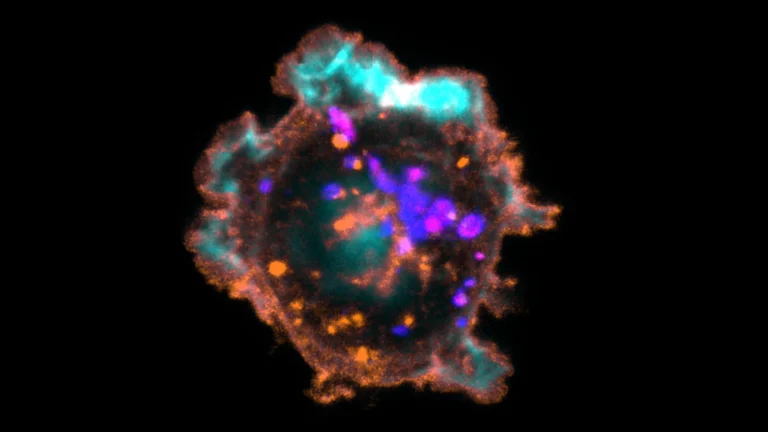










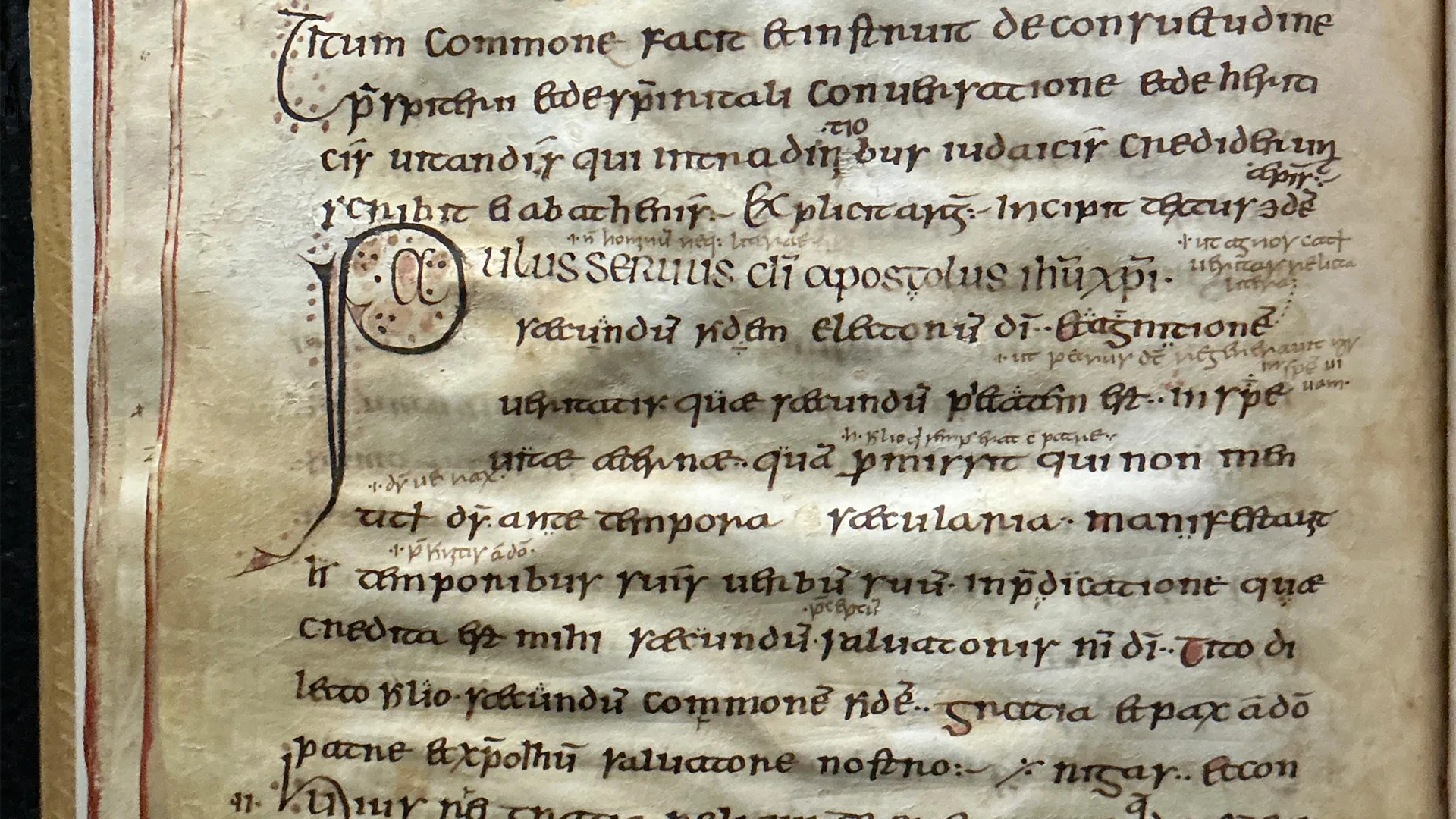
For centuries, the York Gospels have been revered as a masterpiece of Anglo-Saxon artistry—a silent, illuminated witness to the religious and cultural life of the Middle Ages. But beneath the gold leaf and the meticulously calligraphed prayers lies a far more visceral, microscopic history. A team of international scientists has unlocked an extraordinary "biological archive" hidden within the very parchment of this manuscript and others like it, discovering the ancient, preserved DNA of the sheeppox virus (SPPV).
This breakthrough, led by University College Dublin (UCD), does more than just offer a glimpse into medieval biology; it provides a comprehensive map of how a devastating pathogen has shadowed human agricultural development for over three and a half millennia. By marrying the humanities with advanced paleogenetics, researchers have turned the world’s libraries into unexpected laboratories for the study of infectious disease.
The Parchment Paradigm: Books as Biological Time Capsules
Before the democratization of paper, the written word was literally etched onto the skins of animals. Parchment—typically crafted from the hides of sheep, goats, and cattle—served as the primary medium for record-keeping, law, and theology. Because these materials were processed rather than tanned, they retained significant amounts of biological material.
"Parchment making has been considered a vanishing craft, but we are beginning to understand just how much of the past it has retained," explains Dr. Kevin G. Daly, Associate Professor at the UCD School of Agriculture and Food Science and the study’s senior author. "This project shows that parchments not only preserve our cultural history for hundreds of years, but also the landscape of disease in our livestock in the medieval period."
The research team, whose findings were published in the journal Science Advances, analyzed a selection of manuscripts, including the York Gospels and the Corpus Glossary—the latter being one of the earliest known English dictionaries, held at Corpus Christi College, Cambridge. What they found was staggering: the presence of viral DNA on multiple pages, confirming that the animals used to create these manuscripts were already infected with sheeppox at the time of their slaughter.
Chronology of a Contagion: From the Bronze Age to the Modern Era
The investigation was not confined to the medieval period. To understand the full scope of the virus’s history, the researchers expanded their scope to the Bronze Age, extracting ancient DNA from sheep teeth found in pastoralist settlements across the Eurasian steppe.
The 3,700-Year Timeline
- 11,500 – 3,700 Years Ago: Genomic modeling suggests this period marked the divergence of the capripoxvirus family. During this epoch, sheeppox, goatpox, and lumpy skin disease virus emerged as distinct lineages. This timeline correlates precisely with the rise of animal domestication and the large-scale migration of livestock herds from the Eurasian steppes into Europe—a movement that likely served as a vector for the virus’s expansion.
- The Bronze Age: The oldest genetic traces of SPPV were recovered from sheep teeth. These specimens serve as the earliest biological markers of the disease, proving that human pastoralist societies have been contending with sheeppox since the dawn of organized agriculture.
- The Medieval Era: The manuscripts provide a clear snapshot of the disease’s prevalence in Europe during the Middle Ages. The DNA recovered from parchment indicates that the virus was circulating widely through European flocks, potentially devastating the agrarian economies that supported medieval society.
- The Modern Day: Despite thousands of years of evolution, the virus remains a potent threat. Recent outbreaks, such as those reported in Greece, underscore the economic and humanitarian toll of the disease, which causes high mortality rates in lambs and systemic losses in wool, meat, and milk production.
Unraveling the Genetic Mystery
One of the most profound revelations of the study is the surprising stability of the sheeppox virus genome. While many viruses, such as influenza, mutate rapidly to evade host immunity, the sheeppox virus has shown a remarkable lack of genetic drift over the last few millennia.
"We find that, unlike the smallpox virus, the sheeppox virus genome was very stable over the last few millennia," explains Louis L’Hôte, a PhD candidate at UCD and lead author of the study. This stability suggests that the virus reached a highly efficient state of infection very early in its history. Understanding this evolutionary stasis is a critical piece of the puzzle for virologists; if the virus hasn’t changed its genetic architecture significantly in 3,000 years, scientists can better identify the specific traits that allow it to successfully infect sheep. This, in turn, provides a more stable target for vaccine development and containment strategies.
Furthermore, the discovery of viral DNA on parchment made from calfskin and goatskin presented a unique riddle. Because sheeppox is highly host-specific to sheep, the presence of the virus on other animal hides suggests either an infrequent "spillover" event into other species or, more likely, cross-contamination within the parchment production workshops.
Collaborative Science: A Multidisciplinary Effort
The success of this study was rooted in an unprecedented level of interdisciplinary cooperation. The project involved over 30 institutions, including Trinity College Dublin, the Helmholtz Institute for One Health, the University of Cambridge, and the University of Copenhagen.
By combining the expertise of geneticists, virologists, historians, and protein chemists, the team was able to treat a 1,000-year-old manuscript with the same analytical rigor as a modern biological sample. This collaborative approach highlights the "generosity and trust" that Dr. Daly emphasizes is essential for modern science. It also underscores a new mandate for archivists and conservators: libraries are no longer just repositories for text; they are vast, unmined, and potentially dangerous, repositories of ancient biological data.
Implications for Global Health and Historical Understanding
The implications of this research extend far beyond the history of sheep. The methodology established by the UCD team could be applied to thousands of other documents held in global archives.
1. Reconstructing Epidemic Landscapes
If sheeppox DNA is embedded in medieval parchment, what other pathogens might be lurking in our libraries? The study suggests that other diseases, perhaps even those affecting human populations, could be identified by analyzing the biological traces left on historical objects. This provides a "living" history of disease outbreaks that were never captured in contemporary chronicles.
2. Informing Future Disease Mitigation
The ongoing outbreaks of sheeppox in Europe demonstrate that this is not merely a historical curiosity, but a current crisis. By understanding the evolutionary history of the pathogen, scientists are better equipped to model how the virus might behave in the future. As L’Hôte notes, understanding the genetic changes that occurred before the last few millennia might hold the key to developing long-term solutions for current livestock farming challenges.
3. A New Lens on Human Migration
The spread of the sheeppox virus is inextricably linked to the movement of humans and their livestock. By tracing the virus, researchers are effectively tracing the movement of ancient populations across the Eurasian continent. This offers a new tool for archaeologists and anthropologists to verify migration patterns and trade routes that defined the Bronze and Iron Ages.
Conclusion: The Living Archive
As we look at the weathered pages of the York Gospels, we are no longer just looking at a testament to religious devotion. We are looking at a record of a biological struggle that has lasted for nearly 4,000 years. The work of Louis L’Hôte, Dr. Kevin G. Daly, and their colleagues has fundamentally shifted the baseline for historical research, demonstrating that the past is not static—it is preserved in the very materials we have saved, waiting to be read.
By unlocking the secrets of the sheeppox virus, this research provides a vital bridge between the ancient world and the challenges of the modern era. It reminds us that our history—and our future—is written not just in ink, but in the enduring traces of the natural world. As the scientific community continues to digitize and preserve our cultural heritage, perhaps the most important discovery is that these ancient books contain the biological blueprint of the very world we inhabit today.