







In an era where pharmaceutical breakthroughs are rapidly altering the landscape of weight management, a significant disconnect has emerged between medical intervention and lifestyle support. As millions of individuals turn to GLP-1 receptor agonists—the class of medications including semaglutide and tirzepatide—to manage their health, health and fitness professionals are finding themselves in uncharted territory. To address this, the GLP Coaching Institute, in collaboration with industry leader Precision Nutrition and Dr. John Berardi, has announced the launch of the GLP Coaching Institute Certification, a comprehensive program designed to standardize the way fitness, nutrition, and medical professionals support this burgeoning client population.
The New Frontier: Why Specialized Coaching is Essential
The rise of GLP-1 medications has been nothing short of transformative for the medical community, yet for the average personal trainer, nutritionist, or health coach, these drugs have introduced complex new variables. Unlike traditional weight-loss clients, those on GLP-1s face unique physiological shifts: suppressed appetites that can lead to unintended muscle mass loss, profound changes in energy availability, and altered recovery capacities.
For many professionals, existing training programs offer little guidance on how to adjust macronutrient intake for a client whose satiety signals have been chemically altered, or how to program strength training when a client’s recovery threshold has plummeted. The GLP Coaching Institute Certification aims to bridge this gap, moving beyond basic medical knowledge to provide a systematic, evidence-based framework for daily coaching.
A Chronology of the Shift in Professional Standards
The path to this certification began with the observation of a growing, unmet need in the field of health coaching. Over the past several years, the surge in GLP-1 popularity prompted a shift in the client demographic.
- 2024: Industry surveys began highlighting that nearly half of all health and fitness professionals were already working with clients who were utilizing GLP-1 medications, yet most reported feeling unprepared to answer specific, nuanced questions regarding side effects and long-term maintenance.
- 2025: Dr. John Berardi, co-founder of Precision Nutrition, initiated a deep-dive research phase to synthesize the latest pharmacological data with established behavior-change methodologies. The objective was to create a curriculum that didn’t just explain the science but translated it into actionable, daily coaching tactics.
- 2026: Quantitative data confirmed the trend: a survey of 2,490 professionals revealed that 65.1% were actively coaching GLP-1 users. The necessity for a standardized, high-level credential became undeniable.
- January 2027: The GLP Coaching Institute Certification is slated for its official public launch, marking the first formal credentialing process specifically focused on the intersection of GLP-1 pharmacotherapy and lifestyle coaching.
Supporting Data: The Reality of Modern Practice
The demand for this certification is underscored by the shifting nature of the client-coach relationship. Professionals today are not merely "fitness guides"; they are part of a multidisciplinary care team. The data indicates that the "one-size-fits-all" approach to caloric deficit is becoming obsolete for this population.
According to the most recent industry metrics, the primary challenges reported by coaches include:
- Nutrient Density: Managing severe appetite reduction to ensure the intake of essential amino acids and micronutrients.
- Muscle Preservation: Counteracting the rapid weight loss that often includes significant lean tissue degradation.
- Metabolic Adaptation: Navigating the plateaus that occur when the body’s metabolic rate shifts in response to medication-induced intake changes.
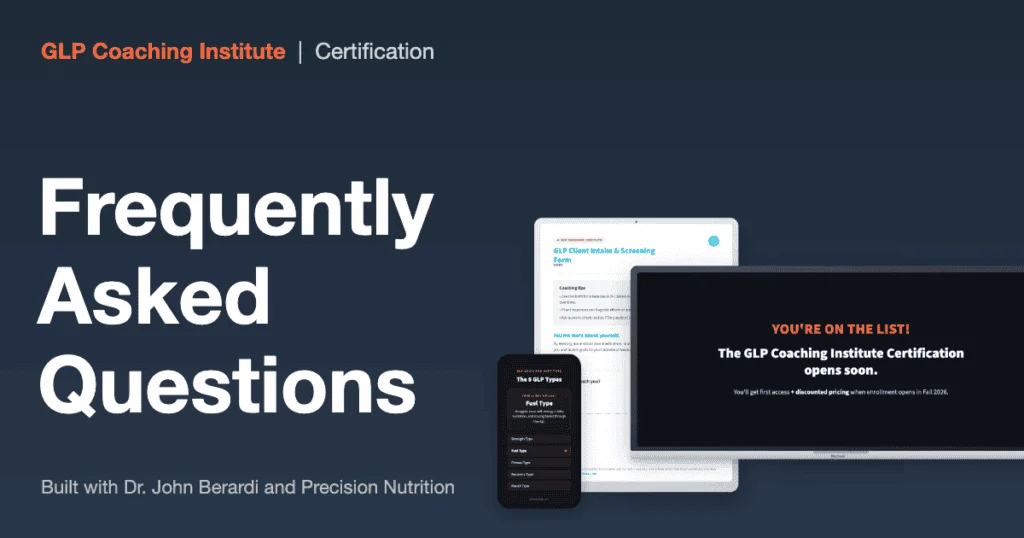
The certification curriculum addresses these via the "Five GLP Types"—a framework developed by Dr. Berardi to help coaches categorize clients based on their specific vulnerabilities: Strength, Fuel, Fitness, Recovery, and Results.
Official Perspectives: The Science of Application
Dr. John Berardi, a figurehead in the evolution of nutritional biochemistry and coaching education, emphasizes that this program is not about overstepping one’s professional scope.
"The goal is not to turn fitness professionals into doctors," Dr. Berardi stated during the program’s developmental review. "It is to provide them with the professional judgment to act as the essential bridge between the physician’s office and the client’s daily life. We are teaching them how to interpret the physiological changes their clients are experiencing and how to adjust their programming so that the medical treatment can be most effective."

The program is built on the foundation of Precision Nutrition’s established methodology—a system that has supported over 350,000 clients globally. By integrating this proven behavior-change model with the nuances of GLP-1 pharmacology, the Institute is setting a new benchmark for excellence. The certification specifically teaches practitioners when a symptom is within the realm of coaching (e.g., managing fatigue through hydration and sleep hygiene) versus when it requires a referral to the prescribing physician.
Implications for the Future of Health Coaching
The launch of the Certified GLP Coaching Specialist (CGCS) credential has profound implications for the industry.
Standardizing Professional Practice
Currently, the advice given to GLP-1 patients is often anecdotal, found in online forums, or based on outdated weight-loss methodologies. By professionalizing the coaching process, the industry moves closer to a regulated standard where clients can expect high-quality, safe, and effective guidance regardless of which coach they hire.
Enhancing Interdisciplinary Collaboration
One of the most significant pillars of the curriculum is the emphasis on communication with the client’s medical team. As coaches learn to speak the language of pharmacology and identify specific markers of success or distress, they become more valuable partners to physicians, who are often too time-constrained to provide the high-touch, daily lifestyle support that these medications require for optimal long-term outcomes.
Long-term Maintenance and Sustainability
Perhaps the most critical implication is the focus on long-term maintenance. As the industry moves past the "honeymoon phase" of GLP-1 adoption, the focus is shifting toward how patients transition off medications or maintain their results indefinitely. The CGCS certification equips coaches with the strategies needed to support this long-term behavioral shift, moving the conversation from "weight loss" to "metabolic health and sustainability."
Curriculum Overview: What Professionals Will Master
The program consists of 80 learning hours spread across four units and 30 chapters, delivered entirely online. The curriculum is designed for accessibility, allowing professionals to integrate the learning into their existing practice without the need for a clinical background.
- Unit 1: The Physiology of GLP-1. Understanding how the drugs work, the different types of medications, and the impact on hunger, satiety, and metabolic markers.
- Unit 2: The Five GLP Types. A masterclass in assessment. Coaches learn to evaluate the specific needs of their clients—whether they are struggling to maintain muscle mass (Strength Type) or failing to hit protein targets (Fuel Type).
- Unit 3: Applied Coaching Strategy. Designing custom nutrition and exercise protocols that account for the unique metabolic state of the GLP-1 user.
- Unit 4: Professional Practice. Establishing a business that integrates seamlessly with healthcare providers, effectively managing client expectations, and staying within the legal boundaries of a coach’s scope of practice.
Looking Ahead: Enrollment and Accessibility
With enrollment opening in January 2027, the industry is bracing for a significant influx of newly certified specialists. The inclusion of a 45-day money-back guarantee signals the Institute’s confidence in the program’s quality and its immediate relevance to the market.
For the modern health professional, this certification represents more than just another line on a resume; it is a vital tool for staying relevant in an industry being reshaped by science. As GLP-1 medications continue to become a staple of modern healthcare, the coaches who understand how to pair these pharmaceutical tools with rigorous, empathetic, and science-backed lifestyle support will define the next generation of wellness.
By focusing on the individual behind the medication, the GLP Coaching Institute is ensuring that as the world changes, the standard of care changes with it. Those interested in leading this shift are encouraged to join the waitlist, securing their place at the forefront of what promises to be the most critical professional development evolution of the decade.