









Published: November 18, 2026
For many practitioners, the hallmark of a "strong" yoga practice is defined by the intensity of the push. We flow through endless Vinyasas, holding Planks, transitioning through Chaturanga, and pressing into Downward-Facing Dog. While these movements undeniably sculpt the chest, anterior deltoids, and triceps, they leave a significant gap in our physical development. As we exit the studio with shaky, tired "noodle arms," we are often failing to realize that we have almost exclusively trained the "pushing" muscles, while entirely neglecting the "pulling" chain.
Amber Burke, a veteran yoga instructor and former lead of the teacher training program at the University of New Mexico-Taos, suggests that this imbalance is one of the most common pitfalls in modern yoga. By prioritizing pushing movements, practitioners frequently overlook the upper back, rear deltoids, biceps, and forearms—the very muscles required for postural integrity and functional balance.
The Anatomy of an Imbalance
The human body thrives on symmetry, yet the standard Vinyasa sequence is inherently biased toward anterior muscle engagement. In kinesiology, the "pushing" chain consists of muscles that move objects away from the body, whereas the "pulling" chain—which includes the latissimus dorsi, rhomboids, trapezius, and biceps—is responsible for stabilizing the shoulder girdle and retracting the scapula.
When the pushing muscles are over-developed at the expense of the pulling muscles, the shoulders often roll forward, leading to a hunched posture and an increased risk of impingement. Burke emphasizes that yoga does not need to be a "push-only" discipline. Through strategic adaptation and the application of isometric resistance, practitioners can transform traditional poses into potent tools for strengthening the underutilized posterior chain.
Strategic Resistance: A New Methodology
The key to unlocking "pulling" strength in a weightless environment is the concept of isometric opposition. By creating resistance between the limbs and the torso—often using props like yoga straps or the body’s own leverage—we can force the muscles to work in a way that mimics a pull-up or a row.
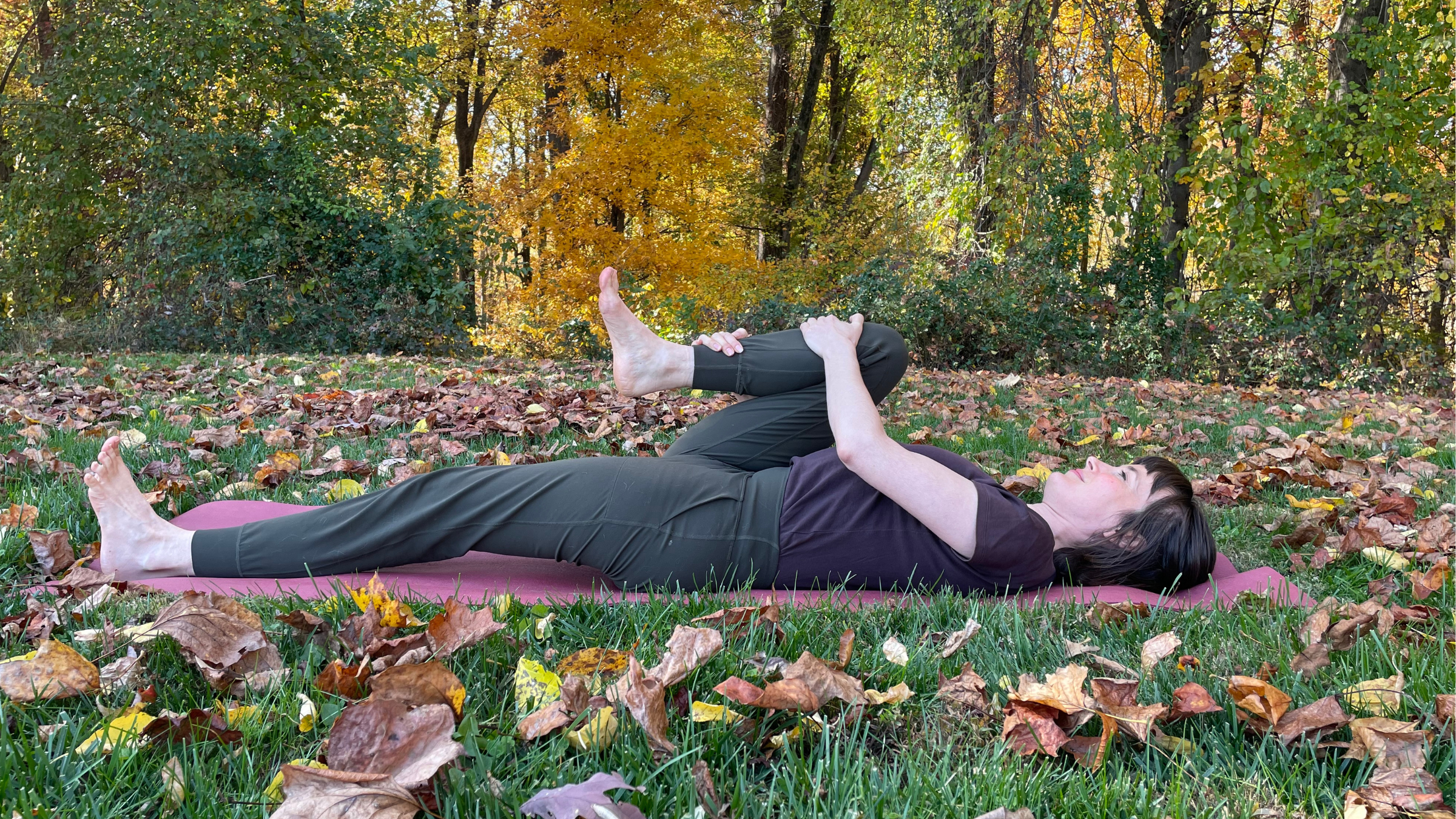
This approach requires a shift in mindset. Instead of passively holding a pose, the practitioner must actively engage in a "push-pull" dynamic, where the extremities press into the resistance while the torso exerts an equal and opposite force. This not only builds muscular endurance but also improves proprioception and stability.
10 Essential "Pull" Poses to Strengthen Your Arms
To integrate these concepts, Burke outlines ten poses that can be modified to target the pulling muscles effectively. These exercises require no external weights—only a strap, a block, and a commitment to mindful engagement.
1. Half Knees-to-Chest (Ardha Apanasana)
While usually considered a restorative pose, this can become a deep upper-back strengthener. By holding your shin with a strap and pulling against it while simultaneously pressing your leg away, you engage the biceps and the muscles between your shoulder blades. Draw the shoulder blades together with intention, treating the movement as if you were performing a seated row.
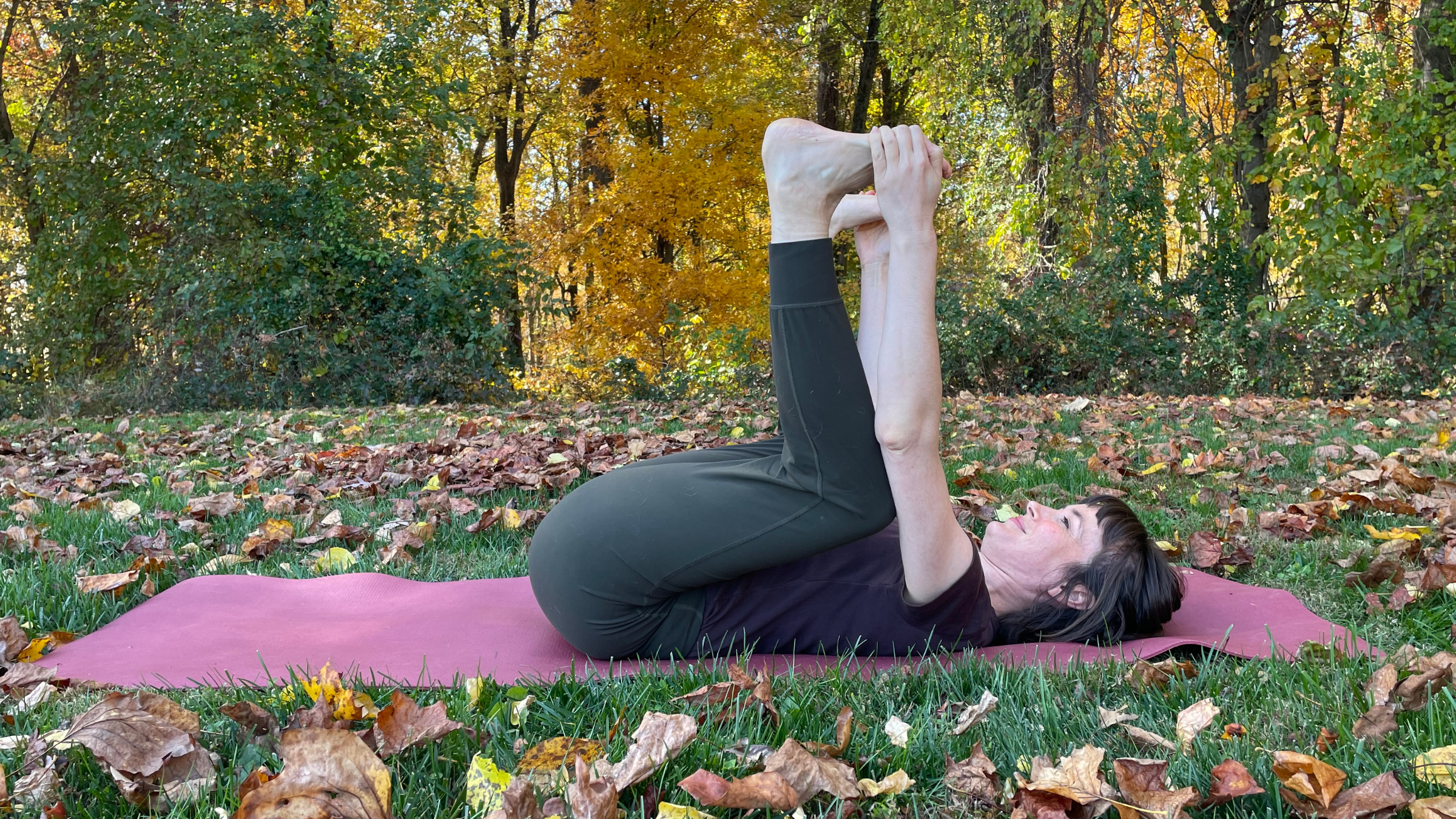
2. Happy Baby (Ananda Balasana)
Happy Baby is an excellent opportunity to activate the lats and biceps. By pulling down on the feet or thighs while the legs push upward, you create a closed-loop system of resistance. Focus on keeping the hips grounded; the struggle against your own limbs is exactly what builds the pulling strength often missing in floor work.
3. Archer Pose Variation (Akarna Dhanurasana)
This pose mimics the mechanics of drawing a bowstring. By leaning back and pulling the foot toward the shoulder, you force the biceps and the posterior deltoids to fire. The key is to keep the chest lifted and the back straight, ensuring the tension is held in the arms and upper back rather than the lower back.
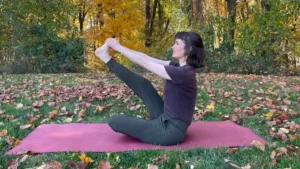
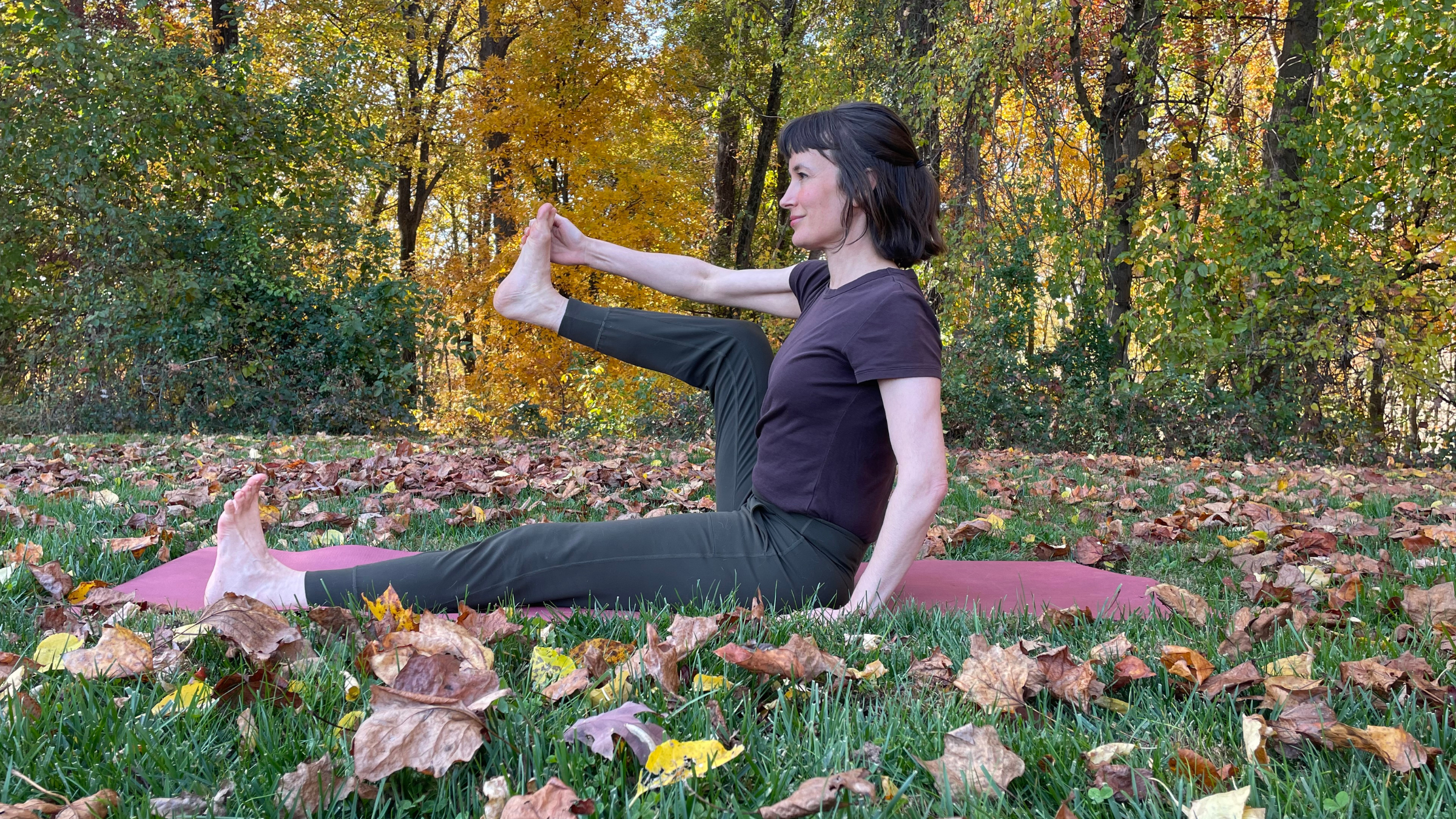
4. Heron Pose Variation (Krounchasana)
Heron Pose demands significant core and arm strength. As you lift the leg, the arms act as the primary stabilizers. By pulling the foot toward you while the leg extends, you engage the forearms and the entire upper back. This is an exercise in tension management: the more you pull, the more the upper body must compensate, leading to greater muscle recruitment.
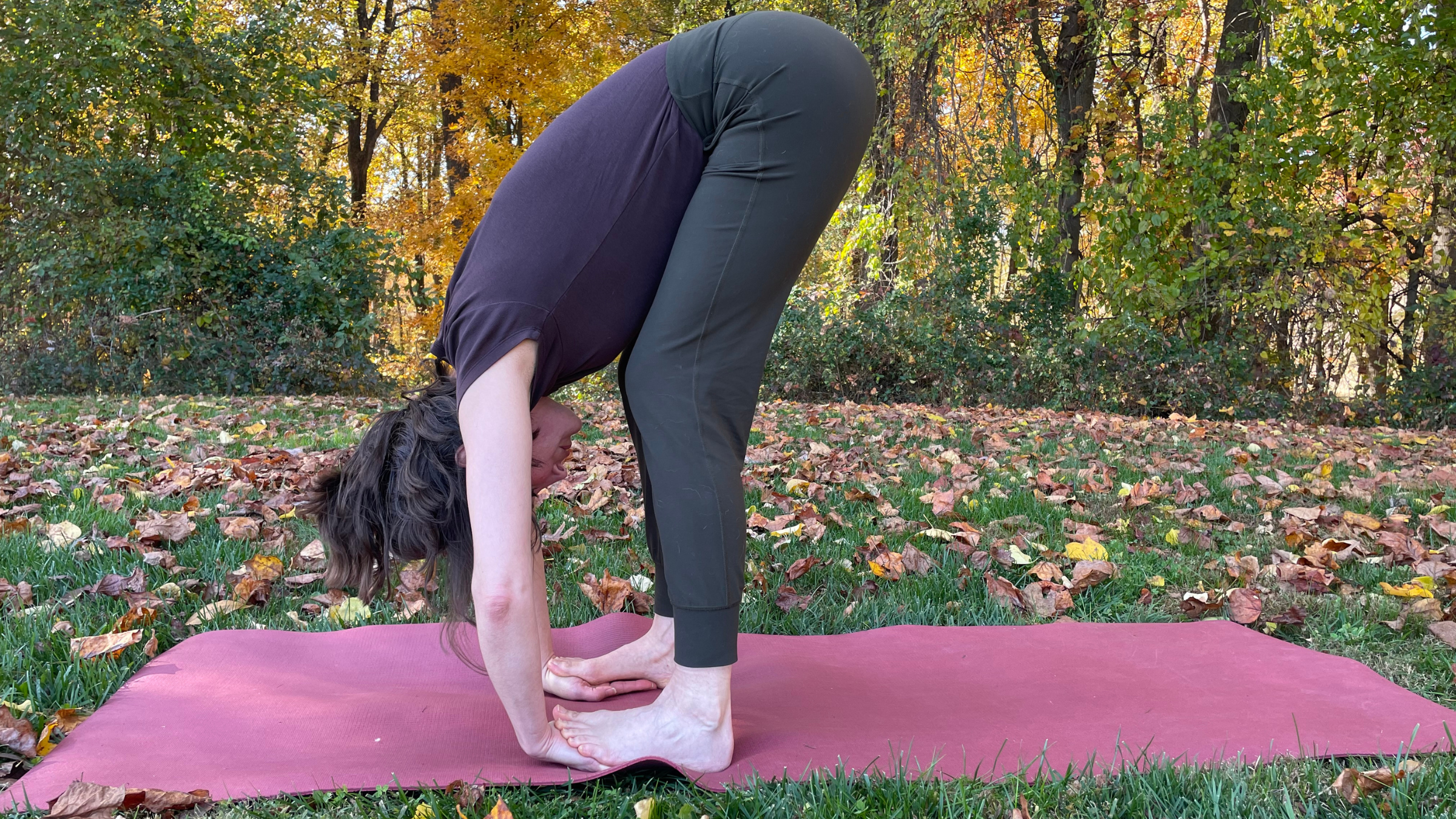
5. Hand to Foot Pose (Pada Hastasana)
In this forward fold, the arms provide the resistance for the legs. By sliding your hands under your feet and pressing upward with your palms while your feet press downward, you create a static "tug-of-war." This targets the forearms and deep back muscles, effectively counteracting the hunching that occurs during prolonged computer work.
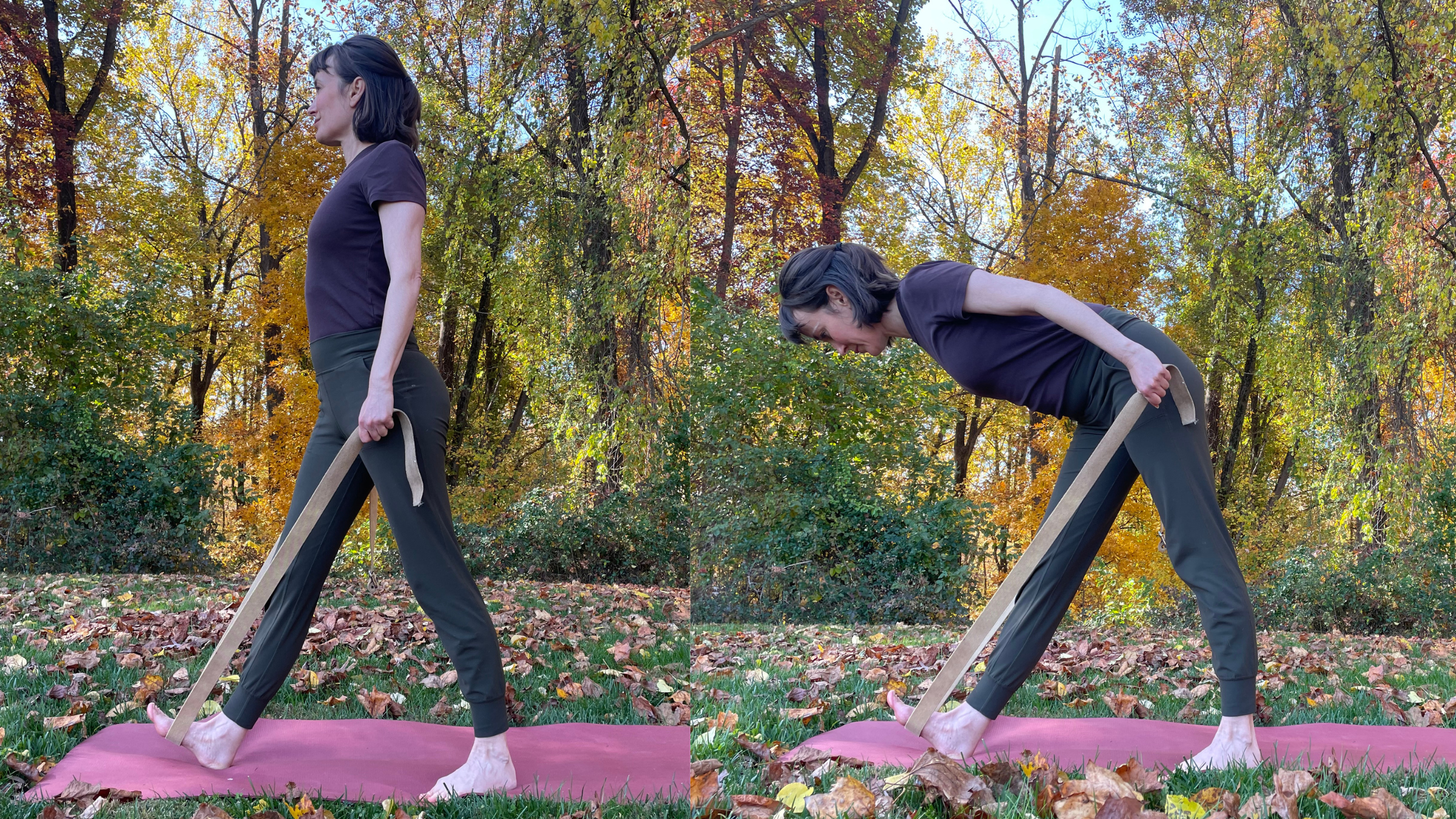
6. Pyramid Pose Variations (Parsvottanasana)
Using a strap looped around the ball of the foot allows for a controlled, high-tension pull. By keeping the strap taut at your hips while in a staggered stance, you can use the arms to pull against the resistance of the leg. This engages the upper back muscles necessary for maintaining a flat-backed forward fold.
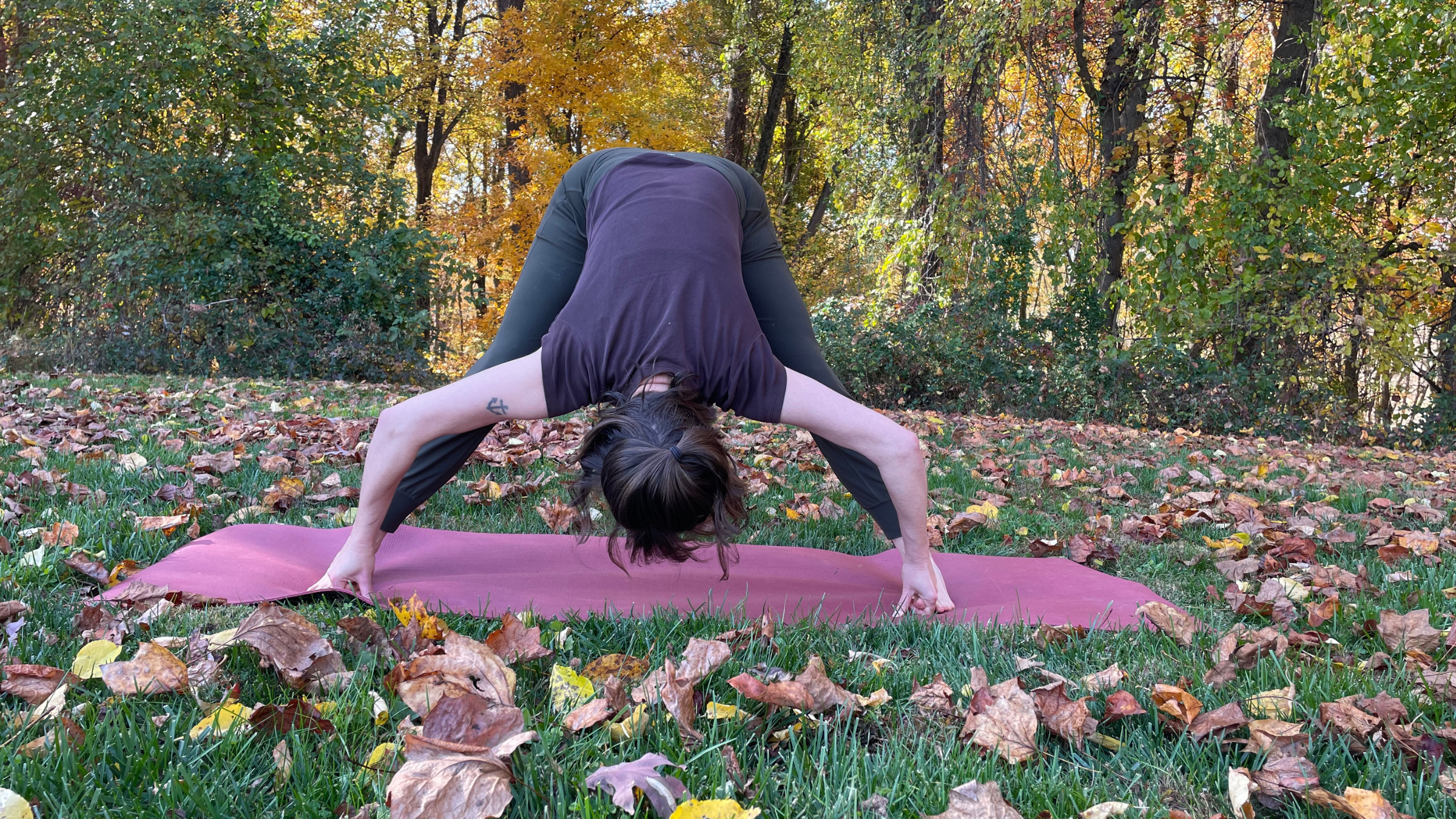
7. Wide-Legged Standing Forward Bend (Prasarita Padottanasana D)
When hooking the big toes or using a strap, the goal is to bend the elbows outward. By pulling upward on the toes, you initiate a retraction of the shoulder blades. This pose is highly effective for correcting shoulder posture, as it demands the active engagement of the rhomboids.
8. Dancer Pose (Natarajasana)
Dancer Pose is the ultimate expression of the "pull" dynamic in a standing balance. By pressing the foot into the hand while pulling back with the arm, you create a bridge of tension across the chest and shoulders. The biceps must remain active to maintain the connection, turning a balancing pose into a full-body resistance exercise.
9. Bow Pose (Dhanurasana)
Bow Pose is perhaps the most direct "rowing" movement in yoga. By grasping the ankles and kicking back, you force the upper body to resist the legs. The pull comes from the hands holding the ankles; the harder the legs kick, the more the back and arms must engage to hold the connection.
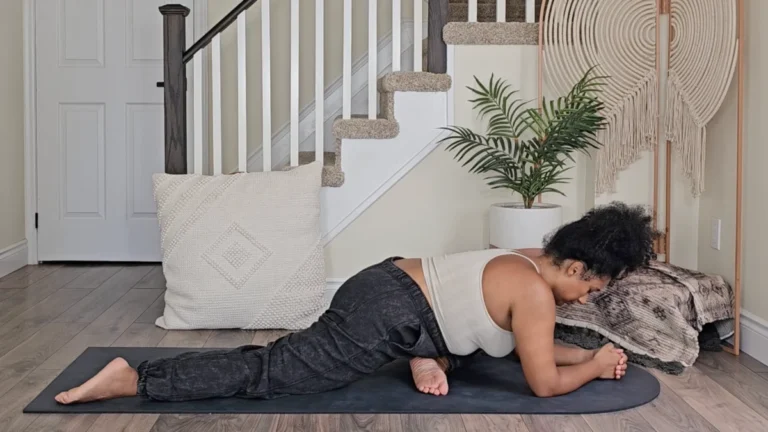
10. Child’s Pose Variation (Balasana)
Even in a resting pose, you can work. By pressing the hands into the mat and "sliding" them toward you without moving them, you create an isometric contraction that fires the lats. Lifting the elbows while keeping the hands rooted deepens this engagement, providing a functional strength stimulus at the end of a session.
Implications for Practice
The transition toward a more balanced, "push-and-pull" yoga practice has significant implications for long-term health.
- Injury Prevention: By strengthening the posterior chain, practitioners can reduce the prevalence of "yoga shoulder"—a term often used to describe the inflammation caused by repetitive, pushing-dominant Vinyasa flows.
- Postural Correction: Strengthening the rhomboids and lats helps pull the shoulders into a neutral position, counteracting the "text-neck" and rounded-shoulder posture prevalent in modern society.
- Functional Longevity: As we age, the ability to pull is critical for daily tasks, from opening heavy doors to carrying groceries. Integrating these movements into a yoga practice ensures that the body remains capable and resilient.
Expert Guidance and Safety
Amber Burke stresses that these poses should be approached with caution. "Yoga is a practice of awareness, not just exertion," she notes. "Beginners should start with lower intensity and fewer repetitions. The goal is not to exhaust the muscles to the point of failure, but to awaken them through conscious, controlled tension."
She recommends incorporating these "pull" poses into the cool-down phase of a practice or dedicating a specific session to them once a week. By diversifying the mechanical load, practitioners can ensure that their yoga practice remains a holistic system for physical and mental health.
As the yoga community continues to evolve, the focus is shifting away from the aesthetics of the "perfect pose" toward the functional reality of a balanced body. By embracing the "pull," we not only strengthen our arms but also build a more resilient, well-rounded foundation for our practice and our lives.