WASHINGTON, D.C. — In what has become the hallmark event for youth mental health advocacy in the United States, the 2026 Active Minds National Conference opened this week with a historic shift in strategy. While previous years focused primarily on campus awareness and stigma reduction, this year’s gathering saw more than 200 youth and young adult leaders descending upon Capitol Hill to demand systemic legislative change.
At the heart of this mobilization is the Campus Lifeline Act, a bipartisan piece of legislation designed to codify and fund mental health protections for students across the country. The move signals a new era for Active Minds, the nation’s premier nonprofit supporting mental health promotion and education for young adults, as it transitions from a grassroots movement into a formidable policy-driving force.
Main Facts: The Legislative Push for the Campus Lifeline Act
The 2026 conference is defined by its focus on the "Campus Lifeline Act." Led by youth voices and supported by a bipartisan coalition in Congress, the bill addresses the escalating mental health crisis among Gen Z and Alpha generations. The legislation is built upon two foundational pillars:
- Strengthening the 988 Suicide & Crisis Lifeline on Campuses: The bill seeks to ensure that every college and university in the United States has integrated the 988 Lifeline into their student services. This includes mandatory inclusion of the number on student ID cards, syllabi, and campus portals, alongside federal funding to train campus security and residence life staff on how to coordinate with 988 dispatchers.
- Expanding Peer-to-Peer Support Networks: Recognizing that students often turn to their peers before professionals, the Act proposes a federal grant program to support peer-to-peer mental health programs. These grants would allow institutions to implement evidence-based training, such as the Active Minds "A.S.K." (Acknowledge, Support, Keep-in-Touch) framework, ensuring that student leaders are equipped to handle crises safely and effectively.
According to organizers, the Act is not merely about providing resources; it is about "giving young people a seat at the table." By involving youth in the drafting and advocacy phases, the bill ensures that the solutions offered are culturally competent and accessible to the digital-native generation.

Chronology of Action: From the Halls of Congress to the Conference Floor
The conference followed a rigorous schedule designed to maximize both legislative impact and community building.
The Morning: Boots on the Ground
The day began at sunrise as 200 advocates, representing nearly every state, met with legislators and their staffers. These "Hill Day" participants were briefed on policy talking points but encouraged to share their lived experiences. The goal was to humanize the statistics regarding youth suicide and depression, providing lawmakers with a face and a story to associate with the Campus Lifeline Act.
The Afternoon: Digital and Physical Mobilization
Following the legislative sessions, the cohort returned to the conference hub for a series of "brand activations" and digital challenges. In partnership with the clothing brand ENOUGH, advocates participated in social media "takeovers" to elevate their message into the digital space.
The conference floor featured several interactive stations:
- The Reimagined "Send Silence Packing" Booth: A long-standing Active Minds exhibit, "Send Silence Packing" (which uses backpacks to represent lives lost to suicide), was updated with a "Share Your Story" booth, allowing survivors and advocates to record testimonials for future campaigns.
- Cause + Career Hub: Recognizing that advocacy is a career path, the conference provided professional headshot stations to help young leaders bolster their LinkedIn profiles and professional presence.
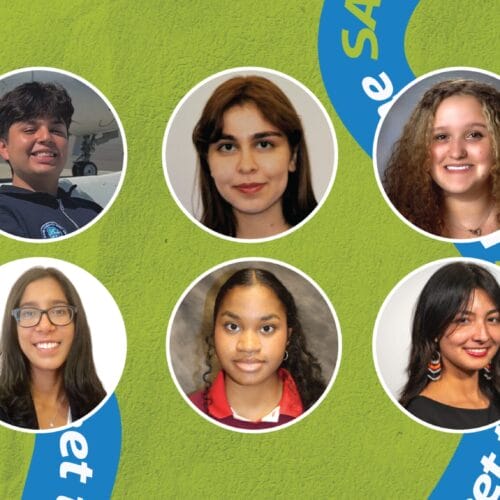
- The Reflection and Connection Wall: Facilitated by the Student Advisory Committee (SAC), this collaborative installation allowed attendees to use art and photography to document the emotional weight of their advocacy work.
The Evening: The "Built for This" Plenary
The day culminated in a high-profile evening program featuring a live recording of the She Persisted podcast with Sadie Sutton and Gen Z advocate Hailey Hardcastle. The night’s centerpiece was a panel discussion titled "Built for This: The Advocacy Pipeline from School Passion to National Impact," which explored how individual campus struggles can be transformed into national policy movements.
Supporting Data: Profiles in Advocacy
The success of the Active Minds model is best reflected in the diverse backgrounds of its leaders. The 2026 panel featured five individuals whose work spans public health, criminal justice, and multicultural wellness.
- Brandon Bond (Moderator): A public health and social work expert, Bond serves as the Director of People & Organizational Well-Being at Garrett’s Space. His work focuses on non-clinical therapeutic support, particularly through innovative projects like "integrative wellness barbershops" for young men of color.
- Bria Murph: The reigning Miss Celina, Murph utilizes her platform to promote her "Do More, Be More" initiative. Through her podcast, Chai with Bria, she highlights stories of overcoming adversity, while her "Project Zen UH" initiative focuses on creating physical relaxation spaces on culturally diverse campuses.
- Rohan Sajita: As the CEO of the Let’s Learn Foundation, Sajita has distributed over 5,000 mental health kits to underserved students. His "Vibrant Voices Project" uses monologue-writing workshops to provide mental health support to youth in juvenile detention centers, a population often overlooked in national mental health conversations.
- Jodi Johnson: A member of Team Active Minds, Johnson bridges the gap between physical and mental health. An international marathoner, he has raised thousands of dollars to support "Brother, You’re Not Alone," a project specifically targeting the mental health needs of Black, African, and Caribbean American men.
- Varsha Penumalee: A student at Virginia Commonwealth University, Penumalee holds leadership roles in both Active Minds and NAMI Virginia NextGen. Her work focuses on addressing health inequities and ensuring that youth-driven policy is inclusive of marginalized communities.
Official Responses: A Bipartisan Mandate
While the names of specific sponsoring legislators remain in flux as the bill moves through committee, the sentiment on the Hill was one of cautious optimism. Staffers for both Republican and Democratic offices noted that mental health remains one of the few "purple" issues in a polarized Washington.
"The Campus Lifeline Act represents a shift from reactive to proactive care," said a spokesperson for the Active Minds Student Advisory Committee. "We are no longer just asking for help; we are providing the roadmap for how that help should be delivered."

In her live podcast recording, Hailey Hardcastle emphasized that Gen Z’s approach to advocacy is fundamentally different from previous generations. "We aren’t waiting for permission to lead," Hardcastle remarked. "The ‘Advocacy Pipeline’ is already full. We have the data, we have the stories, and now, with the Campus Lifeline Act, we have the policy."
Implications: The Future of Youth Mental Health Policy
The 2026 conference serves as a litmus test for the "Advocacy Pipeline." By moving beyond the campus level and into the halls of government, Active Minds is setting a precedent for how youth-led nonprofits can influence federal law.
1. The Professionalization of the Student Advocate
The inclusion of career-building resources like professional headshots and networking sessions suggests that Active Minds views its student members not just as volunteers, but as the next generation of public health professionals. This professionalization ensures that the movement remains sustainable long after students graduate.
2. Peer Support as a Standard of Care
If the Campus Lifeline Act passes, peer-to-peer support will no longer be an "extracurricular" activity; it will be a federally recognized component of the American mental health system. This would provide a critical safety net for a professional workforce that is currently overextended and understaffed.
3. Addressing the Intersectionality Gap
The diverse roster of speakers—from Black male athletes to advocates for youth in the justice system—indicates a concerted effort to ensure that new policies do not leave marginalized groups behind. The emphasis on "multicultural wellness" and "health inequities" suggests that the Campus Lifeline Act is being designed with an intersectional lens.
4. The Power of Storytelling
As seen in the "Send Silence Packing" reimagining and the various podcast and journaling initiatives mentioned in Active Minds’ recent literature, storytelling remains the movement’s most potent weapon. By documenting the "scars of honor" (as described by advocate and singer Shihori in her recent single, When I Decided Not To Die), the organization is creating a cultural archive that makes it impossible for lawmakers to ignore the urgency of the crisis.
As the conference concludes, the 200 young advocates return to their respective states, not just as students, but as lobbyists for a future where mental health support is a right, not a privilege. The fate of the Campus Lifeline Act now rests with Congress, but the message from the youth is clear: the movement is mobilized, the policy is ready, and the voices are louder than ever.