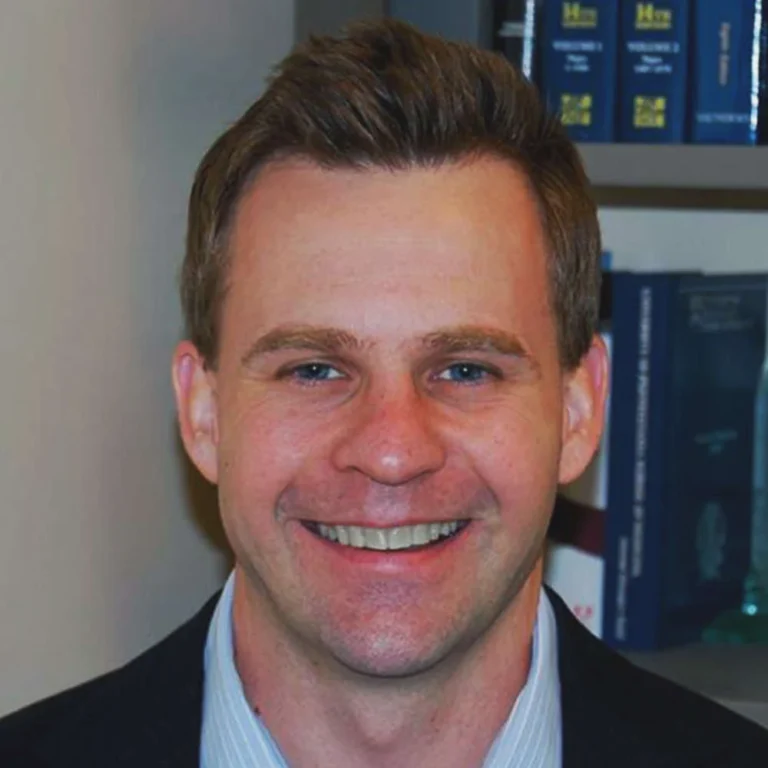











The field of modern psychiatry is currently embroiled in a sophisticated ideological war, one that pits the institutional "enlightened" center against radical critics who argue that the entire foundation of the profession is built upon a series of scientific misrepresentations. At the heart of this recent escalation is a public dispute between Robert Whitaker, the investigative journalist and founder of Mad in America, and Dr. Awais Aftab, a psychiatrist who has become a prominent public intellectual and a frequent media commentator on psychiatric reform.
This conflict, catalyzed by a recent "Mental Health and Overmedicalization Summit" and a subsequent New York Times feature, highlights a deepening divide over the "medical model" of mental health. While institutional figures like Aftab argue for a nuanced, "biopsychosocial" evolution of the field, critics like Whitaker contend that such rhetoric serves primarily to protect the guild interests of psychiatry while obscuring a legacy of "institutional corruption."
Main Facts: The Core of the Contention
The dispute centers on two vastly different interpretations of psychiatric history and the efficacy of current treatments. On one side, Robert Whitaker argues that American psychiatry, particularly since the 1980 publication of the DSM-III, has misled the public by promoting a "chemical imbalance" theory that is not supported by the profession’s own research. Whitaker’s critique is rooted in what he calls a "paradigm shift," moving away from a drug-based model of care toward one that prioritizes social determinants and lived experience.
On the other side, Dr. Awais Aftab represents a segment of the profession that acknowledges past overreaches but maintains that the medical model—properly understood—is a pluralistic and scientifically rigorous framework. Aftab’s recent writings have sought to frame radical critics, including Whitaker, as "Szaszians"—followers of Thomas Szasz, who famously labeled mental illness a "myth." By associating modern critics with the controversial MAHA (Make America Healthy Again) movement, Aftab suggests that the critique of psychiatry is becoming increasingly unmoored from science and aligned with fringe political agendas.
Whitaker’s response, however, rejects these labels as "rhetorical devices" designed to invite disdain. He asserts that his work is not a denial of biological suffering, but a journalistic documentation of how psychiatric drugs often cause "compensatory adaptations" in the brain that lead to worse long-term outcomes for patients.
Chronology: The News Cycle of a Conflict
The current flare-up in this long-standing debate was ignited by a series of events in May 2026, which brought the merits of psychiatric medication back into the national spotlight.
- May 4, 2026: The MAHA Institute hosted "The Mental Health and Overmedicalization Summit." Organized largely by Laura Delano and her Inner Compass organization, the event featured Robert F. Kennedy Jr., who announced that the Department of Health and Human Services (HHS) would seek to curb the overuse of psychiatric medications and support patients in tapering off these drugs.
- May 15, 2026: The New York Times published an article by Daniel Bergner titled "The Strange Alliance Trying to Remake Psychiatry." The piece explored the intersection of radical psychiatric critics and the MAHA movement. Bergner interviewed Whitaker, who argued that "overmedicalization" was an insufficient term, as it implied the disease model itself was still valid, rather than fundamentally flawed.
- May 16, 2026: Dr. Awais Aftab published a response on his Substack titled "The Szaszian Heart of MAHA Psychiatry." In this post, Aftab explicitly named Whitaker, along with psychiatrist Joanna Moncrieff and advocate Laura Delano, as the primary architects of a "scientifically exhausted" movement. He accused them of operating on a simplistic binary: 1980s neuro-reductionism versus an anti-medical posture.
- Late May 2026: Robert Whitaker issued a comprehensive rebuttal, "Psychiatry’s Attack Dog Is at It Again." Whitaker’s response deconstructs Aftab’s arguments, accusing him of "historical gaslighting" and acting as a defender of the psychiatric guild under the guise of an open-minded critic.
Supporting Data: Scientific Claims and Counter-Claims
The intellectual battlefield between Whitaker and Aftab is paved with data regarding drug efficacy, brain chemistry, and institutional history.
The "Chemical Imbalance" and Brain Adaptation
Whitaker cites the work of former NIMH director Steven Hyman, who wrote in 1996 that psychiatric drugs perturb normal neurotransmission, causing the brain to undergo "compensatory adaptations" to maintain equilibrium. Whitaker argues that this process, known as "oppositional tolerance," explains why patients may experience a worsening of symptoms over the long term. He points to research suggesting that while SSRIs and antipsychotics may offer marginal short-term benefits, they often fail to reach the threshold of a "minimum clinically important difference" (MCID) when compared to placebos.
The Biopsychosocial Defense
Aftab counters this by pointing to the "biopsychosocial model," first articulated by George Engel in 1980. He argues that the "medical model" is not a caricature of biological reductionism but an aspiration to use the tools of general medicine—classification, natural history, and multi-level causal explanation—to treat mental distress. Aftab asserts that modern psychiatry is a "space between" the extremes, populated by theories like embodied cognition and social determinants of health.
Institutional Corruption
In his book Psychiatry Under the Influence, Whitaker and co-author Lisa Cosgrove documented what they termed "institutional corruption." They argued that the American Psychiatric Association (APA) and the pharmaceutical industry created a symbiotic relationship that prioritized "guild interests" over patient health. This data is central to Whitaker’s argument that psychiatry has failed as an honest communicator of its own research.

Official Responses and Institutional Perspectives
The institutional response to this debate has largely favored the "reformer" model represented by Aftab.
The APA’s Stance
The American Psychiatric Association recently awarded Dr. Aftab its "Distinguished Service Award" for "exceptional meritorious service to psychiatry and the APA." This award is seen by critics like Whitaker as a confirmation of Aftab’s role as a "defender of the profession." The APA continues to uphold the DSM framework while increasingly acknowledging the importance of social factors, though it has not moved toward the "paradigm shift" Whitaker demands.
The MAHA Influence
The involvement of the MAHA Institute and RFK Jr. has added a volatile political layer to the debate. While Whitaker clarifies that he has no formal involvement with the MAHA initiative and finds the association "problematic" due to its anti-vaccine and anti-science reputation, the media has increasingly linked the two. This linkage allows institutional defenders to frame psychiatric criticism as part of a broader "anti-science" movement, a tactic Whitaker describes as a "rhetorical device" to invite public disdain.
The Voice of Lived Experience
Groups like the Inner Compass organization, led by Laura Delano, represent the "lived experience" wing of the critique. Their response to the institutional defense is often rooted in the "grievous harm" experienced by patients who were told their medications were fixing a chemical imbalance, only to find themselves struggling with long-term dependency and functional impairment.
Implications: The Future of Mental Health Care
The rift between Whitaker and Aftab is more than an academic disagreement; it has profound implications for how society treats mental suffering and how public policy is shaped.
The Politicization of Reform
The emergence of the "MAHA psychiatry" label suggests that the critique of mental health care is becoming polarized. If psychiatric reform becomes inextricably linked with specific political factions, there is a risk that scientific data regarding drug harms and tapering protocols will be dismissed as partisan rhetoric rather than medical necessity.
The Tapering Crisis
One of the most significant practical implications of this debate is the issue of drug withdrawal. RFK Jr.’s call for HHS to support "safely tapering" from psychiatric drugs addresses a growing crisis of patients who find themselves unable to stop medications without severe neurological distress. If the "medical model" fails to acknowledge the extent of these withdrawal syndromes, the responsibility for care will continue to shift toward grassroots organizations and "radical" critics.
The Narrative of Progress
For the general public, the primary implication is a growing confusion over the "narrative of progress." If psychiatry is, as Aftab claims, a "philosophically rich" and "humanistically oriented" field, then the current mental health crisis is a matter of insufficient resources and refined application. However, if Whitaker is correct, the crisis is a product of the model itself—a "drug-based paradigm" that has failed society.
In conclusion, the clash between Robert Whitaker and Awais Aftab represents a pivotal moment in the history of medicine. It is a struggle to define whether the future of mental health lies in the "refined pluralism" of the existing institution or in a radical dismantling of the current psychiatric infrastructure in favor of a new, evidence-based paradigm. As the media continues to navigate these two opposing voices, the stakes remain highest for the millions of individuals currently navigating the psychiatric system.