Age is often viewed as a countdown to frailty, a period defined by the inevitable loss of vitality and physical resilience. However, in the world of professional fitness coaching, this narrative is being rewritten. For those over the age of 60, true strength has very little to do with the year they were born and everything to do with the mechanical demands they place on their bodies every single day.
Tyler Read, a certified personal trainer with over 15 years of experience, has spent his career dismantling the myth that physical decline is an inescapable byproduct of aging. By shifting the focus from aesthetic-based gym workouts to functional, movement-based training, Read has seen clients in their 70s consistently outperform adults twenty years their junior. The secret is not found in complex gym machinery or expensive performance supplements; it is found in the consistent, daily practice of five fundamental movement patterns that maintain the body’s ability to navigate the world with confidence.
The Science of Functional Aging: Why "Use It or Lose It" Is Not Just a Cliché
To understand why some individuals remain athletic well into their eighth decade, we must look at the physiological principle of muscle recruitment. Many people mistakenly believe that strength naturally evaporates with time. In reality, strength wanes when the nervous system and muscular architecture stop receiving a consistent "reason" to remain strong.
When you rely on isolated machine workouts, you engage muscles in a vacuum, often failing to replicate the complex, multi-joint coordination required for real-world activity. Functional training, by contrast, forces the brain to recruit multiple muscle groups simultaneously. This approach enhances neuromuscular efficiency—the way your brain communicates with your muscles—leading to better balance, superior posture, and increased endurance. This is the physiological "fountain of youth": a body that moves better is, by definition, a body that feels younger.
The Core Five: Movements That Build Practical Strength
The following five exercises serve as the backbone of a high-functioning lifestyle. They are designed to mirror the essential tasks of daily life—standing, reaching, lifting, and carrying—ensuring that your physical training directly translates to improved quality of life.
1. The Sit-to-Stand: The Gold Standard of Mobility
The sit-to-stand is the quintessential functional movement. It serves as a rapid diagnostic tool for lower-body strength. Every repetition engages the quadriceps, glutes, hamstrings, and the deep core stabilizers.
- The Technique: Start by sitting on a sturdy chair. Keep your chest upright and your feet hip-width apart. Drive through your heels to stand, and—crucially—control your descent slowly back to the seated position.
- The Benefit: By focusing on the "lowering phase" (the eccentric contraction), you build stability that directly translates to navigating stairs, exiting deep car seats, and standing for extended periods without fatigue.
2. Resistance Band Rows: Reversing the "Desk Posture"
Years of sitting, driving, and looking at devices naturally pull the shoulders forward, creating a rounded posture that contributes to neck and upper back pain. Resistance band rows are an essential corrective movement.
- The Technique: Anchor a resistance band at chest height. With a slight bend in the knees, pull the band toward your ribcage, squeezing your shoulder blades together. Ensure your spine remains neutral and your neck relaxed.
- The Benefit: This move targets the posterior chain—the upper back, rear deltoids, and biceps. Consistent practice helps "open" the chest, allowing for a taller, more confident posture and a significant reduction in chronic neck tension.
3. The Standing Hip Hinge: Protecting the Spine
Lower back pain is often the result of "spine-dominant" lifting—bending at the waist rather than the hips. The standing hip hinge is a vital skill that teaches the body to use the hips as the primary engine for movement.
- The Technique: Stand with feet hip-width apart, knees slightly soft. Push your hips backward as if you are trying to close a door behind you with your glutes, keeping your back perfectly flat. Return to a standing position by engaging your glutes.
- The Benefit: Mastering the hinge provides an "insurance policy" for your lower back. By shifting the workload to the powerful muscles of the posterior chain (glutes and hamstrings), you reduce the strain on the lumbar spine during everyday activities like picking up groceries or gardening.
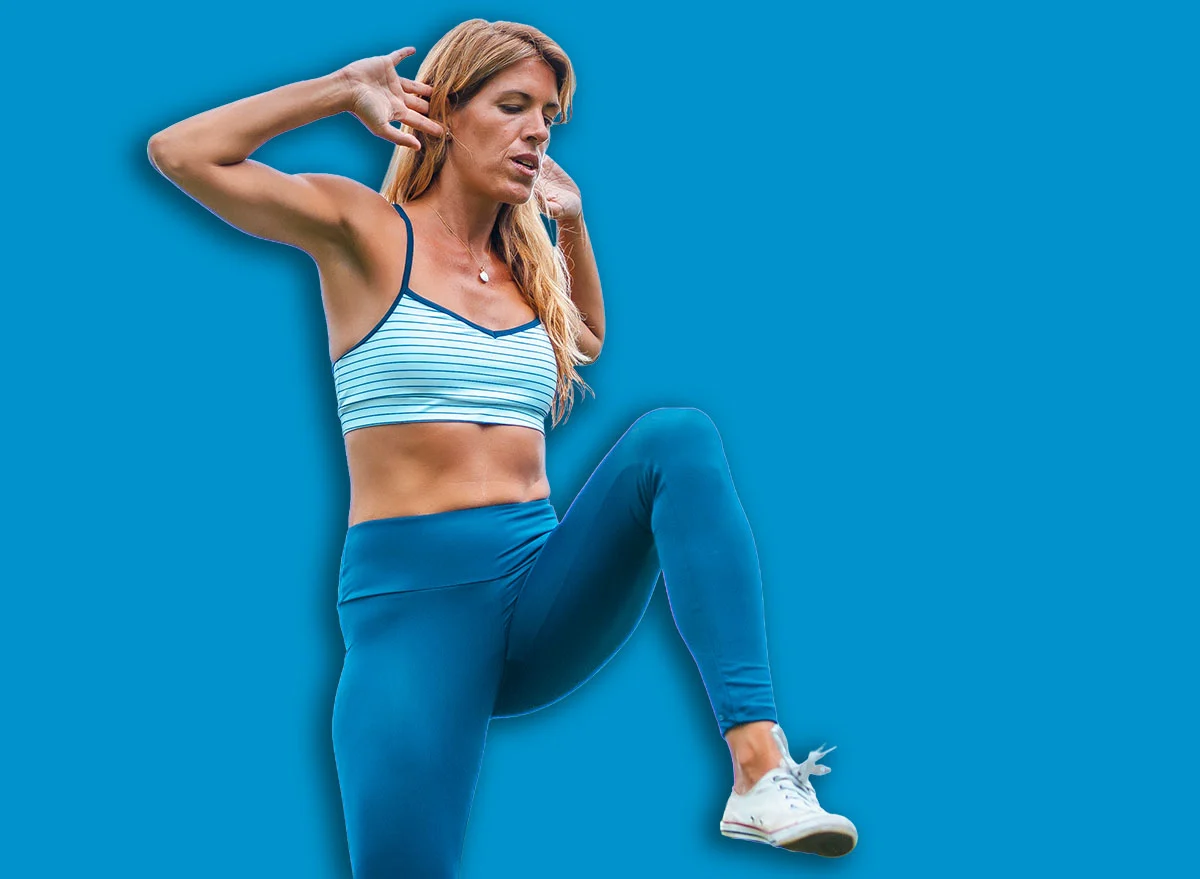
4. Standing Knee Drives: Stability in Motion
Walking is a series of controlled falls and single-leg balances. Standing knee drives isolate this process, strengthening the hip flexors and core while improving proprioception (your body’s sense of its position in space).
- The Technique: Stand tall, perhaps holding a wall for balance initially. Drive one knee toward your chest while keeping your core engaged and your supporting leg firm. Hold for a second at the top before lowering.
- The Benefit: This exercise mirrors the gait cycle of walking. Regular practice increases stability and confidence, reducing the fear of falling and ensuring that your stride remains energetic and fluid.
5. The Farmer’s Carry: The Ultimate Life-Skill
Perhaps no movement is as practical as the Farmer’s Carry. It is the human equivalent of carrying the world on your shoulders—or at least your groceries.
- The Technique: Hold a weight (a dumbbell, kettlebell, or even a water jug) in each hand. Stand tall with your shoulders pulled back and core braced. Walk forward for a set distance or time, maintaining a steady, upright gait.
- The Benefit: This is a full-body integration move. It strengthens the grip, forearms, shoulders, core, and legs simultaneously. By reinforcing an upright posture while under load, it prepares the body for the reality of household chores, travel, and yard work.
Supporting Data and Professional Insights
According to data from the National Institute on Aging, physical activity in older adults is the single most effective intervention for maintaining independence. Studies consistently show that resistance training—even when started in the 60s or 70s—can reverse muscle atrophy and increase bone density.
Tyler Read emphasizes that the "professional" approach to fitness isn’t about hitting personal records in a squat rack; it is about building "longevity capacity." By prioritizing these five movements, individuals are essentially performing a daily "maintenance check" on their skeletal and muscular systems.
When asked about the biggest barrier to success, Read points to the "complexity trap." Many adults feel they need a complicated app, a gym membership, or a personal trainer to see results. The truth is much simpler: frequency beats intensity. Performing these five moves for 15 to 20 minutes daily is vastly superior to a single, grueling two-hour workout once a week.
Implications for the Future of Aging
The shift toward functional fitness has profound implications for public health. As the global population ages, the burden on healthcare systems is heavily influenced by the rates of mobility-related injuries and falls. If a significant percentage of the population over 60 adopted these simple, movement-based habits, we would likely see a dramatic decrease in hospitalizations related to hip fractures and chronic musculoskeletal pain.
Furthermore, the psychological benefits of physical competence cannot be overstated. When an individual realizes they can still lift their own luggage, get off the floor without assistance, or walk for miles without pain, their self-efficacy improves. They move from a mindset of "maintenance" to a mindset of "thriving."
Conclusion: Starting Your Journey Today
You do not need to be a professional athlete to enjoy the benefits of a strong, capable body. The goal is to move with intention. Whether you are 40, 60, or 80, the body’s ability to adapt remains a constant. By integrating sit-to-stands, rows, hinges, knee drives, and carries into your daily routine, you aren’t just exercising—you are investing in the most important asset you own: your ability to move through life on your own terms.
As Read often tells his clients: "The strongest version of yourself is not in your past; it is waiting for you to commit to the movement." Start small, stay consistent, and remember that every repetition is a building block toward a future that is not defined by your age, but by your actions.