





By Energy Desk Analysis
May 22, 2026
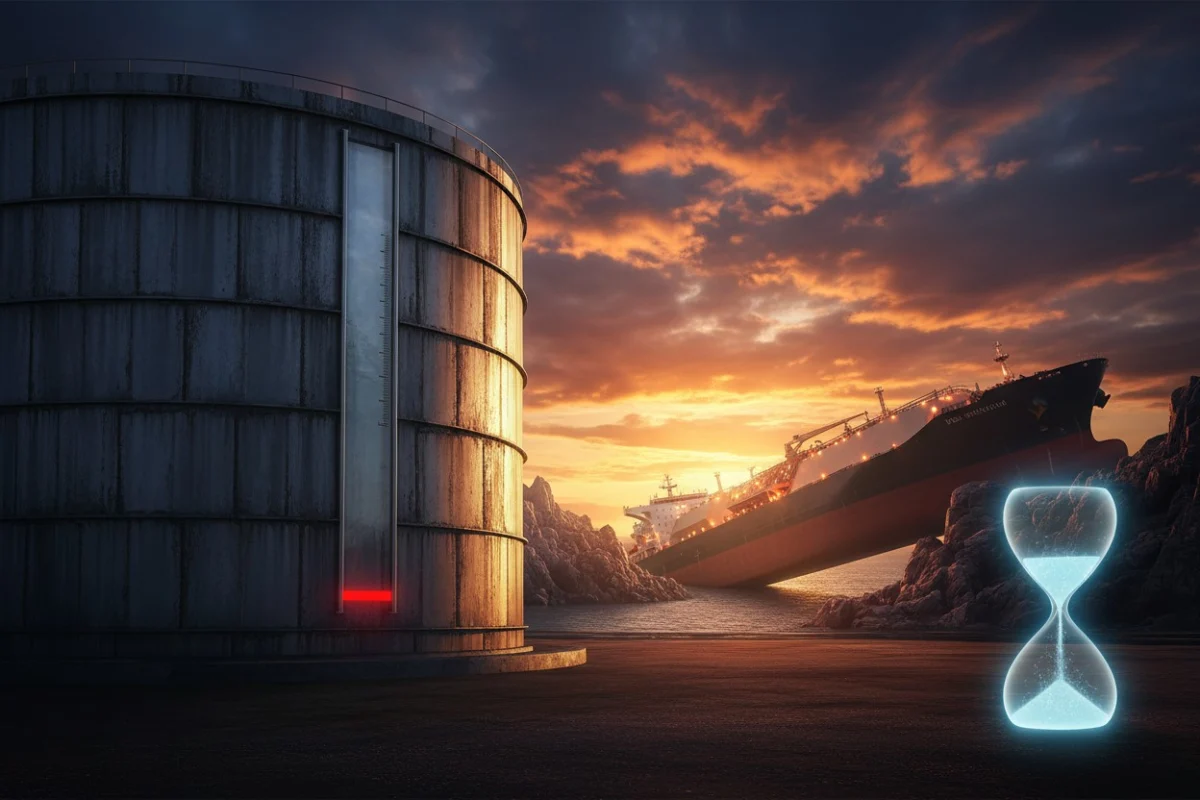
As the European Union navigates the precarious transition from a grueling winter to the critical summer refill season, senior executives at Norwegian energy giant Equinor ASA have issued a sobering warning. With shipping lanes in the Strait of Hormuz experiencing sustained volatility and geopolitical instability across the Middle East, European natural gas reserves face the prospect of a catastrophic shortfall. Equinor analysts suggest that if current maritime disruptions persist for an additional one to three months, the continent’s ability to meet its winter energy security mandates will be fundamentally compromised.
The Anatomy of the Shortfall
Europe entered the current replenishment phase with reserves at their lowest points in recent memory. By the end of a prolonged winter heating season, gas stocks across the continent had plummeted to a mere 28% of capacity. While subsequent weeks of warmer weather saw a marginal increase to between 35% and 37%, this remains drastically below the historical seasonal norm of 50%.
This deficit is not merely a statistical anomaly; it is a structural failure driven by a perfect storm of reduced supply and increased demand. The European Union has long maintained a policy of requiring member states to reach 80% to 90% storage capacity before the onset of winter to ensure grid stability and industrial continuity. According to Equinor’s latest assessment, hitting even the lower bound of that target is now considered a high-risk scenario if the supply chain bottlenecks in the Strait of Hormuz remain unresolved.
A Chronology of Escalation
The current energy crisis is the culmination of a sequence of events that began in early 2026. The timeline of the deterioration is as follows:
- January 4, 2026: Gas Infrastructure Europe (GIE) reports that storage facilities are 59.9% full, already 13% below the five-year average for the date, signaling an early warning of supply exhaustion.
- February 2026: Tensions escalate following the U.S.-Israeli conflict with Iran. The Strait of Hormuz, which handles approximately 20% of global oil and LNG flows, begins to see irregular tanker traffic, leading to massive spikes in insurance premiums and shipping delays.
- March 2, 2026: The crisis shifts from supply-side friction to a full-scale emergency. A drone strike on Qatar’s Ras Laffan LNG complex—the world’s largest export facility—forces a declaration of force majeure and halts production, effectively removing 20% of global LNG supply from the market.
- March 14, 2026: Gazprom reports that European reserves have hit a seasonal low of 29.1%.
- March 21, 2026: Acknowledging the systemic stress, EU Energy Commissioner Dan Jorgensen writes to member states, advising them to consider lowering their 90% storage targets to 80% to prevent market panic.
- May 2026: As of mid-May, the European Union records three consecutive days of record-low stockpiling rates, confirming that the "injection season" is failing to gain the necessary momentum.
The LNG Squeeze and Pricing Distortions
The crisis is compounded by an inverted price curve, known in commodity trading as "backwardation." Typically, gas prices are lower in the summer and higher in the winter, incentivizing traders to fill storage facilities for profit. Currently, Dutch TTF seasonal spreads remain in negative territory near €1.3 per megawatt-hour, with summer spot prices exceeding winter contracts. This market distortion acts as a powerful deterrent to storage replenishment, as market participants see little profit in holding gas that may decrease in value by the time winter arrives.
This, combined with the global scramble for limited LNG cargoes, has created an environment where replenishment is prohibitively expensive. With the loss of Russian LNG and the damage to Qatari infrastructure, Europe is being forced to outbid Asian markets for every available cargo, pushing prices to levels more than double those seen prior to the February conflict.
National Responses: A Patchwork of Policy
Faced with the prospect of empty storage facilities, individual nations are scrambling to implement emergency measures:
- Italy: The regulatory authority ARERA, in coordination with the grid operator Snam, has launched financial compensation schemes. These programs effectively subsidize traders, covering the price gap between summer and winter indices to ensure that firms do not shy away from the mandatory injection targets at the PSV (Virtual Trading Point).
- Germany: As the industrial heart of Europe, Germany has adopted a more aggressive, state-led approach. The Federal Network Agency (Bundesnetzagentur) is utilizing a "storage neutrality charge" to distribute the costs of government-mandated storage across the consumer base.
However, these measures are facing intense scrutiny. Kerstin Andreae, chairwoman of the German Association of Energy and Water Industries, has publicly criticized the government’s approach, stating that the severity of the depletion is "far more severe than politics has so far admitted." Her comments underscore a growing movement within the German energy sector calling for the creation of a national strategic gas reserve, independent of commercial market fluctuations.
Implications: From Price Spikes to Fuel Switching
Equinor’s predictive models highlight two distinct paths for the coming months. In an optimistic scenario, a rapid resolution to the Hormuz blockade could allow for a recovery to 75% capacity—a tight but manageable margin. In the "critical" scenario—a one-to-three-month blockage—analysts forecast a surge in Dutch TTF prices toward €90 per megawatt-hour.
Such a price spike would likely trigger a massive, involuntary demand-side correction. Models suggest a reduction of 10 billion cubic meters in gas-to-power consumption, forcing utility providers to switch to more carbon-intensive fuels. Indeed, the transition has already begun; data from the Baltic and International Maritime Council (BIMCO) shows a 27% increase in global coal shipments to Europe, South Korea, and Japan compared to the same period last year.
Furthermore, the macro-energy picture remains bleak. International Energy Agency (IEA) Executive Director Fatih Birol recently warned that global commercial oil inventories are down to mere weeks of supply. While the European situation is not currently as dire as the immediate aftermath of the 2022 energy crisis, the exhaustion of these buffers means that the margin for error is non-existent.
The Uniper Privatization Paradox
Interestingly, amid this backdrop of volatility, Germany is proceeding with the privatization of Uniper. The energy giant, which required a massive government bailout during the 2022 gas crisis, has shown significant financial recovery and is currently in the process of repaying state aid. While the government views this as a success story for the market-based energy model, critics argue that the privatization is ill-timed, potentially stripping the state of a vital strategic asset just as the continent enters a period of profound uncertainty.
Conclusion: A Winter of Uncertainty
The warning from Equinor serves as a stark reminder that Europe’s energy security is tied to global geography as much as it is to domestic policy. The Strait of Hormuz has become the world’s most dangerous bottleneck, and the destruction of the Ras Laffan complex has removed the safety valve that once protected the European market from supply shocks.
As the EU heads into the autumn months, the focus will remain squarely on the filling levels of subterranean storage caverns in the Netherlands, Germany, and France. If the current trajectory of the injection season does not improve, the European Union will likely face a winter characterized by extreme price volatility, mandatory industrial rationing, and a forced, unplanned return to coal-fired power—a development that would not only threaten the bloc’s economic stability but its long-term climate commitments as well. The coming ninety days will be the most significant test of European energy resilience in over a decade.