












The history of football, or soccer as it is known in some parts of the world, is a sprawling epic that spans over two millennia. What began as rudimentary tribal games involving the kicking of a sphere has transformed into the world’s most popular sport, captivating over four billion people across every continent. From the ancient fields of China to the high-tech, multi-billion-dollar arenas of the 21st century, the journey of football is a testament to human ingenuity and the universal language of competition.
The Genesis: Ancient Roots and Pre-Codification
Long before the modern laws were penned, various civilizations developed their own versions of ball-kicking games. These early iterations were often brutal, disorganized, and deeply ingrained in the local culture, serving as both military training and social recreation.
Cuju: The Earliest Recorded Ancestor
The earliest officially recognized precursor to football is Cuju, recorded in China during the Han Dynasty (c. 200 BC). Players would use their feet to propel a leather ball stuffed with feathers through a small hole in a piece of silk cloth stretched between two bamboo poles. FIFA officially recognizes Cuju as the oldest form of the game. It served dual purposes: it was a rigorous physical exercise for the military and a popular form of entertainment within the Imperial Court.

Episkyros and Harpastum: The Classical Precursors
In the Mediterranean, the Greeks played Episkyros, while the Romans later developed Harpastum. These games were significantly more physical, often involving both hands and feet to control a ball and move it past a designated line. Harpastum, in particular, was used by Roman legions as a form of combat conditioning, spreading the basic concept of "territorial ball games" across the European continent.
Medieval "Mob Football"
During the Middle Ages, particularly from the 9th century onwards, "Mob Football" became a chaotic fixture in England. Hundreds of villagers from opposing parishes would clash, attempting to move a bundle—often a pig’s bladder—toward a target in the opponent’s village. These games had no player limits and virtually no rules, often lasting for entire days and resulting in significant property damage and bodily injury. Several English monarchs attempted to ban the sport, citing its tendency to distract citizens from archery practice, which was vital for national defense.
The Formalization: The Victorian Era and the Birth of Modern Rules
The transformation of these disorganized traditions into a structured sport occurred in 19th-century England, primarily driven by the public school system and the need for standardized regulations.

The Cambridge Rules (1848)
In 1848, students at Cambridge University drafted the first set of unified rules. Prior to this, every school played by its own variations, making inter-collegiate matches nearly impossible. The Cambridge Rules were the first to explicitly ban the handling of the ball and define specific field dimensions and player numbers. This document served as the foundational bedrock for all subsequent developments, effectively splitting football from the burgeoning sport of rugby.
The Foundation of the Football Association (1863)
On October 26, 1863, representatives from 12 London clubs met at the Freemasons’ Tavern to form the Football Association (FA). This was the world’s first professional sports governing body. The FA adopted a unified set of rules, definitively excising the clauses that allowed for "carrying the ball." The year 1863 is now universally recognized as the birth year of the "Beautiful Game."
The 17 Laws of the Game
The FA’s original 17 laws covered everything from offside rules to corner kicks and the size of the goal. Remarkably, the core structure of these 17 laws remains the foundation of the modern game managed by the International Football Association Board (IFAB). This durability is a testament to the foresight of the original founders, who created a framework that proved flexible enough to survive and thrive for over 160 years.
Chronology of Key Milestones
The history of football is punctuated by events that marked the end of one era and the dawn of a new one.
- 1885: Professionalism is legalized by the FA, allowing players to be paid and ending the "gentleman amateur" era.
- 1888: The Football League is established by William McGregor, creating a consistent fixture list for the first time.
- 1904: FIFA is founded in Paris to manage international matches.
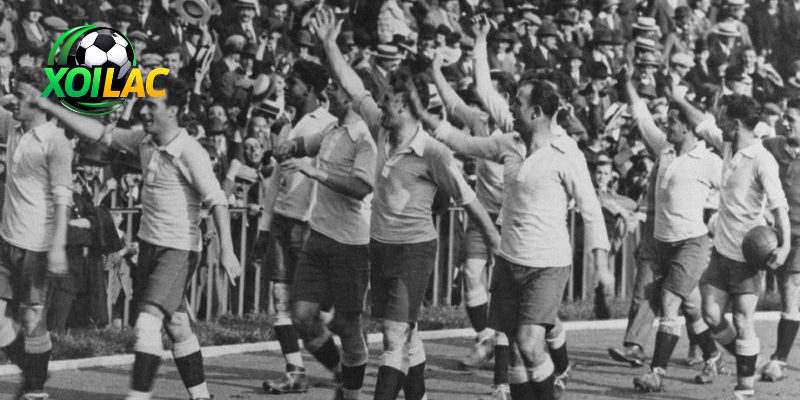
- 1930: The first World Cup is held in Uruguay, proving the sport’s appeal beyond European borders.
- 1955: The first European Cup (precursor to the Champions League) is inaugurated.
- 1992: The English Premier League is launched, revolutionizing broadcasting and commercial revenue.
The Global Expansion: FIFA and the World Cup
The transition to a truly global phenomenon began with the establishment of the Fédération Internationale de Football Association (FIFA).
The Formation of FIFA (1904)
Initially founded by seven European nations, FIFA’s goal was to regulate international competition. Despite initial resistance from the English FA, FIFA rapidly grew. Today, it boasts 211 member nations—more than the United Nations—solidifying its role as the primary authority in the sport.
The 1930 World Cup
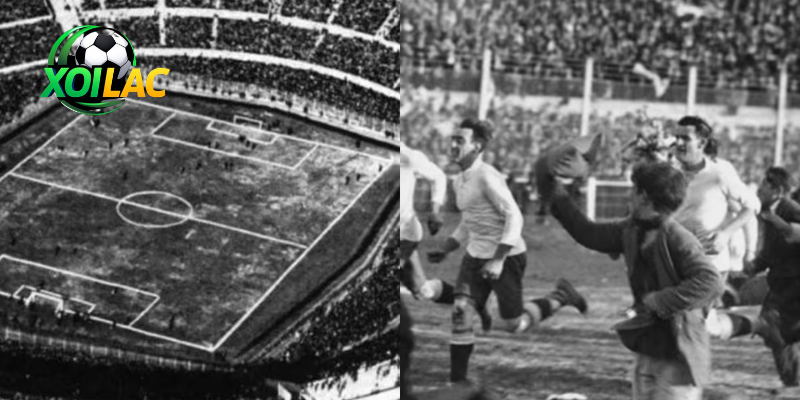
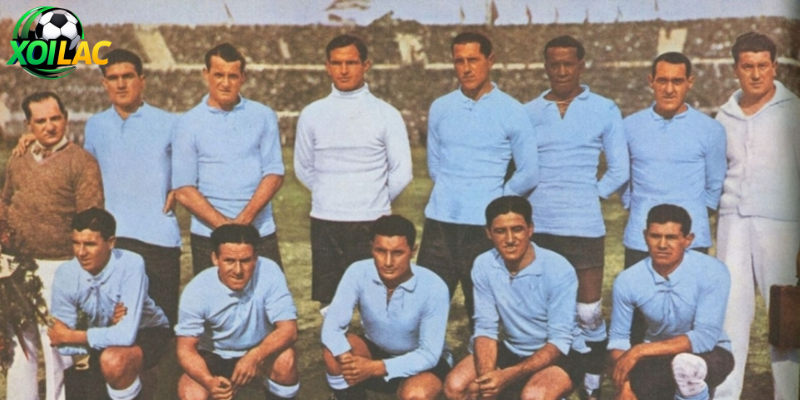
The inaugural World Cup in Uruguay served as the ultimate proof of concept for international football. With 13 participating nations, the tournament culminated in Uruguay defeating Argentina 4-2 before 68,000 spectators in Montevideo. This event laid the groundwork for what would become the most-watched sporting event on the planet.
The Professional and Commercial Era
As the 20th century progressed, football evolved into a massive industry, driven by the professionalization of players and the emergence of television.
The Football League and the End of Amateurism
William McGregor’s 1888 initiative was the catalyst for the modern club structure. By allowing teams to pay wages, the sport moved from a hobby to a career path. Preston North End’s "Invincibles" season in 1888-89 remains a legendary milestone, setting the standard for dominance.

The Television Revolution
The 1992 agreement between the Premier League and BSkyB for £304 million marked the start of the broadcasting era. Television turned clubs into global brands. By the 2022-2025 cycle, domestic broadcasting rights for the Premier League alone reached over £5 billion, highlighting the explosive growth of the sport’s commercial footprint.
Implications of Technological Integration
The 21st century has seen football embrace technology to ensure fairness and enhance the viewing experience.
VAR and Beyond
The introduction of Video Assistant Referees (VAR) at the 2018 World Cup was the most significant regulatory change in modern history. Coupled with Goal-Line Technology and Semi-Automated Offside systems, these tools provide accuracy down to the millimeter. While controversial, these technologies have permanently altered the tactical landscape, forcing players and referees to adapt to a high-scrutiny environment.
Official Responses and Future Outlook
Global governing bodies like FIFA and UEFA continue to adapt the rules to maintain the game’s integrity while fostering growth in emerging markets. The focus has shifted toward sustainability, financial fair play, and the expansion of the game in North America and Asia.
The rise of the "Super Clubs"—organizations that function as multi-billion-dollar media and merchandising conglomerates—has led to ongoing debates about the parity of the game. However, the passion remains rooted in the local community, as seen in the grassroots movements and the continued dominance of the sport in every cultural corner of the world.
Conclusion
The history of football is a narrative of constant refinement. From the brutal fields of medieval England to the pristine, camera-laden stadiums of the Champions League, the game has remained consistent in its simplicity: a ball, a field, and the pursuit of a goal. As technology continues to push the boundaries of what is possible, the soul of the sport—the raw emotion of a last-minute goal and the tribal loyalty of the fans—remains unchanged. Football is more than just a game; it is a global culture, a language spoken by billions, and a history that continues to be written with every whistle blow.