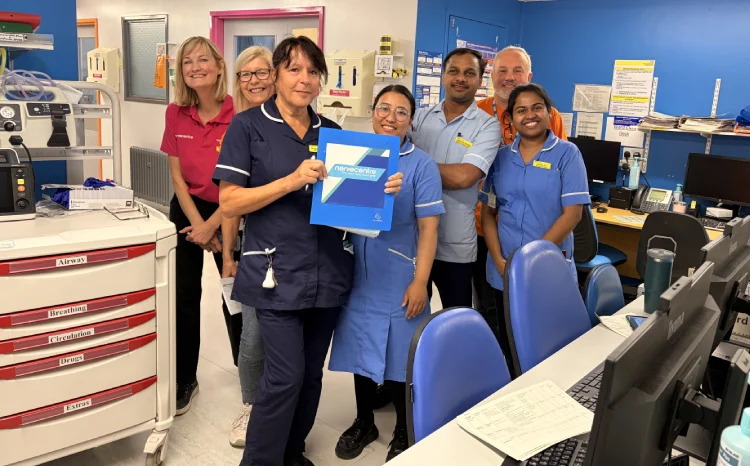
In a significant advancement for healthcare technology in the North of England, the York and Scarborough Teaching Hospitals NHS Foundation Trust has successfully transitioned to the Nervecentre electronic patient record (EPR) system. This deployment marks a pivotal shift in how the Trust manages clinical data, streamlining operations across a vast network of acute hospitals and community settings. The rollout signifies the successful completion of the first phase of an ambitious multi-year digital transformation strategy, promising to enhance patient safety, operational efficiency, and clinical decision-making.
The Scope of Implementation
The implementation, which went live last week, represents one of the most complex digital infrastructure projects undertaken by the Trust to date. The system is now fully operational across a broad geographic footprint, encompassing acute facilities in Bridlington, Scarborough, and York.
Crucially, the reach of the new platform extends beyond hospital walls, integrating several community health settings, including St Monica’s, Selby, White Cross Court, and Nelson’s Court. By covering vital clinical areas—such as urgent and emergency care, inpatient wards, maternity, paediatrics, and neonatal services—the Trust has created a unified digital thread that follows the patient across their care journey. This integration is expected to eliminate data silos, reduce the reliance on fragmented legacy systems, and provide clinicians with a comprehensive, real-time view of patient health records.
Chronology: From Selection to Strategic Pause and Success
The journey to this go-live date was marked by both rigorous planning and strategic agility. Following a highly competitive joint tender process in 2024, the Trust identified Nervecentre as the preferred bidder, citing the company’s ability to meet the complex needs of a multi-site NHS foundation trust.
However, the implementation path was not without its challenges. Initially slated for an early 2026 launch, the Trust made the difficult decision to pause the deployment in March. This pause was a calculated response to the extreme pressures facing the NHS at the time. A spokesperson for the Trust explained that the postponement was necessary to “focus on maximising elective activity and recovering urgent and emergency care performance after the winter.”
This decision, while delaying the project, demonstrated a commitment to putting immediate patient care requirements ahead of technical deadlines. Following this period of operational stabilisation, the Trust resumed its implementation schedule, eventually leading to the successful go-live event that signals the start of a broader digital evolution.
Supporting Data: Early Adoption Metrics
The speed and depth of adoption within the first 24 hours of the system going live have provided compelling evidence of its utility and the preparedness of the staff. According to Nervecentre’s internal analytics, the system was met with immediate, high-volume engagement from healthcare professionals.
Key metrics from the first day following the York go-live include:
- 3,200+ individual staff logins: Demonstrating rapid user onboarding and system accessibility.
- 33,650+ clinical assessments completed: Highlighting the system’s role in daily routine care.
- 188,000+ clinical notes recorded: Reflecting a significant shift toward digital documentation over traditional paper-based methods.
These figures underscore not just the functionality of the software, but the successful change management process undertaken by the Trust’s digital and clinical leadership teams.
Official Perspectives: Transforming Care Delivery
The leadership at both the Trust and Nervecentre view this milestone as a fundamental evolution in healthcare delivery. Nicola Coventry, Chief Nursing Information Officer at York and Scarborough Teaching Hospitals NHS Foundation Trust, emphasised that this is merely the first chapter in a larger story.
“This go-live marks the completion of Phase 1 of our Nervecentre EPR journey,” Coventry stated. “We have two further phases ahead of us, and this first step gives us a strong and proven foundation for transformation. For our staff, it begins to simplify workflows, improve access to information and support more joined-up working across our services. For our patients, it enables safer, more coordinated and more responsive care.”
Paul Volkaerts, Chief Executive of Nervecentre, echoed these sentiments, noting the immense effort required to execute such a transition. “Delivering an EPR go-live of this scale, particularly when transitioning from established incumbent systems to a new, unified platform, is a major undertaking,” Volkaerts remarked. He highlighted the “depth, breadth and complexity” of the programme, noting that the success was predicated on a true partnership between clinical, operational, and digital teams.
Implications for Clinical Practice and Regional Connectivity
The move to a cloud-based Software-as-a-Service (SaaS) architecture carries significant long-term implications for the Trust. Unlike traditional, on-premise EPR solutions that can become stagnant, a cloud-native platform allows for continuous updates and rapid innovation. This flexibility is critical in an era where medical knowledge and clinical requirements evolve at an unprecedented pace.
Enhanced Clinical Decision Support
With the Nervecentre system, clinicians can access patient data instantly, regardless of whether the patient was seen in a community clinic or an emergency department. This "joined-up" approach reduces the risk of errors associated with information gaps, such as incorrect medication history or missed allergies. As the Trust moves into the optimisation phase, these benefits are expected to amplify, with clinical decision support tools providing real-time prompts to improve outcomes and patient safety.
Regional Integration and Future Scalability
A key strategic goal for the NHS is the creation of a more interconnected health system. The adoption of a modern, interoperable platform positions the York and Scarborough Trust to participate more effectively in regional data-sharing initiatives. By aligning with modern digital standards, the Trust can foster more seamless care transitions with other regional partners, ensuring that patient data follows the patient rather than remaining locked in a single institution’s database.
The Path Forward: Optimization and Future Phases
The successful launch does not signal a moment of rest. The Trust has now entered a period of "optimisation," where the focus shifts to refining workflows based on frontline feedback and ensuring that every feature of the EPR is being utilised to its full potential.
Following this, two additional phases of deployment are scheduled. These phases will see the deeper integration of specialist modules, further expanding the scope of the EPR to include more complex clinical pathways. This phased approach allows the Trust to manage risk effectively while continuously adding value to its clinical services.
Conclusion: A Blueprint for NHS Digital Transformation
The successful implementation of the Nervecentre EPR at York and Scarborough Teaching Hospitals NHS Foundation Trust serves as a powerful case study for the wider NHS. It demonstrates that while the transition to digital records is fraught with operational challenges—and often requires the courage to pause for the sake of patient care—the long-term rewards are transformative.
By prioritizing clinical engagement, maintaining a clear strategic vision, and fostering a collaborative relationship with their technology partner, the Trust has established a new standard for itself. As they move forward into the next phases of their digital journey, the focus will remain on harnessing this platform to not only improve current workflows but to fundamentally reimagine how care is delivered, monitored, and optimized for the benefit of the patients they serve. This is, as Nicola Coventry noted, a new chapter—and one that promises to define the Trust’s clinical excellence for many years to come.