










By Editorial Staff
In the high-stakes environment of a clinical sleep center, the quality of data is only as reliable as the equipment used to capture it. For sleep technologists and lab directors, the overnight polysomnogram (PSG) is a delicate balancing act: they must maintain patient comfort while ensuring that signal fidelity remains pristine for the duration of an eight-hour study.
A recent industry survey conducted by Sleep Review sheds new light on the priorities of those on the front lines of sleep medicine. As sleep centers face increasing pressure to improve operational efficiency and diagnostic accuracy, the selection of EEG electrode leadwires and the management of signal artifacts have become focal points of administrative and clinical strategy.
The Foundation of Clinical Success: Durability and Reliability
When equipping a sleep lab, the procurement process is driven by the harsh reality of the clinical environment. Sleep studies are physically demanding on hardware; leadwires are subjected to constant movement, tension, and nightly sanitation cycles.

According to the survey, the industry consensus on what constitutes a "high-quality" leadwire is near-unanimous. When asked to identify the most critical characteristics of EEG electrode leadwires, 100% of respondents cited durability as their primary concern. In an era where cost-containment is vital, the ability of a leadwire to withstand repeated use without degradation is the single most important factor in preventing mid-study failures.
Beyond durability, the physical ergonomics of the setup play a significant role in workflow. Sixty percent of respondents prioritized leadwire length options, a preference driven by the need to accommodate various patient body types and the natural, often restless, movement of patients during sleep cycles. Other critical features identified by professionals included:
- Reduced Tangling: Minimizing the "spaghetti effect" of wires that can frustrate technicians during rapid setups.
- CT Artifact Reduction: Ensuring the signal remains clean even in environments with high electromagnetic interference.
- Connector Reliability: Preventing the intermittent contact that can lead to catastrophic data loss during a study.
The Standard of Care: A Unanimous Preference for Ten20
The hardware is only half the equation; the medium used to bridge the gap between the skin and the electrode is equally critical. The survey results highlighted a clear market leader in this domain. When polled on their preferred electrode paste for securing leads during sleep studies, the results were unequivocal: 100% of participants identified Ten20 paste as their primary choice for ensuring secure, reliable electrode adhesion.
This unanimous preference suggests that while innovations in electrode technology continue to emerge, the industry remains deeply committed to time-tested chemical solutions that provide a consistent, low-impedance connection.

Navigating the Daily Struggle: Persistent Electrode Challenges
Despite advances in technology, sleep lab supervisors report that they are in a constant battle against signal disruption. The overnight study is a volatile environment, and even the best-equipped labs face significant hurdles.
When asked to rank the most frequent culprits behind signal degradation, the data pointed to a clear hierarchy of challenges:
- Electrode Detachment (60%): The primary cause of signal loss, often exacerbated by patient sweat, movement, or poor initial application.
- Wire Tangling (50%): A persistent nuisance that complicates both the patient experience and the technician’s ability to troubleshoot.
- Excessive Artifact (30%): Noise in the recording that can mimic or obscure clinical events.
- Poor Adhesion and Cleanup Burdens (20% each): These factors highlight the operational friction that technicians face during the "take-down" phase of the morning.
Interestingly, 20% of respondents reported that their labs experience few to no recurring electrode issues, suggesting that high-level training and standardized protocols can significantly mitigate the "common" problems experienced by their peers.
The Frequency of Intervention
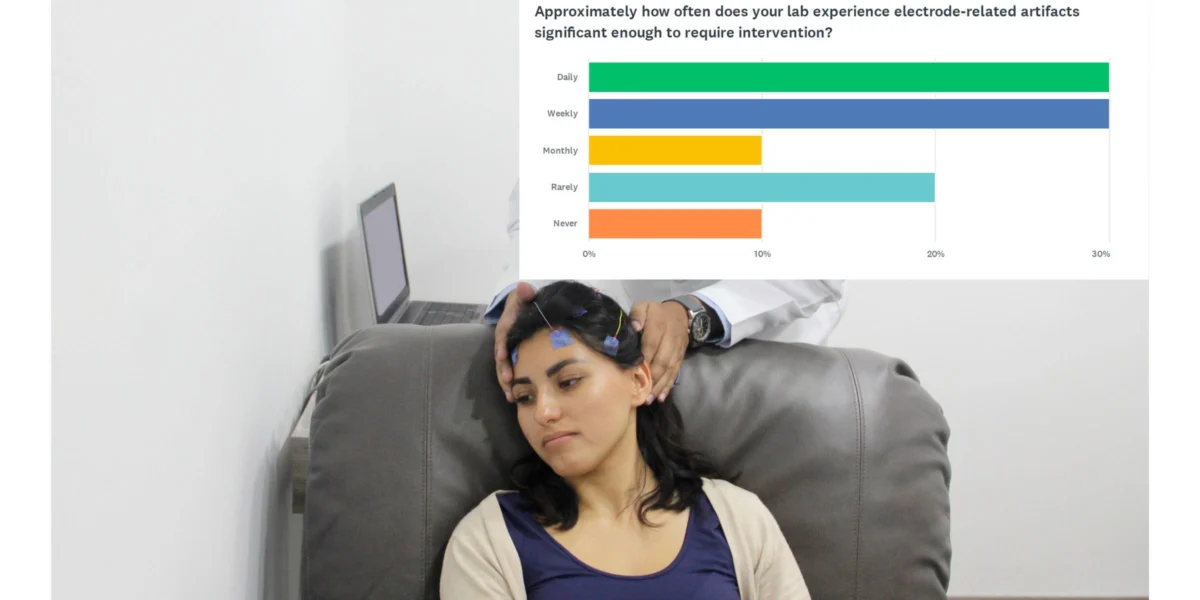
The impact of these challenges is measured by how often a technician must physically intervene during a patient’s sleep. The data reveals a polarized landscape:

- High Intervention (30%): These labs experience artifact-related issues daily, indicating a high-stress environment that requires constant monitoring.
- Moderate Intervention (30%): Issues arise weekly, which is often considered the "standard" burden of a busy lab.
- Low Intervention (40%): These labs report monthly, rare, or non-existent occurrences of significant artifacts, likely benefiting from advanced equipment or rigorous skin-prep protocols.
The Great Debate: Reusable vs. Disposable
One of the most significant shifts in modern sleep medicine is the transition toward disposable technologies. The survey highlights a sector currently divided down the middle. Forty percent of respondents noted that moving to disposable electrodes has "improved workflow significantly," citing the elimination of the time-consuming and labor-intensive cleaning process required for reusable equipment.
Conversely, another 40% remain committed to reusable electrodes. This group likely prioritizes long-term cost savings and environmental sustainability, or perhaps has found a proprietary cleaning and maintenance protocol that keeps their reusable stock in top condition. This 50/50 split indicates that there is no "one-size-fits-all" solution, and that lab managers must weigh the cost of technician labor against the recurring expense of disposables.
Emerging Technologies: The Horizon of Sleep Diagnostics
As we look toward the future of sleep medicine, the industry is not standing still. The survey identified several emerging technologies that are currently capturing the interest of progressive sleep centers.
Wireless Electrode Systems
Wireless technology is the clear frontrunner, with 43% of labs either currently trialing or expressing a strong interest in adopting wireless electrodes. The promise of removing the tether between the patient and the bedside unit is immense, potentially solving the issues of wire tangling and patient discomfort in one stroke.

Specialized Materials and Designs
- Hydrogel-based Electrodes (29%): These are being evaluated for their superior skin-contact properties and ease of application.
- The Next Frontier: A segment of the industry is testing dry electrodes, patch-style systems, and pre-configured rapid-application arrays (14% each). These technologies aim to reduce the "prep time" of a study—a crucial factor in improving the throughput of a busy clinical practice.
Surprisingly, interest in in-ear EEG electrodes remains at 0%. While this technology has garnered academic interest, it has yet to gain traction in the clinical sleep lab, likely due to the specific requirements of standard PSG montages which necessitate scalp placement.
Implications for the Future of Sleep Medicine
The data provided by this survey underscores a fundamental reality: the sleep laboratory of the future must be as efficient as it is accurate. The reliance on durable leadwires and proven pastes like Ten20 highlights a conservative approach to core clinical tasks, yet the interest in wireless and rapid-application systems suggests a hunger for modernization.
For lab supervisors, the path forward involves a strategic mix of:
- Standardization: Adopting proven materials to minimize the variability that leads to daily artifact intervention.
- Workflow Optimization: Evaluating whether the shift to disposables justifies the potential increase in supply chain costs.
- Technological Integration: Keeping a watchful eye on wireless and patch-based solutions, which offer the potential to drastically reduce the technician’s manual workload.
As sleep medicine moves further into the digital age, the "manual" nature of the PSG remains its biggest bottleneck. However, by listening to the needs of those who manage these labs, manufacturers are better positioned to develop the next generation of equipment—tools that don’t just record the sleep cycle, but do so with the reliability, speed, and comfort that modern patients and providers demand.

Ultimately, the goal remains the same as it has always been: a high-quality, artifact-free study that provides the physician with the information necessary to diagnose and treat complex sleep disorders. Whether through the refinement of current electrode technologies or the adoption of new, wireless paradigms, the quest for the perfect signal continues to drive the industry forward.