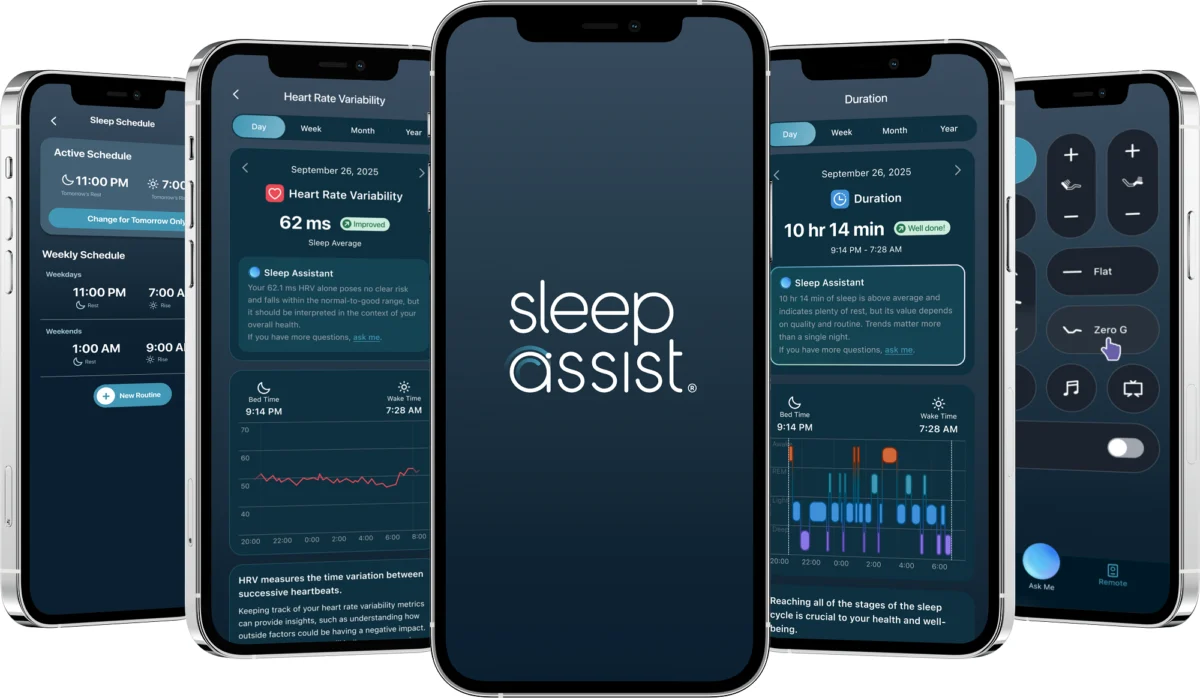
As the boundary between consumer electronics and wellness technology continues to blur, Ergomotion, a global leader in adjustable bed technology, has announced the imminent arrival of its most ambitious project to date: Sleep Assist. Scheduled for a phased rollout beginning August 1, 2026, for iOS users—with an Android version following in mid-August—this platform represents a paradigm shift in how consumers interact with their sleep environment.
By integrating AI-driven biometric insights with physical smart-bed controls, Ergomotion is moving beyond the "passive" bed. The result is a proactive, subscription-free ecosystem that transforms a piece of furniture into a sophisticated health-management hub.
The Core Concept: Bridging Biometrics and Comfort
At its heart, Sleep Assist is powered by "Ergomotion Intelligence," a proprietary software suite designed to unify the chaotic landscape of sleep tracking. Unlike traditional market entrants that rely on wearable devices—which many users find uncomfortable to wear to bed—Sleep Assist utilizes non-contact sensors embedded directly into the base of the bed.
This invisible integration allows for continuous monitoring without the need for smartwatches, rings, or chest straps. The system captures a granular data set, providing users with daily sleep scores and long-term analytical views spanning nightly, weekly, and monthly intervals.
The metrics provided are comprehensive, covering the essential pillars of sleep hygiene:
- Sleep Efficiency and Timing: Analyzing the ratio of time spent asleep versus time spent in bed.
- Restoration Metrics: Tracking heart rate variability (HRV) and lowest resting heart rate to gauge how effectively the body recovers overnight.
- Disturbance Analysis: Identifying patterns in snoring, nighttime awakenings, and general restfulness.
Chronology of Innovation
The journey to Sleep Assist was not an overnight success; it is the culmination of years of R&D in the connected home space.
- Pre-2026: Ergomotion spent several years perfecting the RIO Eco platform, focusing on embedding sensitive, non-contact health sensors into adjustable bases.
- CES 2026 (January): The industry received its first public glimpse of the Sleep Assist platform. It was met with significant critical acclaim for its decision to eschew a subscription-based revenue model in favor of a value-add approach for hardware owners.
- August 1, 2026: The official public launch date for the iOS application, signaling the beginning of the deployment phase.
- Mid-August 2026: Expansion to the Android ecosystem to ensure broad market accessibility.
- Fall 2026: The scheduled retail launch of the Ergomotion Legacy Venti, the next flagship smart bed designed to fully leverage the advanced capabilities of the Sleep Assist app.
AI as a Sleep Coach: Decoding the Data
One of the most significant barriers in the "Quantified Self" movement is the inability of users to interpret the data they collect. A raw chart of HRV or sleep stages often means little to the average consumer. Ergomotion addresses this by integrating a generative AI sleep assistant within the app.
This assistant functions as a conversational bridge. Instead of scrolling through complex spreadsheets, users can ask questions in plain, natural language: "Why was my sleep quality poor on Tuesday?" or "How does my snoring correlate with my sleeping position?" The AI parses the user’s nightly data, cross-references it with their historical trends, and provides actionable insights.
For instance, if the data reveals that the user consistently wakes up during specific hours, the AI might suggest adjusting the bed’s "Zero-G" position or utilizing the sonic massage features before the onset of REM sleep to promote deeper relaxation. This moves the platform from a "tracking" tool to an "intervention" tool.
Technical Implications: Unlocking the Smart Bed
The true power of Sleep Assist is realized when it communicates with the hardware. The software acts as a command center for compatible Ergomotion beds, enabling a suite of automated comfort features:

- Automatic Anti-Snore Intervention: Utilizing the sensor data, the bed can detect the onset of snoring and automatically elevate the head section by a few degrees to open the airways, all without waking the user.
- Adaptive Ergonomics: Through programmable scheduling, the bed can transition through different physical positions throughout the night—from reading support in the evening to a flat, restorative posture during deep sleep, and eventually a slight elevation to assist in waking up.
- Sonic Massage & Relaxation: The app allows users to create routines that pair haptic massage with specific timing, turning the bed into a pre-sleep wind-down station.
Initially, this functionality will be exclusive to beds built on the RIO Eco platform, which features premium articulation (head and foot), active pillow tilt, and lumbar support. By the end of 2026, the launch of the Legacy Venti will expand these capabilities even further, likely incorporating enhanced sensor density for higher-fidelity data collection.
Official Responses and Strategic Vision
"Sleep Assist represents the next step in Ergomotion’s evolution as a connected sleep technology leader," says Gui Peres, CEO of Ergomotion. In a recent statement, Peres emphasized that the company’s focus is not just on selling mattresses or bases, but on providing a "connected sleep environment."
The strategy is clear: by removing the friction of wearables and the barrier of recurring subscription fees, Ergomotion is betting that user loyalty will be built on the platform’s utility. Industry analysts suggest that by keeping the platform subscription-free, Ergomotion is effectively increasing the "residual value" of their beds. In an economy where consumers are suffering from "subscription fatigue," a one-time hardware purchase that continues to improve via software updates is a compelling competitive advantage.
Implications for the Sleep Industry
The launch of Sleep Assist has broader implications for the sleep-tech sector, which has traditionally been bifurcated between "dumb" furniture and "smart" tracking devices.
The Death of the Wearable Barrier
By integrating sensors into the base, Ergomotion is challenging the dominance of companies like Oura or Whoop. While wearables provide excellent data, they require charging and are often uncomfortable. If a bed can provide 90% of the same data without the user having to do anything, the value proposition of the wearable begins to diminish for the average, non-athlete consumer.
The Rise of the "Smart Home" Bedroom
With the advent of the IoT (Internet of Things) bedroom, the bed is increasingly becoming the center of the smart home. Sleep Assist’s ability to "learn" user patterns suggests a future where the bed talks to the thermostat, the smart blinds, and the lighting system. If the bed detects the user is restless, it could theoretically trigger a request to the smart thermostat to lower the room temperature or to the smart lights to dim further.
Data Privacy and Security
As with any health-focused tech, the collection of biometric data raises questions regarding privacy. Ergomotion has positioned the app as a wellness tool rather than a diagnostic medical device, but the sensitivity of the data—tracking heart rate and sleep patterns—requires robust encryption. The company has stated that the platform is built with "connected wellness" at the forefront, implying that data security will be a pillar of their user trust initiative.
Conclusion: A New Standard for Rest
The launch of the Sleep Assist app on August 1 marks a turning point for Ergomotion and the consumer sleep market at large. By synthesizing biometric data with physical, automated adjustments, Ergomotion is shifting the narrative of sleep from something we "do" to something we "optimize."
As we look toward the end of 2026, the success of this platform will likely hinge on the accuracy of the AI recommendations and the seamlessness of the hardware-software integration. If Ergomotion can successfully deliver on the promise of a truly personalized, automated, and subscription-free sleep environment, they will have set a new gold standard that competitors will be forced to follow. For the consumer, the prospect of a bed that doesn’t just support their weight, but actively improves their health, is the ultimate promise of the modern connected home.