






In the complex ecosystem of the National Health Service, few metrics are as indicative of system health—or as critical to patient safety—as "patient flow." As hospitals grapple with record-breaking demand and aging infrastructure, the ability to move patients efficiently from admission to discharge has become the defining challenge for clinical leaders.
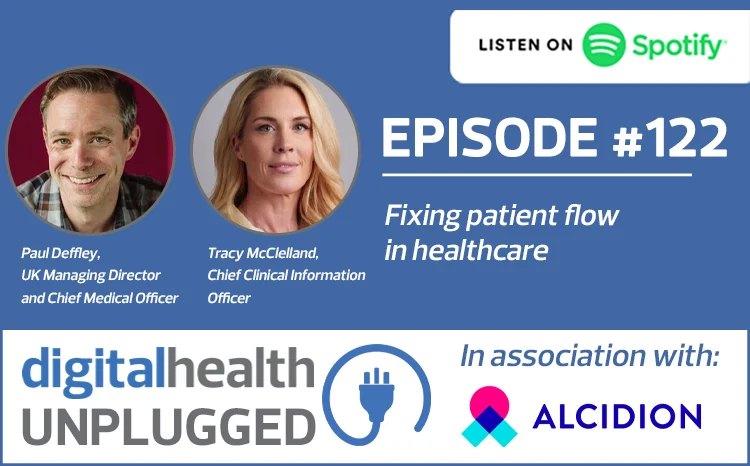
In the latest episode of Digital Health Unplugged, host Jordan Sollof sits down with two of the industry’s foremost experts on digital transformation: Paul Deffley, UK Managing Director and Chief Medical Officer at Alcidion, and Tracy McClelland, the firm’s Chief Clinical Information Officer. Together, they dissect the anatomy of the current crisis, explore the transformative potential of digital tools, and outline a roadmap for leaders aiming to overhaul their operational workflows.
The Core Challenge: Why Patient Flow is a Safety Issue
At its most fundamental level, patient flow is not merely an administrative exercise in bed management; it is a clinical imperative. When patients become "stuck" in emergency departments or are held in wards longer than medically necessary, the downstream effects are immediate: ambulance handovers are delayed, elective surgeries are canceled, and staff burnout accelerates.
During the podcast, Deffley and McClelland emphasize that "flow" is essentially the pulse of a hospital. When the pulse is erratic, the patient experience suffers. "Getting it right isn’t just about efficiency metrics," Deffley notes. "It’s about patient safety. When flow is broken, we see a direct correlation with increased mortality risk and a degradation of care quality."
The discussion moves beyond the surface-level frustration of waiting rooms, delving into the systemic bottlenecks that often go unnoticed—such as poor communication between multidisciplinary teams and the lack of real-time visibility into ward capacity.
Chronology of a Crisis: From Paper Trails to Digital Insights
The conversation tracks the historical evolution of how NHS trusts have attempted to manage flow. For decades, the reliance on manual processes—whiteboards, handwritten notes, and sporadic phone calls—created an "information vacuum."
The Legacy Era
Historically, hospital wards functioned in silos. A consultant in Orthopaedics might not know the status of a bed in Geriatrics, and pharmacy departments were often the last to know that a patient was ready for discharge. This lack of transparency meant that "discharge planning" often began on the day of discharge, rather than at the point of admission.
The Digital Pivot
The recent shift, championed by Alcidion and other innovators, marks a transition from reactive firefighting to proactive management. By integrating data streams from electronic patient records (EPRs), diagnostic systems, and pharmacy logs, hospitals are beginning to build a "single source of truth." This digital maturity allows leaders to predict discharge bottlenecks before they manifest as corridor care.
Real-World Evidence: The South Tees Model
To move the conversation from theory to practice, the guests highlight the successes observed at the South Tees Hospitals NHS Foundation Trust. By implementing sophisticated digital orchestration tools, the trust has been able to visualize patient journeys in real-time.
McClelland explains how this technology acts as a "flight control" for the hospital. By aggregating data, clinicians can identify which patients are medically fit for discharge but are waiting for specific interventions—such as transport or social care packages. This granular level of detail allows for targeted intervention, reducing the "length of stay" (LOS) metrics that currently plague NHS performance data.
The South Tees example serves as a blueprint for other trusts: it is not necessarily about hiring more staff, but about providing existing staff with the visibility required to make informed, data-driven decisions.
Key Findings from the Public Policy Projects (PPP) Report
A significant portion of the episode is dedicated to the recent Public Policy Projects report, a comprehensive analysis of bed management and patient flow in which Alcidion played a pivotal role. The report serves as a wake-up call for policymakers and hospital executives alike.
Key Recommendations:
- Standardization of Data: The report calls for a unified approach to data collection. Currently, trusts report data in disparate formats, making it impossible to benchmark performance accurately at a national level.
- Interoperability: Digital tools must "talk" to one another. The days of closed-loop proprietary systems must end if the NHS is to achieve a seamless flow of information.
- Clinical Ownership: Flow cannot be delegated solely to "bed managers." It must be a core clinical priority, owned by consultants, nurses, and allied health professionals.
- Cultural Shift: Technology is an enabler, but culture is the engine. The report highlights that digital tools only work when there is a organizational commitment to breaking down departmental silos.
Official Perspectives: The Experts Speak
For those in leadership roles looking to make tangible changes "starting tomorrow," Deffley and McClelland offer a pragmatic, three-step approach:
1. Establish Real-Time Visibility: You cannot manage what you cannot see. Leaders must audit their current data visibility. Are your ward boards updated in real-time? Is the information accessible to everyone involved in the patient’s care?
2. Focus on "Discharge Readiness": Start the discharge conversation at the point of admission. By defining the "estimated date of discharge" (EDD) early, the entire multidisciplinary team can align their work toward a common goal.
3. Empower the Workforce: Provide clinicians with mobile-first tools. If a doctor has to walk to a computer terminal to update a patient’s status, the information will always be outdated. Mobile access is the key to agility.
Looking toward 2026, the pair hints at the next frontier for Alcidion: the integration of predictive analytics. By utilizing machine learning, hospitals will soon be able to forecast bed occupancy rates days in advance, allowing for proactive staffing adjustments and elective surgery scheduling that accounts for predicted surges in emergency demand.
Implications for the Future of Healthcare
The implications of the Digital Health Unplugged discussion are profound. The NHS is currently at a crossroads. As the population ages and the complexity of chronic conditions increases, the current manual-heavy model of hospital operation is simply unsustainable.
The Economic Argument
Beyond clinical outcomes, the economic argument for optimizing flow is undeniable. Every hour a bed is occupied unnecessarily is an hour that could have been used for an elective surgery—the very procedures that generate revenue and reduce the NHS waiting list backlog. By improving flow, trusts can effectively "create" capacity without the massive capital expenditure of building new wings.
The Staffing Dimension
Perhaps the most overlooked benefit is the impact on staff morale. Clinicians enter the medical profession to care for patients, not to spend hours navigating administrative hurdles or hunting for available beds. A digital-first flow system restores the "joy of work," allowing staff to focus their expertise on clinical decision-making rather than logistical coordination.
Conclusion: Moving Toward a Seamless NHS
As the conversation concludes, the message from Paul Deffley and Tracy McClelland is one of cautious optimism. The challenges facing the NHS are significant, but they are not insurmountable. Through the strategic application of digital health technology, a commitment to data-driven governance, and a cultural shift toward multidisciplinary collaboration, hospital leaders can transform their institutions into highly efficient, patient-centered hubs of care.
The Public Policy Projects report and the successes at South Tees prove that the solutions are already here. The next step is scaling these innovations across the wider NHS landscape. As we look toward the developments planned for 2026, one thing is clear: the hospitals that invest in flow today will be the ones that define the standards of excellence for the next generation of healthcare.
For those interested in the full discussion, the latest episode of Digital Health Unplugged is available now on Spotify, Apple Podcasts, and the Digital Health YouTube channel. To stay updated on the latest trends in NHS digital transformation, subscribe to the Digital Health newsletter.