










As May arrives, the United States once again observes National Physical Fitness and Sports Month—a tradition that serves as a cornerstone of American public health policy. Originally established in 1983 by President Ronald Reagan, this month-long initiative has become a vital platform for promoting wellness across all demographics. However, the movement to prioritize the physical condition of the American populace is not a modern invention; it is a multi-generational commitment that has transformed from a Cold War security concern into a multifaceted approach to holistic health, nutrition, and athletic excellence.
The Genesis of a Movement: From Security to Wellness
The roots of the Presidential Council on Sports, Fitness, and Nutrition (PCSFN) reach back to 1955, a pivotal moment in American history. When President Dwight D. Eisenhower was presented with the findings of the Kraus-Weber test—a study that compared the muscular strength and flexibility of American school children to their European counterparts—the results were alarming. Nearly 60% of American children failed at least one basic core strength test, compared to just 9% of European youth.
Recognizing that a physically deficient youth population represented a looming national security risk, Eisenhower took decisive action. In 1956, he signed Executive Order 10673, formally establishing the President’s Council on Youth Fitness. This was more than a public relations move; it was a strategic investment in the future strength of the nation. For Eisenhower, physical fitness was synonymous with national vitality.
Chronology: The Evolution of the Council
Since its inception, the council has undergone significant thematic and structural changes, reflecting the shifting priorities of the American health landscape.
- 1956: President Eisenhower establishes the President’s Council on Youth Fitness.
- 1961: President John F. Kennedy, an advocate for physical vigor, invites fitness icon Jack LaLanne to assist in revamping physical education curricula. This era prioritized calisthenics and equipment-free exercises for public schools.
- 1960s-1970s: Under President Lyndon B. Johnson, the council expanded its scope to explicitly include sports, recognizing the role of competitive activity in building character and community.
- 1983: President Ronald Reagan officially designates May as National Physical Fitness and Sports Month, cementing the focus on health as a daily necessity for all citizens.
- 1990-1993: President George H.W. Bush appoints seven-time Mr. Olympia Arnold Schwarzenegger as chairman. This tenure marked a significant intersection between professional bodybuilding and federal policy.
- 2010: President Barack Obama broadens the council’s mandate to include nutrition, acknowledging that physical activity is inextricably linked to dietary habits.
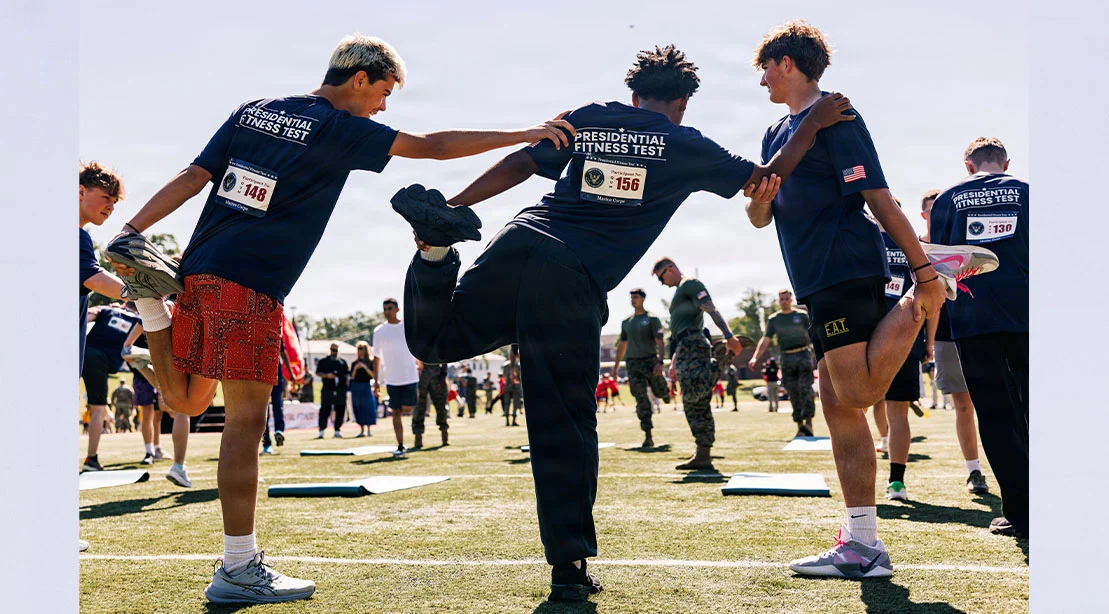
- 2020s-Present: Under the administration of President Donald Trump, the council saw a "back to basics" approach, including the reinstatement of the Presidential Physical Fitness Award and the Presidential Fitness Test, alongside a renewed emphasis on the influence of bodybuilding icons.
The Bodybuilding Connection: A Reservoir of Expertise
The influence of the bodybuilding world on the PCSFN cannot be overstated. By bridging the gap between professional aesthetic training and public health advocacy, these leaders have provided a blueprint for longevity and functional strength.
The appointment of Arnold Schwarzenegger in 1990 served as a watershed moment. Schwarzenegger viewed his chairmanship as a "rent" payment to the nation, leveraging his platform to promote the "Great American Workout." His successors, including eight-time Mr. Olympia Lee Haney, continued this legacy by emphasizing parental responsibility. Haney’s mantra—that parents are the first and most vital role models for their children—shifted the focus from school-based programs to family-centric wellness.
More recently, the council has integrated figures such as Lou Ferrigno, Dr. Robert Goldman, and current Muscle & Fitness Military Editor Rob Wilkins. These individuals, with deep ties to the International Federation of Bodybuilding and Fitness (IFBB) and the Weider legacy, have helped maintain the council’s relevance in a modern era defined by data-driven fitness.
Supporting Data: The Modern Health Crisis
The necessity for such a council remains as urgent as it was in 1955. Today, the nation faces a complex set of health challenges. Research indicates that over 75% of American youth currently do not meet the physical requirements to serve in the United States military. This statistic has reignited the conversation regarding physical wellness as a matter of national security.
In 2026, the scientific understanding of movement, recovery, nutrition, and sleep is at an all-time high. Yet, the gap between knowledge and application remains wide. The current administration has responded by launching resources like whitehouse.gov/fitness, an interactive hub that provides clear, actionable targets for young Americans. By providing a standardized benchmark, the government aims to re-incentivize physical excellence through the revamped Presidential Physical Fitness Award.
Official Responses and Strategic Vision
The current administration has made it clear that physical dedication is a prerequisite for a resilient society. During his most recent proclamation of National Physical Fitness and Sports Month, President Trump emphasized that "physical dedication sharpens the mind, steels the will, and produces the kind of character that Americans carry into every aspect of their lives."
This sentiment is echoed by current members of the council. Olympia President Dan Solomon, following a 2024 meeting with council members, praised the collaborative effort to address America’s health crisis. "The council is playing an important role by shining a spotlight on America’s pursuit of longevity, strength, fitness, and overall health," Solomon remarked.
The appointment of two-time U.S. Open golf champion Bryson DeChambeau as chairman and the inclusion of WWE Hall of Famer Paul "Triple H" Levesque signifies a modern, multidisciplinary approach. By bringing in elite athletes from diverse fields, the PCSFN is attempting to make physical fitness aspirational rather than purely obligatory.
Implications: The "Decade of Sport" and Beyond
As the United States prepares to host a "Decade of Sport"—including the 2028 Summer Olympics in Los Angeles, the 2034 Winter Olympics in Salt Lake City, and the upcoming World Cup—the nation stands at a unique crossroads. These events provide an unprecedented opportunity to galvanize the public.
The implications of this movement are far-reaching:
- Public Health Resilience: By focusing on the youth, the council aims to reduce the long-term burden of chronic, lifestyle-related diseases on the American healthcare system.
- Military Readiness: Addressing the physical fitness gap among young adults is a primary objective to ensure that the nation’s defense forces remain robust and capable.
- Cultural Shift: By emphasizing that fitness is a daily requirement—not just an occasional hobby—the council hopes to foster a culture where physical activity is integrated into the rhythm of daily life, much like brushing one’s teeth.
- Community Engagement: As Lee Haney famously noted, the cycle of health begins in the home. The council’s focus on parental leadership is designed to break cycles of sedentary behavior in the next generation.
Conclusion: The Path Forward
The history of the President’s Council on Sports, Fitness, and Nutrition is a testament to the idea that a nation is only as strong as its citizens. From the shock of the Kraus-Weber test results in the 1950s to the high-tech, data-driven wellness initiatives of today, the mission has remained remarkably consistent: to empower Americans to achieve their physical potential.
As we look toward the 250th anniversary of the United States, the challenge remains the same. Whether through the lens of a bodybuilding legend, a professional golfer, or a concerned parent, the message is uniform: physical wellness is a personal responsibility with national implications. By investing in our own health today, we are, in essence, investing in the stability and longevity of the country.
For those looking to participate in this national mission, the resources provided by the PCSFN—available at odphp.health.gov/pcsfn—offer the necessary guidelines to start a personal fitness journey. As the council’s history proves, the small steps taken by individuals—a workout, a nutritious meal, or a commitment to daily activity—collectively form the bedrock of a stronger, healthier, and more resilient America.
The "Decade of Sport" is not just a time for spectating; it is a call to action for every American to step onto the field, take responsibility for their health, and contribute to the collective strength of the nation.