










The Democratic Republic of Congo (DRC) and its neighboring regions are currently grappling with a public health emergency of alarming proportions. An escalating Ebola virus outbreak has claimed at least 220 lives, with suspected cases rapidly approaching the 1,000-mark. As the World Health Organization (WHO) sounds the alarm, the international community is witnessing a harrowing convergence of medical, political, and social obstacles that are stifling containment efforts.
In a recent interview, Geoff Bennett of KFF Health News sat down with public health expert Dr. Celine Gounder to dissect the structural failures and the dangerous volatility characterizing this latest surge. The picture painted is one of a fragile region struggling to contain a highly lethal pathogen under the weight of armed conflict, deep-seated communal mistrust, and a significant reduction in global health funding.
The Core Facts: A Pathogen Out of Control
The current Ebola outbreak is defined by its speed and its geography. With mortality rates climbing and transmission vectors crossing porous borders, the virus is moving faster than current containment protocols can track. Ebola, a viral hemorrhagic fever, is notorious for its high fatality rate and the intensive, highly specific care required to manage it.
The epicenter remains in the DRC, where the environment is uniquely hostile to traditional public health interventions. Unlike previous outbreaks that occurred in more stable or predictable environments, this crisis is unfolding amidst zones of active conflict. The logistical challenge of delivering vaccines, setting up isolation wards, and ensuring safe burial practices is compounded by the fact that health workers are increasingly becoming targets of violence.
Chronology of a Mounting Crisis
To understand the current state of the epidemic, one must look at the timeline of events that have led to this point.
- Initial Detection: The emergence of the virus in local communities initially saw low-level transmission, but as it reached urban centers like Bunia and Goma, the rate of infection began to accelerate.
- The Breakdown of Trust: Early in the outbreak, local populations expressed deep skepticism toward health authorities. This sentiment, often rooted in historical grievances and the presence of armed groups, has metastasized into outright hostility.
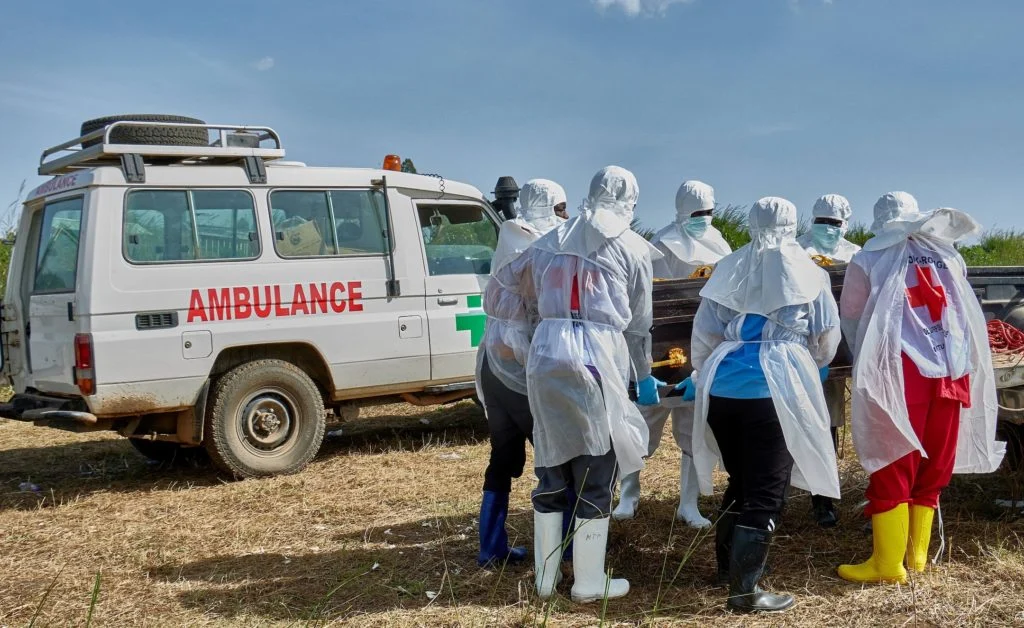
- Militarization of Public Health: As healthcare facilities faced physical attacks, the response was altered to include military and police escorts for Red Cross teams. While this provides physical protection, it has arguably exacerbated the disconnect between the responders and the communities they serve.
- Regional Spillover: The virus has not remained contained. Reports from Uganda indicate that the infection has crossed international borders, raising alarms that major regional travel hubs—such as Kampala—could become secondary epicenters.
Supporting Data: Why Response Efforts Are Stalling
Dr. Celine Gounder, drawing on her experience during the 2014-2016 West African Ebola epidemic, emphasizes that we are seeing a "perfect storm" of conditions. The most harrowing statistic provided is the "one in five" rule: currently, only one in five high-risk contacts of confirmed Ebola cases are being successfully traced and monitored.
The Contact Tracing Gap
Contact tracing is the bedrock of infectious disease control. For a virus as contagious as Ebola, a 21-day observation period is standard for anyone exposed to an infected individual. Without the personnel and the community cooperation to conduct this follow-up, infected individuals remain in the community, potentially spreading the virus to family members and neighbors before they are even aware they are sick.
The Role of Safe Burials
Ebola is most transmissible upon death. Traditional burial rites often involve direct contact with the deceased, which serves as a primary vector for the virus. Safe, dignified, and culturally sensitive burial teams are essential, yet these teams are currently under-resourced and often met with violence. When communities reject these teams, the cycle of infection continues unabated.
Official Responses and the Funding Deficit
The global response is currently under significant scrutiny, particularly regarding the role of USAID and other international aid agencies. Dr. Gounder highlights that funding cuts have had a tangible, devastating impact on the ground.
When international funding for local health infrastructure is slashed, the "last mile" of the response—the local workers who know the terrain, the culture, and the people—is dismantled. These workers are not just medical professionals; they are negotiators, educators, and the first line of defense. By undermining their capacity, the global community has inadvertently left the door open for the virus to spread unchecked.
The "Next-Generation" Vaccine Dilemma
While researchers at institutions like the University of Oxford are exploring next-generation vaccine technologies—similar to those that proved successful during the COVID-19 pandemic—Dr. Gounder strikes a note of caution.
"This is still very early stage," she notes. "I’m not aware of anything that is ready for human clinical trials at this stage." While scientific innovation is vital, the current crisis requires immediate deployment of existing resources, rather than waiting for a technological breakthrough that is not yet ready for "prime time."
Implications: The Risk to the Global Community
A critical question for the international community is whether this regional crisis could transform into a global pandemic. Dr. Gounder offers a nuanced perspective that distinguishes between the risk of sporadic cases and the risk of sustained, explosive transmission.
Why Western Nations Are at Lower Risk
Unlike in the affected regions of Central Africa, health systems in the West possess robust water, sanitation, and hygiene (WASH) infrastructure. Furthermore, infection control protocols in Western hospitals are designed to handle high-consequence pathogens. The likelihood of an outbreak sustaining itself in a developed nation is low, though sporadic cases introduced through international travel remain a theoretical possibility.
The Regional Threat
The true danger is the regional instability the outbreak creates. By destabilizing health systems, disrupting labor markets, and increasing the number of displaced persons, the Ebola outbreak threatens to exacerbate the existing armed conflicts in the region. This creates a feedback loop: war prevents health access, and the lack of health access fuels the fear and chaos that drive further conflict.
Conclusion: The Path Forward
The resistance faced by health workers on the ground, as described by Red Cross volunteer Vanny Birungi, is a sobering reminder of the human element in public health. When she says, "Some people want to stone us, but we’re not going to give up," she highlights the immense courage required to combat this disease.
However, courage alone is insufficient. The containment of this Ebola outbreak requires:
- Restoration of Funding: Immediate reinvestment in local, community-based health workers and contact tracing infrastructure.
- Diplomatic Engagement: Working with local leaders to bridge the trust gap, ensuring that health interventions are seen as a communal benefit rather than an external imposition.
- Security for Aid Workers: A delicate balance must be struck to ensure that health workers are protected without turning public health efforts into a military operation that alienates the population.
As the death toll continues to rise, the international community must decide whether it will treat this as a regional tragedy to be observed from afar or as a global health imperative that demands immediate, coordinated, and well-funded action. The lessons of 2014 were supposed to be learned; this current crisis is the ultimate test of whether that knowledge has been applied.
For now, the situation remains precarious. With nearly 1,000 cases and a death toll that is likely under-reported due to the difficulty of gathering data in conflict zones, the world must watch the DRC with both empathy and a renewed commitment to global health security. The virus is moving fast, and as history has shown, the cost of a delayed response is always measured in lives.