










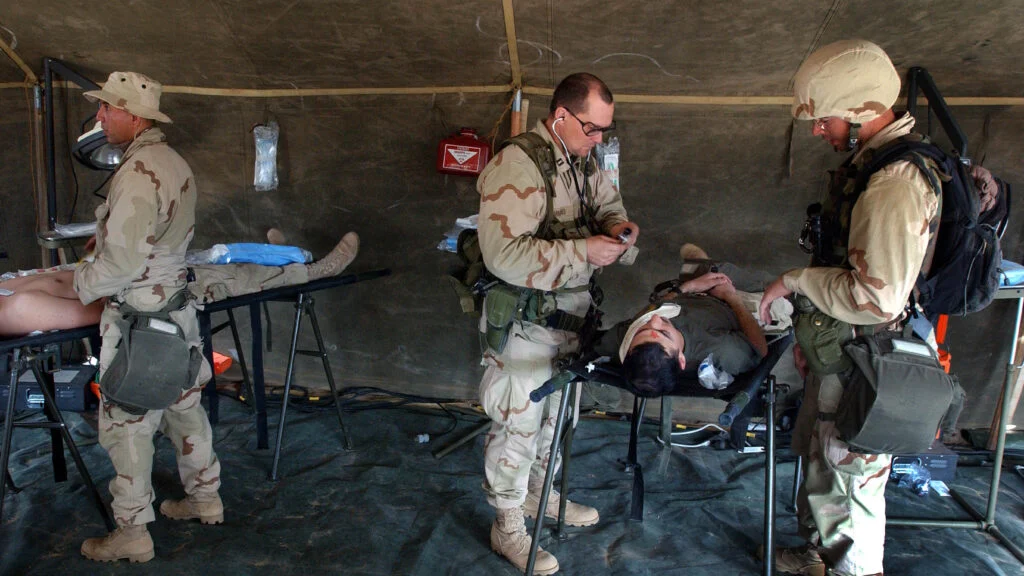
The ongoing conflict in Iran has served as a brutal, clarifying lens for the United States military. While defense analysts have spent decades churning out policy papers on industrial base capacity and the procurement of hypersonic missiles, the war has forced an uncomfortable, honest reckoning with the most fundamental element of military power: the health and survival of the warfighter.
Amid the clamor over supply chains and weapons platforms, a critical vulnerability has remained obscured—the systematic degradation of the uniformed medical and technical workforce. Without a robust, highly trained cadre of physicians and specialists, sustained military operations are not just difficult; they are impossible. Today, the U.S. military’s medical infrastructure is hemorrhaging talent, and the pipeline designed to replace it is drying up, leaving the nation’s defense apparatus dangerously exposed.
The Anatomy of the Medical Recruitment Failure
The tri-service medical corps—encompassing the Army, Navy, and Air Force—is currently facing a recruitment and retention crisis that defies simple budgetary fixes. According to a landmark 2024 study by the RAND Corporation, a larger-than-expected proportion of military physicians are opting to exit the service the moment their contractual obligations are satisfied.
The reasons for this exodus are multifaceted, but three drivers stand out: a staggering pay disparity, an ever-increasing administrative burden, and, perhaps most alarmingly, the atrophy of clinical skills due to bureaucratic mismanagement.
The Financial Chasm
The compensation gap between military service and civilian practice has become the most intractable barrier to recruitment. A 2020 report from the Government Accountability Office (GAO) revealed that in two-thirds of medical specialties, military physicians cannot reach even the 20th percentile of their civilian counterparts’ earnings. For procedural specialists—the very surgeons and trauma experts needed on the front lines—the annual income gap can exceed $400,000. In an era of crushing medical school debt, this financial sacrifice is increasingly viewed as untenable by young doctors.
The Skill Degradation Crisis
Beyond money, there is a professional malaise affecting the corps. A June 2025 Department of Defense Inspector General report highlighted a systemic failure in how medical officers are utilized. Many emergency medical officers, tasked with maintaining "wartime readiness," are assigned to garrison hospitals where they perform little to no direct patient care. When highly trained specialists are relegated to administrative roles or low-acuity settings, their clinical skills degrade. They are essentially being asked to prepare for the rigors of combat surgery while being systematically deskilled by the very institution they serve.
A Chronology of a Shrinking Pipeline
The path to becoming a military physician has historically been a proud, albeit arduous, tradition. Most enter through the Health Professions Scholarship Program (HPSP), which funds medical school in exchange for an active-duty commitment. Others graduate from the Uniformed Services University of the Health Sciences (USUHS), incurring a seven-year service obligation.
However, the demographic landscape of American medicine has shifted drastically since the late 20th century.
- 1973: The era of the draft, when a young Robert Krasner entered the Navy Medical Corps. At the time, military service was seen as a standard civic duty, and the military health system was a world-class training platform.
- 2000s: The shift toward an all-volunteer force saw a gradual widening of the gap between military and civilian medical practice, yet patriotism and the prestige of military medicine kept recruitment numbers stable.
- 2017: A pivotal year when legislative changes eliminated the "above-the-line" deduction for unreimbursed military expenses, further penalizing those who served in the reserves.
- 2022: Data from the American Medical Association confirms that the era of the "independent physician" has ended, with fewer than half of U.S. physicians owning their practices. The military’s recruiting model, however, has failed to adapt to this corporate reality.
- 2024–2025: Current studies confirm a "hemorrhaging of talent," with the Association of American Medical Colleges (AAMC) projecting a national physician shortage of up to 86,000 by 2036, forcing the military to compete in a hyper-competitive, shrinking labor market.
The Cultural Disconnect: Why the Talent Pool is Receding
The military is not only struggling with economics; it is struggling with relevance and culture. The medical student population today is more diverse than ever, with women comprising nearly 50% of matriculants. My conversations with medical students and residents suggest that a significant segment of this new generation is hesitant to engage with the military.
Many view current institutional policies as exclusionary or misaligned with their values. When a large, highly talented cohort of potential recruits decides that the military is not a place where they can thrive, no signing bonus—no matter how large—will bridge the gap. The military must reckon with the reality that its recruitment messaging is failing to resonate with the values of the next generation of American healers.
The Path Forward: Structural Reform
If we are to preserve the tradition of American military medicine, we must move beyond cosmetic fixes and embrace structural, institutional reform. The military must stop trying to fit 21st-century medicine into a mid-20th-century bureaucratic box.
1. The Medical Readiness Partnership Tax Credit
The military should stop viewing civilian employers as competitors and start viewing them as partners. Congress should establish a "Medical Readiness Partnership Tax Credit." If a university health system or a private-equity-backed medical group releases a physician for military service, the government should provide a tax credit of $1,500 to $2,000 per day of duty. This transforms military service from a "scheduling liability" into a "financial asset" for the hospital, incentivizing employers to actively support their staff’s service.
2. Modernizing Benefits
The individual physician needs more than just a paycheck; they need the security to balance a dual career. This includes restoring the above-the-line tax deduction for military expenses, providing robust family healthcare coverage, and creating a path toward partial pensions for those who serve vital roles without necessarily completing a full 20-year career.
3. Streamlining Credentialing
The bureaucratic friction of military medical credentialing is a major deterrent. We need a standardized "Green Card" for military medicine—a process that automatically recognizes civilian board certification and hospital privileging as the baseline for military service. By removing months of administrative hurdles, the military can tap into the talent pool more effectively.
Implications for National Security
The consequences of failing to act are profound. If the military medical system continues its current trajectory, we will reach a breaking point where, in the event of a large-scale conflict, the ability to provide life-saving care on the battlefield will evaporate.
Evidence from current tri-service embedding programs—where military surgeons rotate through civilian Level I trauma centers—shows that these physicians accumulate readiness points five to ten times faster than those at traditional military hospitals. These partnerships represent the future of military medicine: a synergy where civilian hospitals gain elite, combat-tested specialists, and the military retains a razor-sharp, deployment-ready force.
Conclusion: The Call to Service
There is no shortage of young, talented clinicians who feel a genuine, deep-seated desire to contribute to the public good. They are looking for ways to bridge the gap between medicine and national security. They want to be part of something larger than themselves.
The military has an under-told story to share—a history of contributions to vaccine development, infectious disease control, and disaster response that remains one of the most compelling narratives in public health. But to capture this talent, the military must offer more than nostalgia. It must offer a modernized, flexible, and respectful framework that acknowledges the professional realities of the modern physician.
The time for policy papers has passed. The time for structural reform is now. If we do not act to secure the future of our medical corps, we will find ourselves in the next conflict with the best weapons in the world, but without the hands required to heal the men and women who use them.