











For decades, the tricuspid valve has been colloquially referred to by cardiologists as the "forgotten valve." Situated between the heart’s right atrium and right ventricle, its primary role is to ensure unidirectional blood flow toward the lungs. When this valve fails to close properly—a condition known as tricuspid regurgitation (TR)—blood leaks backward, forcing the heart to work harder and often leading to debilitating symptoms like fatigue, fluid retention, and heart failure.
Historically, surgical intervention for isolated tricuspid regurgitation was approached with extreme trepidation. Surgeons and cardiologists often viewed the procedure as carrying an unacceptably high mortality risk, frequently opting for medical management or diuretics rather than corrective surgery. However, a seismic shift is underway. With the emergence of advanced risk-prediction modeling and the recent introduction of minimally invasive transcatheter technologies, the medical community is reassessing the viability of treating this once-neglected condition.
Main Facts: A New Paradigm for Tricuspid Care
The landscape of cardiovascular intervention is currently undergoing a significant transition. For years, the primary barrier to treating isolated tricuspid regurgitation was a clinical perception of high surgical risk. Because the tricuspid valve is often involved in complex, multi-valve heart conditions, isolating it for repair was traditionally reserved for the most dire cases, often resulting in poor outcomes.
However, recent data derived from the Society of Thoracic Surgeons (STS) database is challenging these long-held assumptions. The development of new predictive models suggests that the actual operative mortality risk for isolated tricuspid valve surgery may be significantly lower than the historical benchmarks that deterred physicians from recommending surgery.
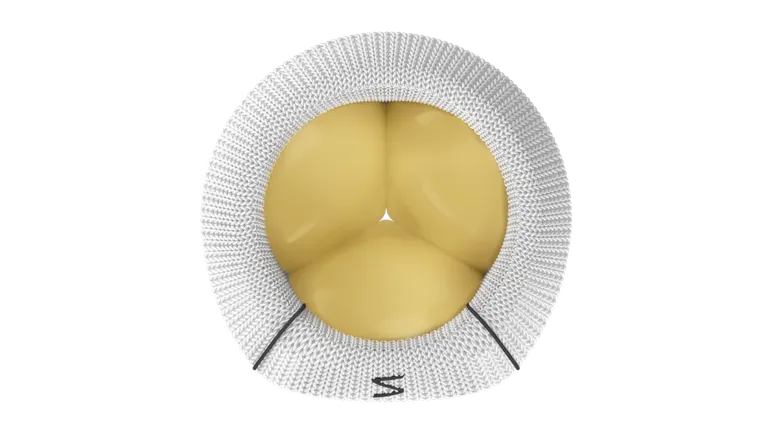
This shift is occurring in parallel with the commercial availability of the Evoque system, manufactured by Edwards Lifesciences. As the first and only FDA-approved transcatheter tricuspid valve replacement device, Evoque represents a breakthrough in the structural heart space, offering a minimally invasive alternative for patients who are either deemed high-risk for open-heart surgery or who simply seek to avoid the trauma of a sternotomy.
Chronology: From Neglect to Innovation
The path to modern tricuspid intervention has been long and incremental.
- The "Forgotten" Era: Throughout the late 20th and early 21st centuries, TR was largely managed via pharmacological intervention. Because surgical outcomes for isolated TR were poor—often attributed to late-stage patient referral—surgeons were hesitant to operate until the patient’s right-sided heart failure was advanced.
- The Rise of Structural Heart: Following the success of Transcatheter Aortic Valve Replacement (TAVR), the medical device industry turned its gaze toward the tricuspid. Engineering teams began tackling the unique anatomical challenges of the tricuspid valve, which is larger and more variable in shape than the aortic or mitral valves.
- February 2024: A milestone moment occurred when the FDA granted approval to Edwards Lifesciences for the Evoque system. This marked the first time a transcatheter device was cleared to treat tricuspid regurgitation, moving the field away from strictly open-heart procedures.
- May 2024: A pivotal analysis published in the Annals of Thoracic Surgery (and featured via the STS database) provided the statistical ammunition needed to change clinical practice. The study introduced a refined predictive model showing that the operative mortality risk for isolated tricuspid surgery is estimated at 5.6%, a figure considerably lower than the anecdotal fears that dominated the 2000s and 2010s.
- Present Day: Edwards Lifesciences and other industry players are now awaiting further regulatory milestones, including potential label expansions for existing repair technologies like the Pascal transcatheter system.
Supporting Data: Debunking the High-Risk Myth
The recent analysis of the Society of Thoracic Surgeons database is perhaps the most significant development in the field this year. For years, clinicians operated under the assumption that mortality risk for isolated tricuspid surgery was prohibitive.
The new predictive model, however, accounts for a wider array of variables than previous metrics. By standardizing the assessment of patient health, the model demonstrated that an operative mortality risk of 5.6% is achievable. This data provides a crucial "benchmark" for hospitals and heart teams to evaluate whether a patient is a candidate for surgical repair.
Furthermore, the success of the Evoque system provides a "best-of-both-worlds" scenario. Clinical trials for Evoque showed that patients treated with the transcatheter replacement experienced significant improvements in quality of life and reductions in regurgitation. By offering a minimally invasive option that avoids the high-risk environment of a full-scale cardiac surgery, Edwards has effectively lowered the "barrier to entry" for treatment. The availability of both surgery (now better understood through the STS data) and transcatheter replacement (Evoque) means that heart teams can now tailor their approach based on individual patient anatomy and risk profiles.
Official Responses and Strategic Implications
For Edwards Lifesciences, the timing of these developments is strategically fortuitous. The company has positioned itself as the dominant force in structural heart disease, and the confluence of the STS data and the commercial roll-out of Evoque allows them to market their solutions to a broader patient base.
"The recent analysis provides a critical benchmark for the industry," an Edwards representative noted, emphasizing that the data validates the importance of intervention. By proving that the risks are manageable, the company is effectively encouraging cardiologists to screen patients earlier. Early screening is essential, as waiting until the patient reaches end-stage right-heart failure significantly limits the effectiveness of both surgery and transcatheter devices.
Furthermore, the industry is closely watching the progress of the Pascal system. While Pascal is already utilized for other applications, a label expansion for tricuspid disease would provide another vital tool in the toolkit. Should the FDA grant this approval, it would signify a maturing market where physicians can choose between "repair" (using systems like Pascal) and "replacement" (using Evoque), depending on the specific pathophysiology of the patient’s leaky valve.
Implications for the Future of Cardiology
The broader implications for the healthcare system are profound.
1. Shift in Patient Referral Patterns
With lower mortality risks being documented, the "wait-and-see" approach to tricuspid regurgitation is becoming obsolete. Cardiologists are now incentivized to refer patients to structural heart centers sooner. This could lead to a significant increase in the volume of tricuspid procedures performed annually in the United States.
2. Economic and Resource Allocation
As transcatheter procedures become more common, hospitals will need to invest in the specialized imaging and catheterization labs required to support these interventions. While the upfront costs of transcatheter devices are high, they may be offset by shorter hospital stays, lower intensive care unit (ICU) requirements, and faster recovery times compared to traditional open-heart surgeries.
3. The Need for Continued Data Collection
While the 5.6% mortality risk figure is promising, the medical community remains cautious. Continued surveillance is necessary to ensure that these results hold true across diverse patient populations. Future studies will likely focus on long-term durability—specifically, how these transcatheter valves perform five to ten years post-implantation.
4. Patient-Centric Care
Perhaps most importantly, the paradigm shift offers hope to a patient population that previously had few options. Many patients with severe TR are elderly or have multiple comorbidities that make open-heart surgery impossible. The ability to offer a life-altering intervention without the need for a heart-lung machine represents a humanistic win for modern medicine.
Conclusion
The transformation of the tricuspid valve from the "forgotten" to the "emerging" frontier of cardiology is a testament to the power of integrated data and technological innovation. By combining the rigorous analysis of surgical outcomes provided by the Society of Thoracic Surgeons with the sophisticated engineering of devices like the Evoque system, the medical field is entering a new era of proactive heart care.
As we look toward the remainder of the decade, the focus will undoubtedly shift toward optimizing patient selection and refining the timing of these interventions. With the regulatory environment shifting to favor these advancements, the prognosis for patients suffering from tricuspid regurgitation has never been better. The "forgotten valve" is now, firmly and rightfully, at the center of the structural heart conversation.