











By International Affairs Desk
June 1, 2026
Executive Summary: A Strategic Reversion
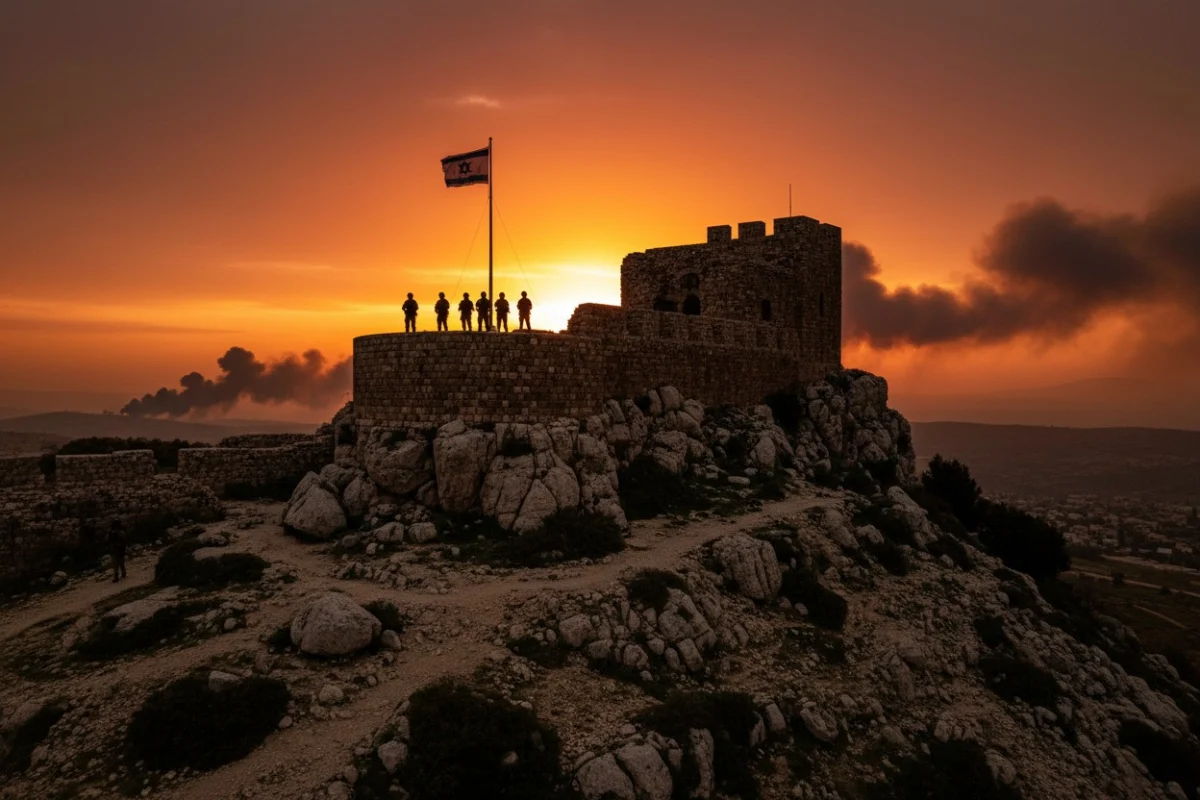
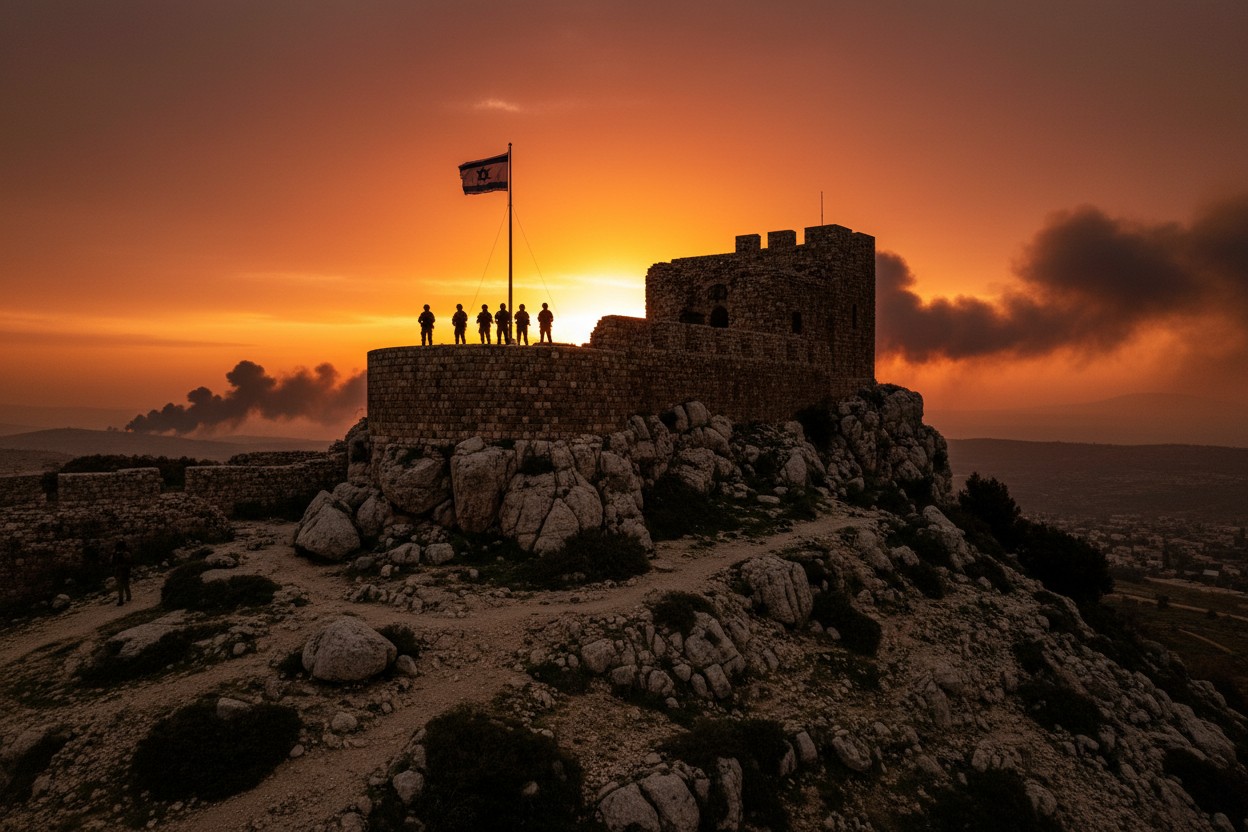
In a move that reverberates with the historical weight of decades of regional conflict, Israeli forces officially seized control of the 900-year-old Beaufort Castle (Qalaat al-Chakif) and its surrounding strategic ridge in southern Lebanon on May 31, 2026. The capture, confirmed by both Israeli military statements and visual confirmation from the field, marks a significant tactical expansion of the ongoing ground maneuver in Lebanon.
Prime Minister Benjamin Netanyahu, framing the development as a “dramatic shift” in military policy, has ordered the Israel Defense Forces (IDF) to broaden their ground operations, pushing deeper into Lebanese territory than at any point in the last three decades. The site, a crusader-era fortress that overlooks the Litani River gorge, served as a primary Israeli military base during the occupation of southern Lebanon from 1982 to 2000. Its reclamation signals a return to a landscape that defined an entire generation of Israeli-Lebanese security dynamics.
Chronology of the Escalation
To understand the current gravity of the situation, one must look at the rapid deterioration of the “Yellow Line” demarcation zone established following the April 17 ceasefire agreement.
- Mid-April 2026: A fragile ceasefire is declared, intended to stabilize the border. However, the agreement fails to address fundamental security concerns, with both Israel and Hezbollah trading accusations of persistent violations.
- Late April – Early May 2026: Israel establishes the "Yellow Line," a buffer zone intended to curtail rocket fire. Hostilities, however, continue to simmer, with Hezbollah intensifying its long-range artillery and rocket strikes in response to perceived Israeli encroachment.
- May 25, 2026: IDF intelligence identifies strategic gaps in the southern Lebanese defense perimeter, leading to a decision to expand the ground maneuver.
- May 31, 2026: The Golani Brigade spearheads an operation to secure the Beaufort ridge. By evening, the Israeli flag is raised above the fortress ruins.
- June 1, 2026: Following the capture, the IDF initiates sweeping expulsion orders for civilian populations south of the Zahrani River, signaling an intent to consolidate control over a wider swathe of territory.
The Strategic Significance of Beaufort Castle
Beaufort Castle is not merely a historical monument; it is a geographic master-key. Perched atop a cliff face overlooking the Litani River, it provides a commanding view of the surrounding valleys, effectively acting as a natural surveillance hub.
During the 1982 invasion, the capture of Beaufort was a central objective for the IDF, then led by commanders who saw the site as a critical "terrorist stronghold." In his memoir A Warrior’s Way, Avigdor Kahalani detailed the intense training required to neutralize the position, highlighting its role as a gatekeeper to the interior of southern Lebanon.
Today, the IDF’s re-entry into the fortress serves a dual purpose: tactical advantage and psychological warfare. Prime Minister Netanyahu’s televised statement—"Today, we have returned to Beaufort in a different way. We have returned united, determined, and stronger than ever"—was a clear signal to both his domestic audience and international adversaries that Israel intends to re-establish a long-term security footprint in the region.
Humanitarian Impact and Tactical Reality
The ground advance has been accompanied by a severe escalation in aerial bombardment. Military reports indicate that the city of Nabatieh is now the focal point of the current offensive. Satellite and ground-level footage show significant destruction to civilian infrastructure, residential districts, and public facilities.
The humanitarian cost is mounting. The issuance of sweeping expulsion orders for residents south of the Zahrani River has triggered a massive displacement of civilians, leading to widespread concern among international humanitarian agencies. While the IDF maintains that its operations are strictly targeted at “Hezbollah operatives and infrastructure,” the presence of massive plumes of smoke over densely populated areas suggests a total war approach that ignores previous urban containment protocols.
Despite the intensity of the fighting, the IDF confirmed that no significant weaponry was discovered within the castle walls during the initial sweep, casting a spotlight on the potential shift of Hezbollah’s defensive tactics toward decentralized, mobile units rather than fixed mountain strongholds.
Regional Implications: The Iran-US Nexus
The conflict in Lebanon has become inextricably linked to the broader regional tensions between Washington and Tehran. Analysts suggest that the current escalation is a direct spillover from the earlier US-Israeli coordinated military actions against Iranian interests.
Diplomatic backchannels have been active but largely ineffective. Reports indicate that Iran has proposed a package deal to the United States via Pakistani mediators: a comprehensive cessation of hostilities in Lebanon in exchange for the reopening of the Strait of Hormuz and a temporary freeze on nuclear enrichment activities. However, with the US administration showing little willingness to engage in a broad-scale regional bargain while Israel is in the midst of an active military campaign, these negotiations have stalled.
The lack of progress in these talks has emboldened hardliners on both sides. Hezbollah, viewing the Israeli advance as an existential threat to its presence in the south, has significantly increased the frequency and payload of its rocket barrages into northern Israel.
International Diplomatic Reaction
The expanding occupation has placed the UN Security Council in a precarious position. France, responding to the rapid shift in facts on the ground, has formally requested an emergency session to discuss the Israeli military’s deeper penetration into Lebanese sovereignty.
The reaction from Jerusalem has been one of defiance. A senior Israeli diplomat dismissed the French request, openly mocking Paris for prioritizing international intervention over its own domestic political challenges. This diplomatic friction underscores a growing rift between Israel and its traditional European allies, many of whom are becoming increasingly critical of the duration and scale of the Lebanese offensive.
The Road Ahead: A New Status Quo?
As the IDF continues to solidify its hold on the ridge, the prospect of a near-term withdrawal seems remote. Prime Minister Netanyahu has been explicit in his directives: the goal is to "deepen and expand our hold in places that were under Hezbollah’s control."
This language suggests that the 2026 offensive is not a temporary incursion but a structural effort to redraw the security architecture of the Israel-Lebanon border. With the ceasefire effectively defunct and diplomatic channels clogged by mistrust and conflicting regional objectives, the conflict appears headed for a protracted phase of attrition.
The capture of Beaufort Castle serves as a grim metaphor for the current reality: a return to the ghosts of the past, with advanced military technology deployed to control ancient heights, all while the civilian population of southern Lebanon remains caught in the crossfire of a war that shows no sign of yielding to diplomacy.
Summary of Key Findings
- Military Objective: Consolidation of the Beaufort ridge and surrounding areas to control the Litani River crossing.
- Political Stance: Israel has signaled a move away from containment toward a long-term, deep-territory security presence.
- Regional Context: The conflict is paralyzed by the failure of US-Iran negotiations, leaving no room for a de-escalation framework.
- Humanitarian Outlook: Displacement is expected to increase as the IDF targets the city of Nabatieh and expands expulsion zones.
For real-time updates and further analysis on the ground situation, refer to our daily situation reports and the provided infographic documenting the history of the Beaufort corridor.