










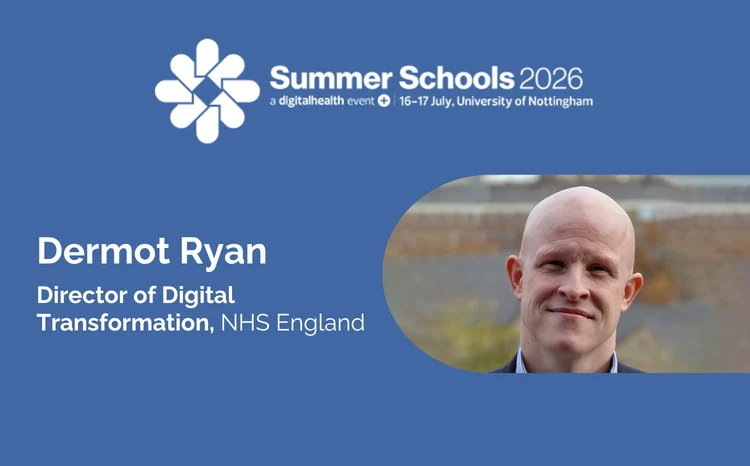
As the NHS stands at a critical juncture in its digital evolution, the announcement that Dermot Ryan, director of digital transformation at NHS England, will headline the upcoming Digital Health Summer Schools 2026 has sent a ripple of anticipation through the health IT community. Set against a backdrop of £2.5 billion in strategic investment, this year’s event promises to be a masterclass in navigating the complexities of modernizing the UK’s most vital institution.
The event, scheduled for 16-17 July at the University of Nottingham, is not merely a conference; it is a high-stakes forum designed to tackle the systemic hurdles of clinical engagement, the redistribution of resources to non-acute settings, and the persistent, thorny challenge of interoperability.
The Strategic Vision: Frontline Productivity at the Core
Dermot Ryan’s keynote address is perhaps the most anticipated session of the two-day summit. Tasked with leading the execution of NHS England’s ambitious Frontline Productivity Programme, Ryan is at the helm of an initiative designed to squeeze maximum efficacy from the £2.5 billion capital injection currently flowing into the health service.
The Frontline Productivity Programme represents a paradigm shift. Rather than viewing digital transformation as an isolated technical project, Ryan’s approach integrates it directly into the workflow of frontline staff. For those in attendance, his insights will provide a rare look behind the curtain of how national policy translates into local, measurable improvements in patient care.
A Chronology of Transformation: From Vision to Execution
The path to the 2026 Summer Schools has been defined by a series of rapid policy shifts and leadership appointments. Over the past eighteen months, NHS England has moved from planning to aggressive implementation.
- Early 2026: The interim leadership for the Frontline Productivity Plan was revealed, signaling a pivot toward operational rigor.
- March 2026: The first wave of speakers was announced, setting a tone of collaborative, multidisciplinary leadership.
- May 2026: The official working programme was released, highlighting a revamped structure that prioritizes small-group, interactive "closed-door" sessions over traditional, passive lecture formats.
- July 2026 (Upcoming): The Summer Schools event will serve as a "state-of-the-nation" summit, providing a bridge between the central strategy and the practical realities of the ward, clinic, and community hub.
This chronology reflects a concerted effort by NHS England to maintain momentum. By placing leaders like Dermot Ryan, national CCIO Dr. Alec Price-Forbes, national CNIO Helen Balsdon, and national CMIO Dr. Wajid Hussain in direct conversation with digital health leaders, the event aims to bridge the gap between national mandates and clinical reality.
Supporting Data and the Economic Landscape
The £2.5 billion investment is the largest of its kind in recent memory, yet the sector remains cautious. The primary challenge is not the availability of capital, but the difficulty of deployment. Research within the Digital Health community suggests that while "digital maturity" is increasing across the board, the return on investment (ROI) remains uneven.
The "Productivity Gap" remains a significant focus for the 2026 agenda. Analysts have pointed out that historical digital investments often failed due to a lack of clinical buy-in. To counter this, the Summer Schools programme has been intentionally designed to include clinical leadership in every conversation. By including figures like Dr. Penny Kechagioglou, chair of the CCIO Networks Advisory Panel, the conference ensures that technical deployment is never divorced from the clinical pathways they are meant to support.
Critical Conversations: Addressing Risk and Future-Proofing
One of the most provocative sessions on the agenda is titled, "AI is now the top risk to patient safety: what can organisations and patients do to protect themselves?" This session brings together a heavyweight panel from Guy’s and St Thomas’, University Hospitals of Northamptonshire, West London NHS, and Patient Safety Learning.
This focus on AI underscores a mature, pragmatic approach to innovation. Rather than buying into the hype, the NHS leadership is choosing to treat AI as a complex, high-risk, high-reward clinical tool that requires rigorous governance. The session will likely explore the ethical implications of algorithmic decision-making and the necessary safeguards for protecting patient data in an increasingly automated environment.
Furthermore, the panel session, "One year on from the 10-year health plan: where are we and what’s next?" will feature Salma Yasmeen, chief executive at Sheffield Health Partnership University NHS Foundation Trust, and Dr. Masoon Nazir, medical director for integrated care at NHS Birmingham and Solihull ICB. This session promises to offer an honest audit of the 10-year plan, evaluating whether the systemic changes envisioned a year ago have taken root at the regional level.
Implications for Digital Leaders: The Shift to Practicality
The decision to revamp the format of the Summer Schools to focus on small-group interaction is perhaps the most significant structural change for 2026. This move acknowledges that digital leaders are no longer looking for high-level theory; they are looking for "how-to" guidance.
The implications for attendees are clear:
- Peer-to-Peer Knowledge Exchange: By facilitating closed-door sessions, the event allows for the sharing of "war stories"—the failures, the bottlenecks, and the unexpected successes that don’t make it into official reports.
- Leadership Skill-Building: The programme is CPD-accredited, emphasizing that leadership is a skill to be honed. Participants will leave not just with a better understanding of policy, but with practical strategies for managing change, negotiating with vendors, and fostering a digital culture within their own organizations.
- Direct Access to Power: The presence of the national CCIO, CNIO, and CMIO allows for a two-way flow of information. It provides a rare opportunity for local leaders to voice concerns about the national strategy directly to those writing it.
The Role of Industry Partnerships
The event is supported by a robust list of industry partners, including AWS, Better, CereCore, Dell Technologies, InterSystems, Microsoft, Nervecentre, Optum Emis, and Salesforce. These partnerships are essential to the ecosystem of the NHS.
However, the event structure ensures that these partners serve as enablers of discussion rather than just exhibitors. By integrating these industry leaders into the conversation about the Frontline Productivity Programme, the Summer Schools foster a more transparent relationship between the NHS and its technology providers. This is crucial for addressing the "interoperability hurdle"—the persistent struggle to ensure that patient data flows seamlessly across systems, regardless of the vendor.
Conclusion: A Call to Action for Digital Leaders
The Digital Health Summer Schools 2026 arrives at a moment of both immense opportunity and profound pressure. With £2.5 billion on the table and a new, more clinical-led approach to digital transformation, the stakes could not be higher.
For current and aspiring digital leaders, the event offers more than just professional development; it offers a seat at the table. As Dermot Ryan prepares to discuss the execution of the Frontline Productivity Programme, attendees are being asked to engage with the reality of what it means to build a digital-first NHS.
With tickets starting at £399, the event is positioned as an accessible, high-value investment in the future of the health service. As workshop bookings open, the message to the community is clear: register early, prepare your questions, and be ready to participate in the most significant transformation the NHS has ever undertaken.
The path forward will not be easy, but the 2026 Summer Schools provide the map, the resources, and the community support required to navigate the challenges ahead. The future of the NHS is digital, and for those who wish to lead that future, the journey begins in Nottingham this July.