








By Mike Stobbe — Associated Press
June 5, 2026
NEW YORK — A sobering new analysis from U.S. health officials has cast a dark shadow over the ongoing Ebola outbreak in Central Africa. According to projections released Friday by the Centers for Disease Control and Prevention (CDC), the current epidemic could surge to 20,000 cases or more if immediate and robust public health interventions are not successfully implemented.
The CDC’s computer modeling, which evaluated a range of potential scenarios, suggests that without the rapid isolation of infected individuals, the region could be facing a humanitarian catastrophe on par with the devastating West Africa epidemic of 2014–2016. That historic crisis resulted in more than 28,000 reported cases and over 11,000 deaths.
The Current Landscape: A Dangerous Trajectory
The situation on the ground remains volatile. As of early June, the Africa Centers for Disease Control and Prevention (Africa CDC) reports approximately 400 confirmed cases and 63 deaths. However, public health experts emphasize that these figures likely represent only a fraction of the true toll, as many infections in remote or conflict-ridden areas remain undiagnosed or unreported.
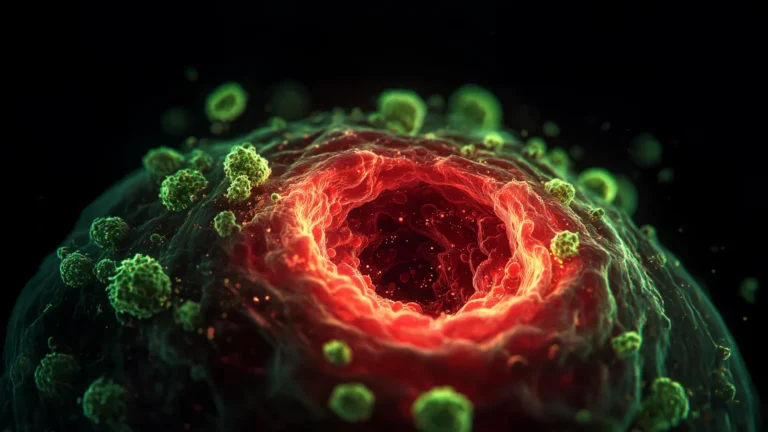
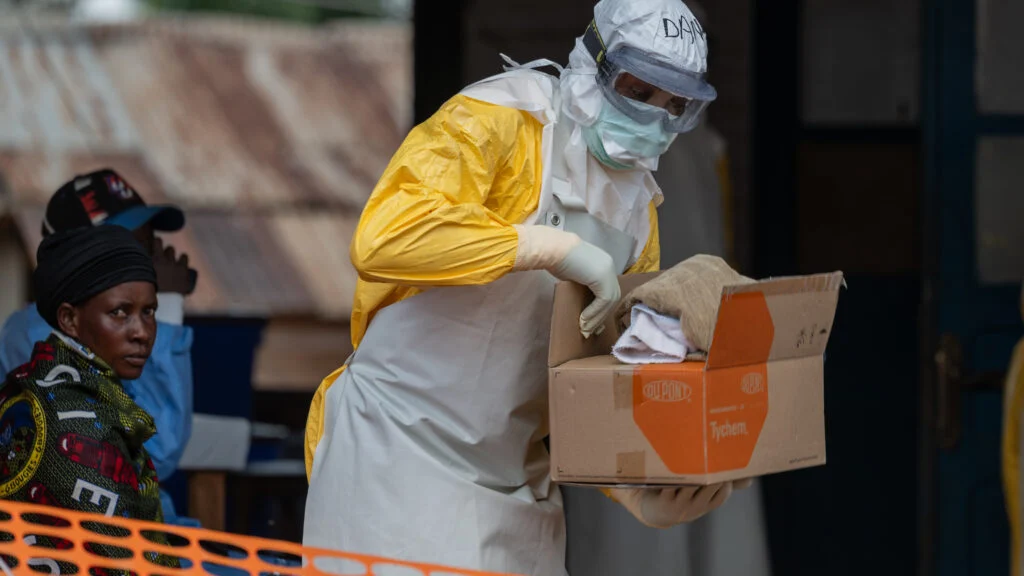
The virus at the center of this outbreak—the Bundibugyo strain—is notoriously deadly. It is transmitted through direct contact with the bodily fluids of infected individuals, including blood, vomit, and semen. Crucially, the medical community currently lacks specific vaccines or targeted treatments for this particular strain, leaving responders to rely on supportive care and rigorous infection control measures to curb the transmission chain.
Chronology of the Outbreak
The current emergency has been marked by delays and systemic challenges:
- February 2026: Epidemiologists now believe the virus began circulating in the region. However, early detection efforts were hindered because health officials initially tested for a different strain of Ebola, leading to a critical window where the virus spread undetected.
- May 2026: The World Health Organization (WHO) formally declared the outbreak a "public health emergency of international concern," elevating the global response to the crisis.
- Late May 2026: CDC modeling began to incorporate data suggesting that roughly 20% of infected persons were being successfully isolated.
- June 5, 2026: The CDC released its formal modeling report, projecting a wide range of outcomes from 10,000 to over 20,000 cases, contingent on the success of containment strategies.
Conflict Complicating Containment
The containment effort is not merely a medical challenge; it is a geopolitical nightmare. The outbreak is occurring in a region fractured by persistent armed conflict. Tensions between the Congolese government and the Rwanda-backed M23 rebel group, coupled with lethal incursions by the Allied Democratic Forces (ADF)—an Islamic State-affiliated militant group—have created a "no-go" environment for many aid workers.
The violence has forced massive waves of civilian displacement, creating a "perfect storm" for viral transmission. As populations flee conflict zones, they inadvertently carry the virus into new, previously unaffected areas, making contact tracing and isolation nearly impossible in certain sectors.
Data Analysis: The Modeling Scenarios
The CDC’s report is an attempt to quantify the "what-ifs" of the epidemic. The models rely on variables including the current rate of isolation, the number of existing cases, and the efficacy of contact tracing.
- The Baseline Scenario: Assuming that 50 people had died by late May and that only 20% of infected individuals were successfully isolated, the simulations point toward a total of 20,000 cases and 4,000 deaths over a three-month period.
- The Optimistic Scenario: If responders can increase the isolation rate to 50% or 70%, the total case count could be curtailed to approximately 10,000.
Satish Pillai, the incident manager for the CDC’s Ebola response, admitted during a briefing that the current isolation rate is unknown but is feared to be on the lower end of the spectrum. Conversely, if the actual mortality rate in late May was higher than currently reported—a strong possibility given the difficulty of data collection in war zones—the projected outcomes could be significantly more dire.
A History of Modeling Uncertainty
It is important to view these projections through the lens of historical precedent. The CDC has been criticized in the past for its modeling accuracy. During the 2014 West Africa epidemic, the agency released a worst-case scenario projection suggesting that 1.4 million people could become infected if no action were taken. The reality proved to be vastly different, with the final case count being more than 50 times lower than the "worst-case" model.
Experts like Jennifer Nuzzo, director of Brown University’s Pandemic Center, are urging caution regarding the latest figures. "I wouldn’t read too much into the specific numbers," Nuzzo stated. "It is exceptionally difficult to make an accurate projection when you are operating with limited data. The model confirms what we have worried about since the beginning: this outbreak is following a dangerous trajectory."
Global Implications and U.S. Preparedness
Despite the alarming projections, U.S. health officials remain confident that the risk of a widespread domestic outbreak is minimal. The CDC released a companion paper on Friday reinforcing this assessment, citing the robustness of U.S. border and health screening protocols.
To protect the U.S. mainland, the federal government has implemented strict travel restrictions. Entry is currently denied to any individual without a U.S. passport, as well as green-card holders who have visited the Democratic Republic of Congo, Uganda, or South Sudan within the previous 21 days. For U.S. citizens who have traveled to these regions, the protocol is rigorous: they must undergo mandatory health screenings and are funneled through four designated "receiving" airports, where they are monitored for signs of the virus.
"I don’t think it’s a scenario that is going to come here and spread broadly," Nuzzo stated earlier this week, echoing the prevailing sentiment among the nation’s top infectious disease experts.
The Path Forward
The path to controlling the Ebola outbreak in Central Africa is narrow. It requires a synchronized effort between international aid organizations, the WHO, and local governments to overcome the obstacles of civil war and limited infrastructure.
As the situation evolves, the primary focus remains on the "three pillars" of outbreak control: community engagement to overcome mistrust of medical interventions, safe burial practices to prevent transmission during funeral rites, and the rapid identification and isolation of patients.
While the CDC’s models serve as a dire warning of what could happen, they also serve as a call to action. The difference between 10,000 cases and 20,000—or even higher—rests on the speed and efficacy of the global response in the coming weeks. For the people of Central Africa, the time for modeling has passed; the time for intervention is now.
The Associated Press Health and Science Department receives support from the Howard Hughes Medical Institute’s Department of Science Education and the Robert Wood Johnson Foundation. The AP is solely responsible for all content.