









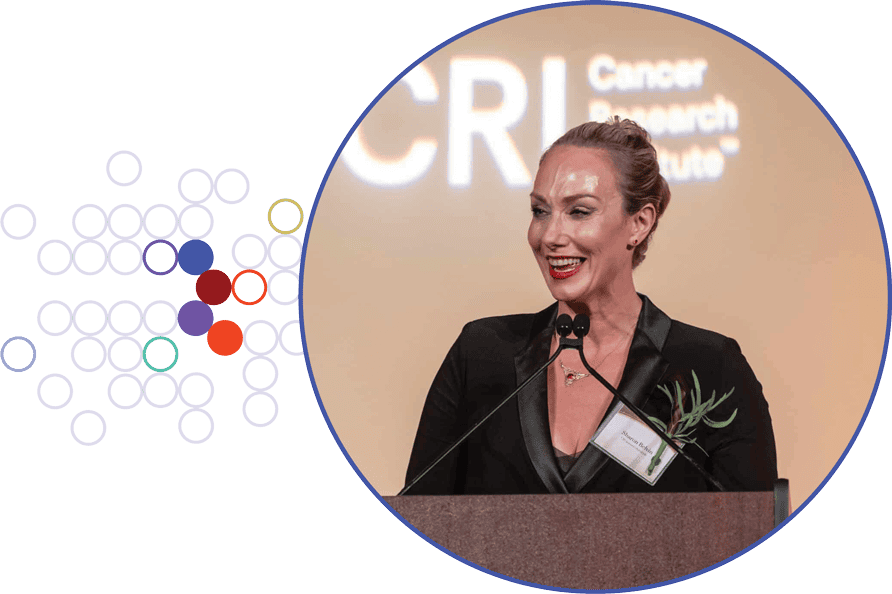
Picking up the kids, navigating the aisles of a grocery store, rushing to a meeting, or planning a child’s birthday party—these are the rhythms of a life lived in motion. For most, these are chores to be crossed off a list. For Sharon Belvin and Jenney Bitner, they are profound, hard-won victories. They are the ordinary, everyday moments that both women, as stage 4 melanoma survivors, once feared they would never see again.
Their stories, separated by years but woven together by the relentless progress of medical science and the deep empathy of shared experience, serve as a testament to the power of immunotherapy. It is a narrative of how clinical research doesn’t just produce data points; it produces futures.
The Weight of the Diagnosis: When the Future Becomes a Question Mark
The phrase "You have cancer" is a linguistic earthquake. It shifts the tectonic plates of one’s reality, turning a path that seemed straight and certain into a labyrinth of shadows.
For Sharon Belvin, that shift happened at the precipice of adulthood. At just 22 years old, she was diagnosed with stage 4 melanoma. In the medical climate of that era, the outlook was grim. There were few arrows in the oncologist’s quiver, and the prognosis suggested that the life she had barely begun to build was already nearing its conclusion. She was forced to confront the haunting possibility of a future she would never get to inhabit.
Years later, the shadow fell across Jenney Bitner. Living in the midst of the global COVID-19 pandemic and deep in the responsibilities of motherhood, Jenney began to suffer from escalating headaches. What she initially dismissed as the stress of parenting soon revealed itself to be something far more ominous: a brain tumor and an aggressive form of cancer. Suddenly, she was racing against a biological clock that seemed to be ticking down with terrifying speed.
Though separated by nearly two decades, both women found themselves staring into the same abyss: the unbearable uncertainty of whether they would survive to see their children grow, their careers flourish, or their lives unfold as they had once imagined.
Chronology of a Breakthrough: From Clinical Trials to Remission
The trajectories of Belvin and Bitner are linked by the evolution of immunotherapy, a field of medicine that fundamentally changed the landscape of cancer treatment.

The Pioneer: Sharon Belvin’s Leap of Faith
When Sharon Belvin was diagnosed, the options were limited. Facing a terminal prognosis, she made the difficult decision to enroll in an early-stage clinical trial for immunotherapy. At the time, this was not a guaranteed cure; it was a leap of faith into the unknown. It was an unproven therapy, and for Belvin, it was a final line of defense.
The results, however, were nothing short of miraculous. The treatment triggered her immune system to recognize and eliminate the cancer cells that had been threatening her life. Slowly, the disease receded. The future, which had felt like a distant, unreachable shore, began to materialize again. Today, two decades later, Belvin remains in remission, having become a living symbol of what medical innovation can achieve.
The Beneficiary: Jenney Bitner’s Fight for Survival
By the time Jenney Bitner was diagnosed in February 2020, the scientific groundwork laid by patients like Belvin had paved the way for more refined treatments. However, Bitner’s road to recovery was arduous. It involved two complex brain surgeries and the premature birth of her fourth child, all while battling the physical and psychological exhaustion of stage 4 cancer.
Her survival was not a single, instantaneous miracle; it was a marathon of endurance. In October 2020, following four rigorous rounds of immunotherapy, her scans confirmed what she had dared to hope for: no evidence of disease.
The Meeting of Minds: Finding the "Worst Club with the Best Members"
The connection between the two women was serendipitous. After seeing Belvin featured in the documentary Breakthrough—a film highlighting the work of Nobel laureate Jim Allison—Bitner’s husband realized they shared a common origin: a small town where he and Belvin had both grown up.
He reached out, and that single act of outreach bridged a gap that spanned years of scientific and personal struggle. Belvin, who had made a silent vow while inside an MRI machine years earlier—that if she survived, she would dedicate her life to helping others navigate the same darkness—responded immediately.
What blossomed was a bond of "chosen family." As Belvin describes it, survivorship is "the worst club with the best members." It is a community built on a foundation of mutual understanding that requires no translation. They share the weight of lingering scans, the bittersweet nature of anniversaries, and the unique, often unspoken, challenges of motherhood while living in the shadow of a past diagnosis.

Supporting Data: The Impact of Immunotherapy
The stories of Belvin and Bitner are not mere anecdotes; they represent a measurable shift in oncology outcomes. According to data from the Cancer Research Institute (CRI), the advent of checkpoint inhibitors—the type of immunotherapy utilized by both women—has transformed metastatic melanoma from a near-certain death sentence into a condition that many patients can live with for years, or even decades.
Clinical data suggests:
- Long-term Survival: Before the immunotherapy era, the five-year survival rate for metastatic melanoma was less than 10%. Recent studies indicate that with modern immunotherapy, a significant percentage of patients are achieving long-term, durable remissions.
- Scientific Advancement: The transition from early, experimental trials to standard-of-care treatments has reduced the toxicity for patients while increasing the efficacy of the immune response.
- Quality of Life: Beyond mere survival, the success of these treatments has allowed patients to return to their "ordinary" lives, maintaining functionality and family roles that were previously considered compromised by the disease.
Official Perspectives: The Role of Advocacy and Research
Leading oncologists and research advocates often point to the "Belvin-Bitner" dynamic as the gold standard for the patient-advocate model. By sharing their experiences, these survivors provide the "human face" of clinical research, which is essential for funding and recruitment for future trials.
"The persistence of our immune system is our greatest ally," notes a spokesperson from a major cancer research organization. "When we look at cases like Sharon’s and Jenney’s, we aren’t just looking at the success of a drug. We are looking at the success of a partnership between scientists, who build the tools, and patients, who have the courage to use them."
Implications: A New Era of Survivorship
The implications of these stories reach far beyond the individuals involved. They suggest a paradigm shift in how we define "recovery."
For Belvin and Bitner, survivorship is not a destination. It is a state of being that is perpetually "in progress." It is the act of choosing to lean into the life in front of them, even when the memory of what was almost lost remains a constant companion.
The Burden and the Gift
There is a profound responsibility that comes with surviving the unsurvivable. Both women speak of the "guilt of the survivor"—the awareness that their path to health was not available to those who came before them. This is what drives their advocacy. They act as beacons for newly diagnosed patients, showing them that the loneliness of a cancer diagnosis can be mitigated by the presence of someone who truly understands the terrain.
The Future of Oncology
As research continues to accelerate, the goal is to make these stories the norm rather than the exception. The transition from "experimental" to "standard" is the primary mission of organizations currently investing in next-generation therapies. By studying the long-term survivors, researchers gain insights into why some patients respond so well to treatment, potentially opening doors to even more effective therapies for those who are currently resistant to existing ones.
Conclusion: More Than Just Time
Ultimately, the story of Sharon and Jenney is a reminder that the true metric of medical success is not just the extension of life, but the quality of the life that is extended. It is the ability to enjoy the "mundane"—the school drop-offs, the grocery runs, and the quiet bedtime stories.
"I feel like I did not appreciate life until it was almost gone," says one of the survivors. "And now, every day is a gift, no matter how mundane."
For these two women, the journey through the darkness has resulted in a deeper, sharper appreciation for the light. They are the living evidence of progress—a promise to the future that even in the face of the most formidable adversaries, there is always room for hope, for connection, and for more time.