










In the ongoing war against cancer, oncologists have long relied on a reactive strategy: administer a potent therapy, monitor the tumor for regression, and—only when the cancer inevitably regrows—pivot to a new line of defense. However, a groundbreaking study published in the journal Genetics suggests that this conventional paradigm may inadvertently provide cancer cells with the time and biological "breathing room" they need to evolve.
By applying the principles of evolutionary biology and sophisticated mathematical modeling, researchers are proposing a radical shift in strategy: instead of waiting for a tumor to develop resistance, clinicians should strike while the cancer is still shrinking. This "kick it while it’s down" approach aims to disrupt the evolutionary trajectory of malignant cells, potentially turning the tide in one of medicine’s most difficult battles.
The Core Problem: Why Cancer is a Moving Target
To understand why this new strategy is so critical, one must first understand the mechanism of treatment failure. Dr. Robert Noble, a Senior Lecturer in the Department of Mathematics at City, St George’s, University of London, and the lead author of the study, notes that the phenomenon of relapse is not merely a failure of a drug to kill cells; it is an evolutionary response.
"Although tumors may at first shrink under therapy," Dr. Noble explains, "in many cases they eventually regrow. These relapses stem from a small number of cancer cells that have gained mutations making the cells resistant to the treatment."
The Mechanics of Mutation
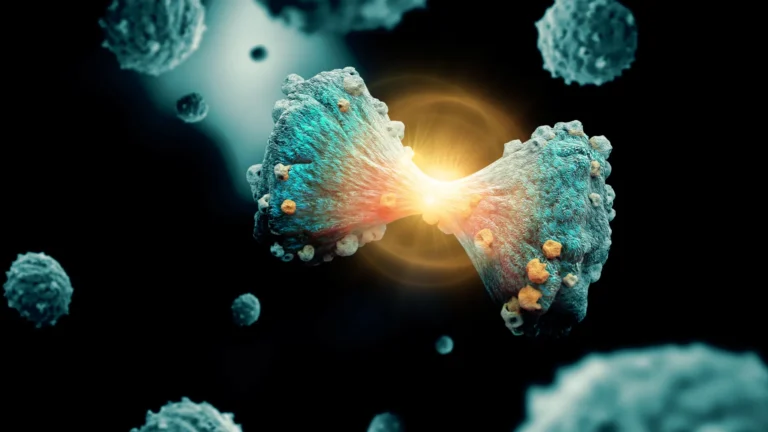
Cancer cells are inherently unstable. As they divide, they accumulate genetic mutations—random changes in their biological "instructions." While most of these mutations are inconsequential, some grant a cell a survival advantage. If a specific mutation allows a cell to survive a chemotherapy drug that kills its neighbors, that cell becomes the progenitor of a new, resistant sub-population.
Under the current standard of clinical care, doctors often continue a treatment until imaging or blood tests confirm that the tumor has begun to expand again. By this time, the tumor has essentially "selected" for a population of resistant cells. Furthermore, because these cells have had time to replicate and evolve further, they may already possess mechanisms that render secondary or tertiary treatments ineffective. The delay is not just a clinical pause; it is a period of accelerated evolution that favors the tumor over the patient.
A New Philosophy: The "Kick It While It’s Down" Strategy
The proposed approach, rooted in evolutionary theory, argues that we must treat the tumor as a dynamic, evolving population rather than a static mass. By switching to a second, distinct therapy before the tumor shows signs of clinical resistance, physicians can alter the "environmental pressure" acting upon the cancer cells.
Evolutionary Pressures and Therapeutic Hurdles
In biology, environmental pressure—such as a changing climate or the introduction of a predator—forces a species to adapt or perish. In the context of cancer, each drug acts as a severe environmental stressor.
If a physician switches therapies early, the tumor is forced to contend with a new set of constraints before it has finished adapting to the first. By layering these pressures, researchers hope to create a "bottleneck" that makes it mathematically difficult for any single group of cells to develop the mutations necessary to survive a series of diverse, sequential attacks.
This is not a new concept in other areas of science. Dr. Noble points to the success of managing antibiotic resistance and the predictive modeling used to select strains for seasonal influenza vaccines. "Evolutionary approaches have been very successful in other contexts," he explains. "There is every reason to suppose that similar approaches should work in tumors."
Mathematical Modeling: Mapping the Future of Oncology
To test the viability of this theory, Dr. Noble and his international team of mathematical biologists employed tools typically reserved for ecology—specifically, models designed to study how flora and fauna evolve in response to changing environmental conditions.
Simulating Survival
The researchers used these models to simulate how different treatment schedules influence which cancer cells remain and how rapidly they multiply. By inputting variables such as mutation rates, cell growth speeds, and drug efficacy, the models generated a roadmap of tumor evolution under various scenarios.
The findings were striking: in almost every simulation, switching treatments before the onset of clinical relapse performed better than the standard "wait and see" approach. The model suggests that the tumor’s ability to "out-evolve" the treatment is significantly diminished when the therapeutic landscape is changed unpredictably and preemptively.
Chronology of Research and Current Clinical Status
The journey toward this paradigm shift has been a multi-year effort involving collaboration across continents. The project, which originated from the final-year work of Srishti Patil—a master’s student at the Indian Institute of Science Education and Research, Pune—grew into a robust international investigation.
Timeline of Development
- Initial Research (Foundational Phase): Srishti Patil began the preliminary modeling work under the supervision of Dr. Noble at City, St George’s, University of London, laying the groundwork for how evolutionary pressure could be quantified in a tumor.
- Expansion (Collaborative Phase): The team expanded to include Johns Hopkins University undergraduate Armaan Ahmed and Dr. Yannick Viossat of Université Paris Dauphine-PSL, bringing expertise in complex biological systems.
- Validation (Modeling Phase): The team spent several years refining the mathematical tools, comparing them against known biological data from cancer cell lines.
- The Present (Clinical Trial Phase): While the study’s findings are rooted in mathematics, they have now crossed the threshold into practical application. Three small-scale clinical trials are currently underway, targeting:
- Soft-tissue sarcoma.
- Prostate cancer.
- Breast cancer.
These trials represent the critical "reality check" for the models. While mathematics can predict outcomes, the human body offers complexities—such as immune response, drug toxicity, and metabolic variance—that are far harder to simulate.
Implications: A Multi-Pronged Attack on Large Tumors
One of the most provocative findings of the study is that for larger, more established tumors, two treatments may simply not be enough.
"Our models predict that this new approach will generally outperform the standard of care," Dr. Noble explains in a podcast discussing the findings. "A sequence of two treatments, even if optimally timed, is likely to succeed only in relatively small tumors. But we have reason to hope that switching between three or more treatments, following the same principle, could eliminate larger tumors."
Challenges and Future Considerations
The transition to this strategy is not without significant hurdles. Critics and proponents alike note that this approach is not a universal panacea.
- Personalized Timing: Determining the exact moment to switch therapies requires highly sensitive biomarkers. If a doctor switches too early, they may be wasting a potent drug; if too late, they have already allowed resistance to take hold.
- Toxicity Profiles: Switching between three or more potent therapies places a heavy burden on a patient’s body. The medical community must balance the "evolutionary" benefits of switching with the cumulative side effects of diverse drug protocols.
- Heterogeneity: Every tumor is unique. The genetic profile of a patient’s breast cancer may evolve differently than another’s, necessitating a highly personalized, data-driven approach to scheduling treatments.
Conclusion: Changing the Narrative of Cancer Care
The research led by Dr. Noble and his team offers more than just a new dosing schedule; it offers a new way of thinking about the patient-tumor relationship. By treating cancer as an evolving, intelligent adversary, oncology can move from a defensive posture to an offensive one.
While the scientific community awaits the results of the ongoing clinical trials, the study in Genetics stands as a testament to the power of cross-disciplinary science. By bridging the gap between mathematical biology and clinical practice, researchers are providing the tools necessary to outpace the mutation-driven survival strategies of cancer.
As we move forward, the goal is clear: to stop waiting for the tumor to tell us when it has survived, and instead, to control the environment so that it never has the chance to thrive. While there is still much to learn regarding the safety and efficacy of these complex, multi-therapy sequences, the potential to significantly improve cure rates makes this one of the most promising avenues in modern cancer research.