










4 June, 2026
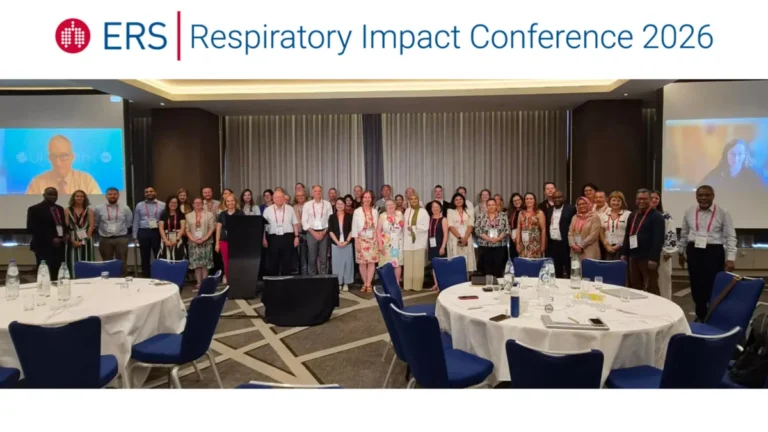
In an unprecedented display of unity, the European Respiratory Society (ERS), alongside a coalition of nearly 500 organizations and prominent individual advocates, has issued a formal, urgent appeal to the highest echelons of European governance. As negotiations regarding the next Multiannual Financial Framework (MFF)—the EU’s long-term budget—reach a critical juncture, this diverse collective of health experts, researchers, and patient advocates is demanding that public health be elevated to a formal strategic priority, anchored by a dedicated, ringfenced financial commitment.
The appeal, directed at European Commission President Ursula von der Leyen, European Council President António Costa, and the governments of EU Member States, strikes a chord of warning: Europe’s ambition for economic competitiveness and strategic autonomy is fundamentally incompatible with a deteriorating public health landscape.
The Core Mandate: Why Health is the Bedrock of Prosperity
The central premise of the coalition’s argument is that health is no longer merely a domestic policy concern; it is a pillar of economic security. For years, the European health community has observed a worrying trend: health initiatives are often relegated to the periphery of broader industrial and economic policy discussions.
However, as the EU pivots toward a strategy centered on "competitiveness, resilience, and economic security," the signatories of the joint letter argue that this strategy is hollow if it fails to account for the physical and mental well-being of the workforce. The logic is straightforward: a robust economy requires a healthy population. When non-communicable diseases (NCDs) and preventable illnesses erode the labor force, the ripple effects are felt in stagnant productivity, increased social spending, and diminished global standing.
Chronology of a Growing Movement
The push for a ringfenced health budget has evolved from a series of disparate complaints into a coordinated, multi-year advocacy campaign.
- Early 2024 – 2025: Initial discussions within the European health sector began to highlight the fragility of post-pandemic health systems. Advocacy groups, including the ERS, started drafting frameworks that tied health outcomes to long-term EU fiscal stability.
- Spring 2026: The movement gained significant political momentum when the European Parliament officially adopted its position on the upcoming MFF. In a landmark move, Parliament members pushed for a dedicated health budget, proposing a €10 billion investment specifically earmarked for health innovation, infrastructure, and preventative care.
- May 2026: As the MFF negotiations moved toward the European Council, the ERS mobilized a massive coalition. The resulting letter, representing the largest coordinated action by the health community to date, served as a "red line" for policymakers, signaling that the health sector would no longer accept vague promises of support without budgetary guarantees.
- 4 June, 2026: The letter is formally delivered to the European Commission and Council, marking the beginning of the final phase of intense lobbying and negotiation.
The Economic Burden: Data Behind the Demand
The argument for increased funding is not based on moral sentiment alone, but on stark, quantifiable economic data. According to figures provided by the World Health Organization (WHO), the economic cost of inaction is staggering.
Europe loses an estimated €442 billion annually due to productivity losses linked directly to preventable deaths and the long-term impact of non-communicable diseases. These figures account for premature retirement, workforce absenteeism, and the high cost of acute care interventions that could have been avoided through better prevention strategies.
Furthermore, the "cost of inaction" extends beyond immediate health expenditure. When health systems are underfunded, they become less resilient to external shocks—be they future pandemics, environmental crises, or the demographic challenges posed by an aging European population. By investing in a dedicated health budget, the EU would not only be preventing the loss of hundreds of billions in productivity but also creating a preventative framework that serves as a buffer against future crises.
Official Responses and Political Landscape
The political reaction to this movement has been a study in contrast. Within the European Parliament, the reception has been largely positive, with cross-party support for the €10 billion investment proposal. The Parliament recognizes that the public is increasingly concerned about healthcare access and the quality of care, viewing it as a tangible indicator of the "European Project’s" success.
However, the hurdle lies within the European Council, where the Member States hold the keys to the budget. While some nations—particularly those with strong public health infrastructure—have signaled support for a more robust health mandate, others are focused on austerity or competing priorities such as defense, energy transition, and digital transformation.
The coalition’s letter serves as a direct challenge to these Member States. By linking health to "competitiveness," the ERS and its partners are attempting to reframe the debate: health is not an alternative to industrial policy; it is a prerequisite for it.
Implications: The High Stakes of the Next MFF
The outcome of the MFF negotiations will define the EU’s trajectory for the next seven years. If the health community’s call goes unheeded, the implications are severe.
1. The Erosion of Human Capital
Without a dedicated, protected budget, health initiatives will continue to compete for scraps within the broader EU social fund. This fragmentation prevents long-term planning and leaves the EU vulnerable to health crises.
2. A Widening Inequality Gap
A lack of central coordination and funding exacerbates the disparity in health outcomes between different regions of the EU. A dedicated budget would allow for the standardization of care, ensuring that a citizen in any Member State has access to the same level of preventative and diagnostic services.
3. Declining Global Competitiveness
As other global powers increase their investment in health technologies and workforce wellbeing, the EU risks falling behind. The coalition argues that "Health is not a luxury—it is a human right," and as such, it must be defended with the same vigor as the Single Market or the Euro.
The Perspective from the Frontline: ERS Advocacy
Prof. Barbara Hoffmann, Chair of the ERS Advocacy Council, has been a vocal leader in this effort. In her recent statements, she emphasized the ethical and practical imperative of this budgetary shift.
"Health is not a luxury—it is a human right," Hoffmann stated, addressing the disconnect between current political rhetoric and actual fiscal policy. "It is paramount that the importance of health is recognised as a priority area in the next MFF, with its own ringfenced budget allocated. Without this, Europe’s future is at risk, given the public health and economic implications of a failure to act."
Hoffmann’s message to the European leaders is one of long-term vision. "Spending for health and prevention may seem significant now, but the cost of inaction will be much higher in the future," she warned. "I urge EU leaders and Member States to take this opportunity to play their part in protecting the future health of European citizens."
Looking Ahead: The Path to Reform
As the negotiations continue throughout the remainder of 2026, the European health community is not planning to retreat. The mobilization of nearly 500 organizations is a sign of a maturing, highly organized advocacy sector that understands the nuances of EU budget cycles.
The next few months will be decisive. The European Council must decide whether to embrace a vision of Europe where health is a cornerstone of economic strength or continue with a fragmented, reactive approach. For the ERS and its partners, the message remains clear: a competitive Europe is a healthy Europe. Anything less is a failure of leadership that will haunt the continent for decades to come.
The collective is now calling on the public and the media to maintain pressure on national governments, ensuring that the health of the population remains at the very top of the political agenda as the MFF negotiations reach their climax. With the potential for €10 billion in investment hanging in the balance, the European health community stands ready to hold the Union accountable to its citizens.