









WASHINGTON — As millions of soccer fans descend upon 16 host cities across North America, the atmosphere is electric with anticipation. Yet, behind the roar of the crowds and the spectacle of the pitch, a different kind of intensity is unfolding. For public health officials, the World Cup is not merely a global sporting event; it is a high-stakes, six-week-long endurance test for the nation’s disease surveillance infrastructure.
While heat waves and crowd-crush risks are immediate physical concerns, experts are primarily focused on an invisible, more pervasive threat: the rapid spread of infectious diseases. From the highly contagious measles virus to vector-borne illnesses like dengue fever, health agencies are utilizing a sophisticated, multi-layered approach to detect, contain, and mitigate potential outbreaks before they spiral out of control.
The Magnitude of the Challenge
The sheer scale of the tournament presents a logistical nightmare for disease control. With fans traveling from every corner of the globe, the potential for "imported" pathogens is significant. The Pan American Health Organization (PAHO) issued a stark warning this week, highlighting that the combination of packed stadiums, bustling bars, and dense tourist hubs creates an ideal environment for respiratory and foodborne illnesses to flourish.
"This is truly a marathon," says Palak Raval-Nelson, Philadelphia’s health commissioner. Her sentiment is echoed by public health professionals nationwide who are operating under significant strain. Budget-strapped local and state agencies are currently balancing the demands of the World Cup with ongoing concerns, including a growing Ebola outbreak in central Africa and sporadic cases of hantavirus linked to cruise ship travel.
Chronology of Surveillance Efforts
The preparation for this health surveillance initiative began months ago, long before the first whistle blew.
- Pre-Tournament (Months Prior): Health agencies conducted tabletop emergency drills, simulating potential disease outbreaks and refining communication channels between municipal, state, and federal bodies.
- Initial Deployment (Weeks Prior): The establishment of the Health Security Operations Center, a joint venture between Georgetown University and MedStar Health, provided a crucial layer of non-governmental support. This center began issuing daily "situation reports" to hundreds of stakeholders, mapping disease trends in real-time.
- The Tournament Window (Ongoing): Surveillance systems have shifted to high alert. This includes real-time monitoring of emergency room admissions, social media sentiment analysis to detect self-reported symptoms, and, most importantly, the implementation of wastewater testing across key urban centers.
- Post-Tournament Strategy: Plans are already in place to monitor health trends for several weeks following the final match, as fans return home and potentially carry asymptomatic infections back to their home countries.
Supporting Data: The Measles and Wastewater Fronts
Measles remains the primary concern for health officials. The United States has already recorded over 2,000 measles cases this year, a figure that rivals the total count for the entirety of the previous year. Because measles is airborne and highly transmissible—a single infected individual can potentially expose up to 18 others—the risk of a superspreader event in a stadium is high.
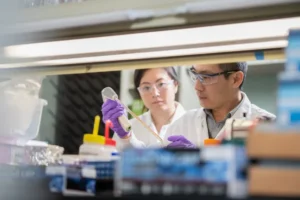
However, the medical community is leveraging cutting-edge technology to stay ahead of the curve. Wastewater surveillance has become the "canary in the coal mine." By testing sewage for genetic material shed by infected individuals, researchers can identify the presence of pathogens like rotavirus, hepatitis A, and norovirus days—or sometimes weeks—before symptomatic patients arrive at hospitals.
In Dallas, Dr. Phil Huang, director of Dallas County Health and Human Services, has spearheaded an aggressive surveillance program. By testing wastewater at the international airport and within the city, his team is casting a wide net, looking not just for known local threats like the West Nile virus, but for imported pathogens such as dengue and chikungunya, which are endemic in parts of the world represented by traveling teams and fans.
Expert Perspectives: Assessing Real Risks
While the public conversation often gravitates toward "scary" diseases like Ebola, experts are urging a more nuanced understanding of risk. Dr. Craig Spencer of Brown University, who famously survived an Ebola infection during the West Africa epidemic, emphasizes that the actual risk of an Ebola outbreak during the World Cup is negligible.
"For me, Ebola is not the No. 1 or No. 2 or even No. 3 threat," Dr. Spencer explained. "I am much more concerned about the importation of other infectious threats that may not seem as scary but are far more efficient at spreading in a crowded, modern urban environment."
Dr. Jennifer Nuzzo, director of the Pandemic Center at Brown, supports this assessment. She points out that the fundamental nature of Ebola—which requires direct contact with bodily fluids and usually leaves the patient too ill to travel or participate in festivities—makes it a poor candidate for a mass-gathering outbreak. In contrast, viruses like measles or COVID-19, which can be transmitted by asymptomatic individuals, present a far more formidable challenge to public health security.
The Role of the CDC and Global Coordination
The Centers for Disease Control and Prevention (CDC) remains the backbone of this effort, though their capacity has been tested. Impacted by historical staffing cuts and the pressure of managing global health crises, the agency’s "World Cup disease surveillance dashboard" faced development delays as the tournament commenced.
Despite these hurdles, the agency has worked behind the scenes to provide data frameworks for state and local departments. Global health specialist Rebecca Katz of Georgetown University notes that the "stretched" nature of these agencies has forced a pivot toward interdisciplinary collaboration. By working with organizations like MedStar Health, the public health sector has created a "safety net" that serves as an insurance policy against the unknown.
"It’s important that we don’t become alarmist," says Dr. Shane Kappler, a MedStar emergency medicine specialist. "Our role is to provide the data that allows local officials to make informed decisions without inciting panic."
Implications for Public Health Policy
The 2026 World Cup serves as a litmus test for the future of global public health surveillance. The reliance on non-traditional data sources—such as sewage testing and social media monitoring—suggests a permanent shift in how cities prepare for mass gatherings.
The implications are clear: as the world becomes increasingly interconnected, the distinction between local and international health threats is vanishing. The success of the current surveillance efforts rests on the ability of disparate agencies to share data instantaneously. If the systems holding up during this tournament prove successful, they could provide a blueprint for managing future global events, including the Olympics and international summits.
Ultimately, the goal is not to eliminate all risk—an impossibility in a globalized society—but to build a resilient system that can detect anomalies early. As Philadelphia’s Raval-Nelson noted, the frameworks are in place. The question is whether the public health infrastructure, despite its current fatigue, can sustain this level of vigilance for the duration of the tournament.
For now, the spectators in the stands see only the beautiful game. But behind the scenes, a different game is being played—one involving sophisticated analytics, clinical expertise, and the quiet, persistent work of thousands of health professionals dedicated to ensuring that when the final whistle blows, the only thing the fans take home is the memory of the match, not an unwelcome infection.