




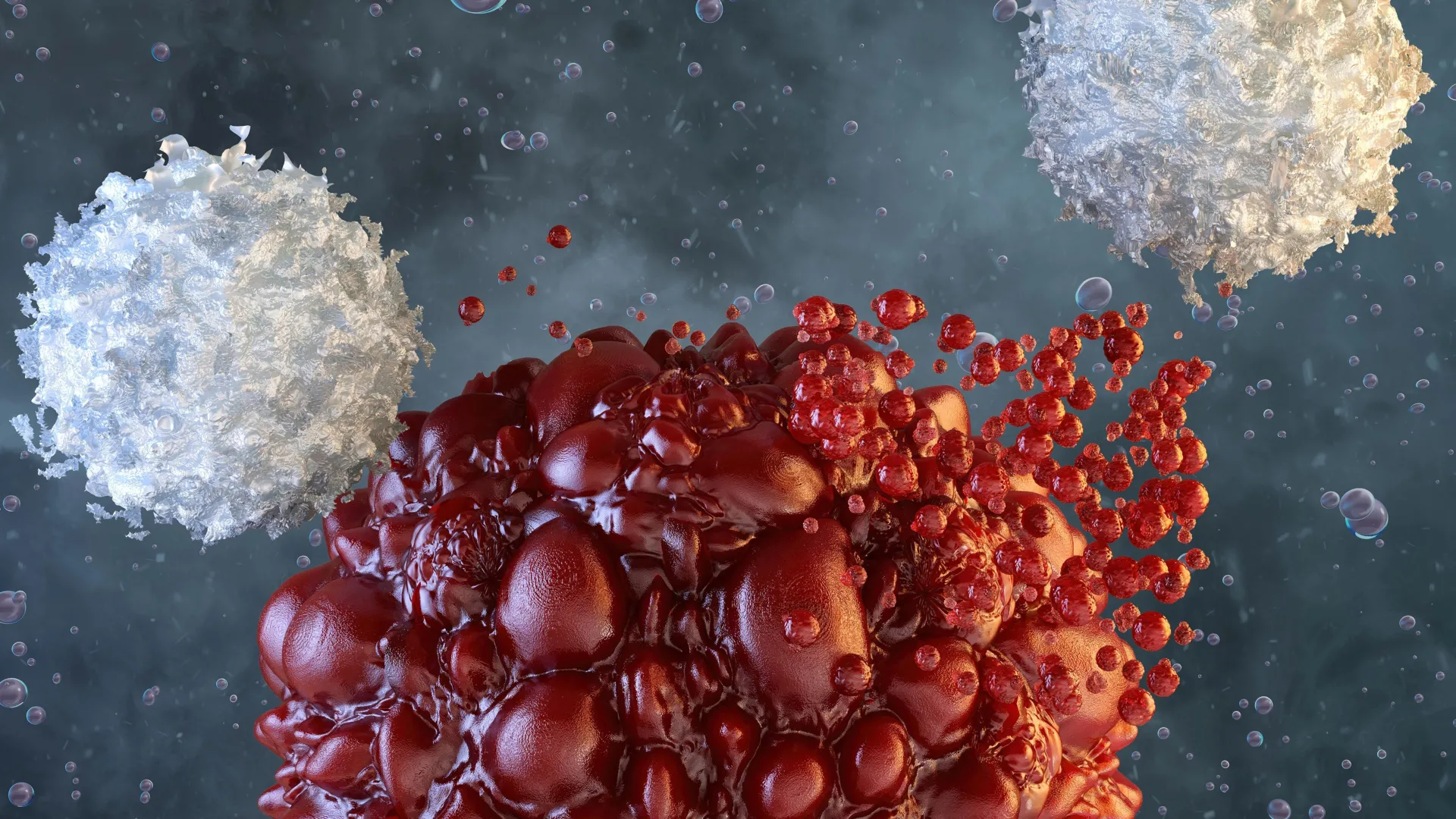
In the ongoing war against cancer, the human immune system remains our most sophisticated weapon. Among its elite frontline soldiers are Natural Killer (NK) cells—a specialized class of cytotoxic lymphocytes that patrol the body, identifying and eliminating virally infected or malignant cells. However, tumors are notoriously cunning, often erecting molecular barricades that neutralize these defenders, rendering the body’s natural surveillance ineffective.
Now, a pioneering study led by researchers at McGill University’s Rosalind & Morris Goodman Cancer Institute and the Research Institute of the McGill University Health Centre (RI-MUHC) has unveiled a transformative method to strip away these tumor defenses. By temporarily inhibiting two specific proteins, the research team has successfully "supercharged" NK cells, enabling them to breach the protective shields of some of the most aggressive cancers known to medicine.
The Core Discovery: Breaking the Molecular Barrier
The research, published in the April 2026 issue of EMBO Reports, centers on the identification of two specific proteins—PTPN1 and PTPN2—that act as "brakes" on the immune system’s efficacy. When these proteins are active, they dampen the signaling pathways that allow NK cells to respond to cytokines, such as IL-2, which are essential for immune activation. Furthermore, these proteins make NK cells hypersensitive to TGF-β1, a molecule frequently secreted by tumors to suppress immune activity.
By employing small-molecule inhibitors to block PTPN1 and PTPN2, the researchers were able to prevent the tumor from "turning off" the NK cells. In preclinical trials, these enhanced cells demonstrated a lethal precision against an array of stubborn malignancies, including triple-negative breast cancer, glioblastoma, kidney cancer, and various forms of leukemia. In animal models, the treatment not only halted the progression of tumors but, in many instances, led to significant regression.
A Chronology of Innovation
The path to this discovery was not linear; it represents the culmination of years of rigorous investigation into protein tyrosine phosphatases (PTPs) and their role in immune regulation.
- Early Foundations: The Tremblay lab at McGill has spent decades mapping the regulatory networks of PTPs. Recognizing that these proteins were "master regulators" of immune checkpoints, the team began investigating whether their inhibition could provide a more effective alternative to current checkpoint inhibitors (such as PD-1 inhibitors), which often show limited efficacy in "cold" tumors.
- The Shift to NK Cells: While much of the industry focused on T-cell therapies, the McGill team turned their attention to NK cells due to their innate ability to recognize cancer cells without the need for patient-specific antigen priming.
- Integration with Cord Blood Banks: Partnering with the Cellular Therapy Laboratory at the RI-MUHC, the researchers established a protocol for utilizing umbilical cord blood. This resource provided a scalable, "off-the-shelf" source of high-quality NK cells.
- Proof of Concept (2024-2025): Through a series of in vitro and in vivo assays, the researchers demonstrated that PTPN1/PTPN2 inhibition acted as a "master switch," simultaneously increasing the NK cells’ sensitivity to activation signals while rendering them resistant to tumor-mediated suppression.
- Publication and Future Roadmap (2026): With the publication of their findings in EMBO Reports, the team moved from the laboratory bench toward the prospect of clinical application, initiating the regulatory and funding processes required for human trials.
Supporting Data: Why This Approach Matters
The efficacy of the treatment is underscored by the versatility of the NK cells used. Unlike CAR-T cell therapies—which require the extraction, genetic modification, and re-infusion of a patient’s own cells—the McGill approach utilizes donor-derived cells.
Overcoming the "Personalization" Bottleneck
Current immunotherapies are often prohibitively expensive and logistically daunting. The "vein-to-vein" time for CAR-T therapy can stretch into weeks, a luxury that patients with aggressive, fast-moving cancers do not have. By using cord blood-derived NK cells, the McGill team has created a potential "off-the-shelf" product. These cells can be isolated, cultured, and stored in cryobanks, allowing for immediate administration to patients upon diagnosis.
The Safety Advantage: Reversibility
A major concern in modern immunotherapy is the "permanence" of genetic engineering. Techniques such as CRISPR or viral vector modification can lead to off-target effects that are irreversible. If a patient experiences a severe immune overreaction, it is nearly impossible to "turn off" genetically modified cells.
The McGill approach uses small-molecule drugs to induce a temporary, reversible enhancement. Because the modification relies on pharmacological inhibition rather than genomic alteration, the intensity of the immune response can be modulated by adjusting the dosage or discontinuing the drug, providing a significant safety margin for clinicians.
Official Responses and Expert Perspective
The implications of this research have drawn significant attention from the oncology community. Senior author Michel L. Tremblay, Distinguished James McGill Professor in the Department of Biochemistry, emphasized the urgent need for this development.
"This approach is particularly promising for patients who currently have very few options, when standard treatments have failed," Dr. Tremblay stated. He noted that the flexibility of the therapy allows it to address "aggressive cancers that have historically evaded our best efforts."
Chu-Han Feng, a research scientist at the Rosalind & Morris Goodman Cancer Institute and the study’s lead author, highlighted the practical advantages of the method: "This approach will make immunotherapy at the McGill University Health Centre faster, safer, and more affordable. It avoids the complex, high-cost process of customizing cells and uses readily available drugs to reversibly enhance NK cells’ anti-tumor activities."
The collaborative spirit of the project was further underscored by the contributions of Pierre Laneuville and Linda Peltier, who led the Cellular Therapy Laboratory’s efforts in cell isolation and banking. Their work ensured that the research was not merely theoretical but grounded in the reality of clinical logistics.
Implications for the Future of Oncology
The transition from preclinical success to clinical reality is the next major hurdle. The research team is currently focusing its sights on acute myeloid leukemia (AML), a disease that remains one of the most challenging blood cancers to treat.
The Path to Clinical Trials
The team is currently awaiting the necessary funding and regulatory approvals to initiate Phase I human clinical trials. If successful, this would represent a landmark achievement in Canadian medical research. The shift toward "universal" immunotherapy could democratize access to high-end cancer care, reducing the reliance on the expensive, centralized facilities currently required for personalized CAR-T treatments.
Broader Economic and Societal Impact
If this therapy reaches the market, the cost-benefit analysis of cancer care could be radically altered. By removing the need for individualized cell manufacturing, healthcare systems could potentially treat a higher volume of patients with fewer resources. Furthermore, the use of cord blood—a biological material often discarded as medical waste—transforms a secondary product into a primary life-saving tool.
Acknowledging the Human Element
It is worth noting that the success of this study rests upon the altruism of the mothers who donated the cord blood used in the research. As the researchers themselves noted, this science is fundamentally built on public participation and the gift of life.
Conclusion
The study by Feng et al. provides more than just a new therapeutic target; it offers a new philosophy for immunotherapy. By prioritizing reversibility, safety, and scalability, the McGill researchers have outlined a pathway that addresses the core failures of current cancer treatments. While the road to the clinic remains subject to regulatory and financial milestones, the potential to turn the tide against aggressive cancers is now within reach. As the medical community looks toward the next generation of immunotherapy, the PTPN1/PTPN2 inhibition strategy stands as a beacon of progress—a testament to the power of precision medicine to empower the body’s own defenses.