By Editorial Staff
June 18, 2026
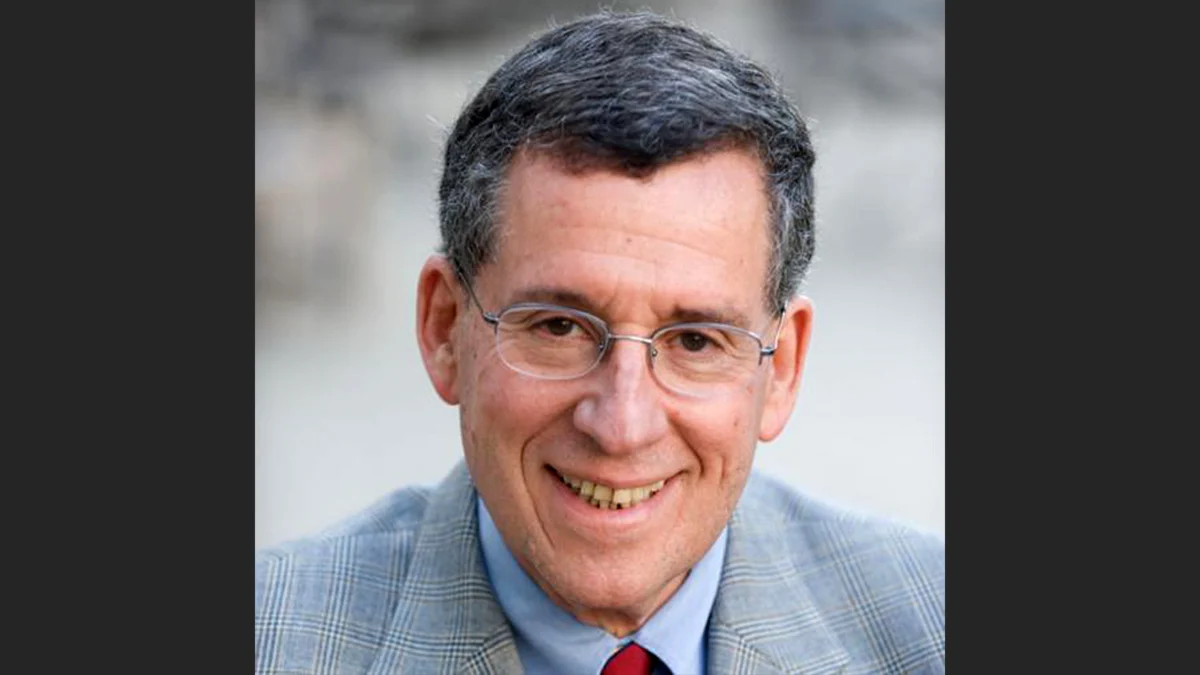
Bob Blendon, ScD, an intellectual titan who fundamentally reshaped the landscape of healthcare polling and public policy analysis, passed away on Wednesday. His death, confirmed by officials at Harvard University, marks the end of a career that bridged the gap between complex statistical inquiry and the visceral, often volatile, reality of American health politics.
For decades, Blendon served as an emeritus professor of health policy and management at the Harvard T.H. Chan School of Public Health. To his peers, he was more than an academic; he was a pioneer who elevated the study of public opinion from a niche survey practice into a vital tool for understanding the legislative possibilities—and limitations—of the U.S. healthcare system.
The Architect of Public Opinion Research
"Bob contributed so much to health policy as an innovator in research on public opinion," said Paul Ginsburg, PhD, of the University of Southern California’s Schaeffer Institute for Public Policy and Government Service. Ginsburg, who served as vice chair of the Medicare Payment Advisory Commission (MedPAC), noted that Blendon’s work provided a roadmap for policymakers navigating the often-treacherous waters of public sentiment.
Blendon’s academic foundation was as rigorous as his research. A graduate of Marietta College in Ohio, he pursued an MBA at the University of Chicago before completing his doctoral studies at Johns Hopkins University, where he specialized in the nuances of health policy.
Between 1987 and 1996, he chaired the Department of Health Policy and Management at the Harvard School of Public Health. During this transformative decade, he directed the Harvard Opinion Research Program. This initiative became the gold standard for measuring how Americans perceive major social policy shifts. By focusing on public knowledge, attitudes, and beliefs, Blendon provided the evidence base that informed debates on everything from universal coverage to the rising costs of prescription drugs.
A Legacy of Collaboration and Insight
Blendon’s influence extended far beyond the ivory tower. He was a master of collaborative journalism, frequently partnering with major news organizations to ensure that academic insights reached the public square.
He co-directed the Robert Wood Johnson Foundation/Harvard T.H. Chan School of Public Health project, which sought to decode the "American Health Agenda." This effort produced high-profile collaborations with National Public Radio (NPR) and Politico, translating dense data into accessible narratives. Perhaps most notably, his earlier polling series with the Washington Post and the Kaiser Family Foundation (KFF) earned a nomination for a Pulitzer Prize—a rare feat for an academic researcher in the field of public health.
Drew Altman, PhD, president and CEO of KFF, paid tribute to Blendon’s unique role in the academic ecosystem. "Bob Blendon was not a political scientist," Altman wrote in a post on X. "But at the HSPH, he made healthcare politics a legitimate area of inquiry. In a system dominated by money, politics, and misinformation, [this was] a fundamental contribution."
Shaping Future Generations
Beyond his publications and polls, Blendon’s most enduring legacy may be the legion of scholars, journalists, and policy analysts he mentored. Adrianna McIntyre, PhD, of the Harvard T.H. Chan School of Public Health, described Blendon as a "rare combination of both larger-than-life and incredibly accessible."
"His influence is most visible in the polling work that he did, but is most powerful in the generations of scholars, policy professionals, and journalists he inspired and mentored, who carry forward the wisdom he imparted," McIntyre said.
She emphasized that Blendon’s teaching style was deeply practical. He didn’t just teach students how to read a poll; he taught them how to identify the "stakes" of health politics. "Bob had an extraordinary ability to make the stakes of public opinion and health politics feel vivid and urgent," she added. "He taught students with an eye toward helping them understand how they could challenge and change the status quo."
Analytical Rigor: From Public Options to Election Cycles
Blendon’s work was defined by its refusal to accept partisan narratives at face value. He frequently challenged his readers to look at the mechanics of how opinions are formed.
In a 2023 article published in the Milbank Quarterly, Blendon and his colleagues examined the elusive "public option" for health insurance. By reviewing 43 polls conducted between 2009 and 2010—the period surrounding the passage of the Affordable Care Act (ACA)—he demonstrated that public support for such policies was highly elastic. He found that respondents were easily swayed by question framing: support for a public option skyrocketed when it was compared to Medicare, but fluctuated significantly based on whether the phrasing was perceived as "adversarial" to private insurance. This work remains a definitive study on how language shapes public policy outcomes.
As recently as the 2024 election cycle, Blendon remained at the forefront of political forecasting. In a New England Journal of Medicine (NEJM) commentary, he and his co-authors offered a prescient analysis of the potential health policy landscape under a Republican administration. They noted a widening partisan divide, specifically regarding trust in health scientists.
"Because Republicans have a lower level of confidence in health scientists, they are less likely to rely on scientists for decisions on health and medical policy issues," the authors wrote. They further predicted that this lack of confidence would likely lead to increased government investigations into research agencies and academic health institutions.
The article also provided a clear-eyed breakdown of the legislative future: "Bipartisan actions will include some level of effort to increase funding for Medicare and veterans’ medical care. But Republicans are likely to support efforts to encourage more Medicare beneficiaries to join private Medicare Advantage plans, and Democrats will support the existing Medicare program and its expansion."
The Implications of a Life’s Work
The death of Bob Blendon leaves a significant void in the field of health policy. At a time when healthcare is increasingly viewed through a lens of extreme polarization, his work served as a grounding force. He maintained that public opinion was not merely a set of numbers, but a reflection of the fears, hopes, and values of the American populace.
For policy professionals, the implication of Blendon’s life’s work is clear: to govern is to communicate. He demonstrated that even the most technically sound health policy is doomed to fail if it does not account for the public’s perception of that policy. By dissecting the intersection of money, politics, and belief, he provided a framework that allowed his students and readers to navigate a "deeply imperfect" system with confidence and purpose.
As the healthcare community reflects on his contributions, there is a consensus that the landscape of American health policy is significantly more robust because of his intervention. He taught his students that while they may not always be able to fix the system, they had a responsibility to understand it, interrogate it, and strive to improve it.
"U.S. health policy remains deeply imperfect," McIntyre observed, "but it’s better than it otherwise would have been because Bob engaged so deeply."
Bob Blendon’s voice may be silenced, but the methodology he established—and the thousands of students he empowered to think critically about the American healthcare agenda—will ensure that his influence persists for decades to come. His was a life defined by the pursuit of clarity in a field often clouded by partisan noise, leaving behind a roadmap for all those who seek to bridge the gap between rigorous research and meaningful change.