




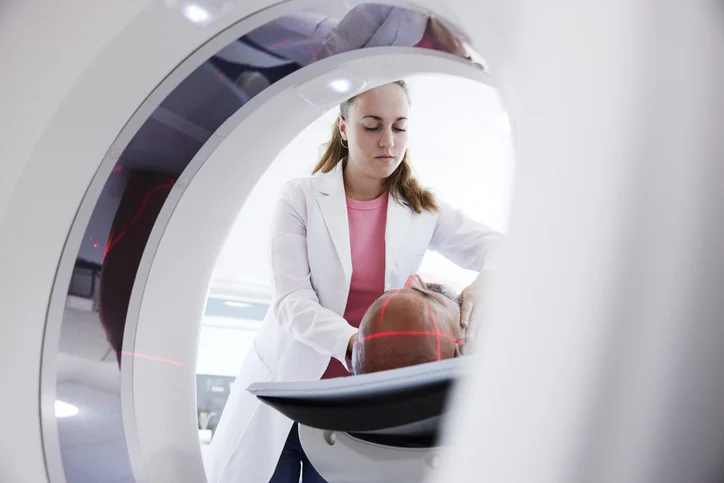
The American healthcare landscape is currently witnessing the emergence of a high-tech, high-cost trend: the elective whole-body MRI. Marketed as a "proactive" shield against life-threatening diseases, companies like Prenuvo, SimonMed, and Ezra (now part of Function Health) are attracting thousands of affluent consumers who are willing to pay anywhere from $1,300 to over $2,500 for a deep-tissue scan of their entire anatomy.
While these companies have collectively scanned more than 100,000 patients and secured hundreds of millions of dollars in venture capital, the medical establishment is growing increasingly vocal in its opposition. In a landmark editorial published in JAMA last month, leading radiologists—including Dr. Matthew Davenport of the University of Michigan and Dr. Scott Reeder of the University of Wisconsin—argued that this booming industry is peddling a service that lacks clinical evidence, carries significant risks of "downstream" harm, and places an unnecessary burden on the broader healthcare system.
The Chronology of a Controversial Trend
The rise of the elective MRI is a story of modern innovation meeting consumer anxiety.
- The Early 2000s: Companies like SimonMed began pioneering the early iterations of whole-body scanning, positioning these tests as a specialized service for those looking to gain a complete picture of their health.
- The Rise of the "Concierge" Diagnostic: Over the last five years, the industry saw a surge in investment. Prenuvo and Ezra leveraged sophisticated AI-driven image processing and sleek, high-end marketing campaigns, often featuring celebrity endorsements from figures like Kim Kardashian and Gwyneth Paltrow.
- The Venture Capital Boom: By framing health as a "proactive" asset that can be managed through data, these companies tapped into a burgeoning "longevity" market, raising hundreds of millions to scale their operations globally.
- The Academic Pushback: As the market expanded, so did the scrutiny. Radiologists, oncologists, and researchers began observing a trend: patients were presenting with "incidentalomas"—benign findings detected by the scan that were not actually threatening, but which triggered a cascade of anxiety, follow-up biopsies, and surgical interventions.
- The JAMA Watershed: The publication of the Davenport-Reeder editorial marked a shift from quiet professional disagreement to a public, data-driven confrontation with the industry’s business model.
Supporting Data and the "Overscreening" Problem
At the heart of the debate is the concept of "overscreening." Dr. Matthew Davenport emphasizes that he is not against evidence-based screening; he is a strong proponent of mammograms and colonoscopies, which have undergone rigorous clinical trials proving they reduce mortality.
However, the math of screening changes when applied to a large, asymptomatic population. Davenport points out that roughly 20% to 40% of these whole-body scans will identify an "abnormality." In a healthy person, the vast majority of these findings are false positives or slow-growing, low-risk conditions that would never have caused harm during the patient’s lifetime.
The consequences are not merely psychological. Once a finding appears on a high-resolution MRI, physicians feel compelled to investigate. This leads to:
- Increased Imaging: Further MRI or CT scans to monitor the finding.
- Biopsies: Invasive procedures that carry risks of infection, bleeding, and organ damage.
- Surgical Intervention: The removal of tissues—such as thyroids or small masses—that may have been harmless, potentially leaving the patient with lifelong hormone deficiencies or surgical complications.
Dr. Otis Brawley, an oncologist at Johns Hopkins, cites the South Korean thyroid cancer screening experiment as a cautionary tale. In that instance, the implementation of widespread screening increased thyroid cancer diagnoses 15-fold but resulted in zero lives saved. The only outcome was the unnecessary removal of thousands of healthy thyroids, leading to significant morbidity.
Official Responses: The Industry Defense
The companies at the center of the storm reject the characterization that their services are harmful or unscientific. Their defense rests on three primary pillars:
1. The Scope of Detection
Dr. Dan Durand, Chief Medical Officer of Prenuvo, argues that the JAMA critique is overly narrow. By focusing exclusively on cancer, critics ignore the ability of whole-body MRIs to detect life-altering conditions such as fatty liver disease, aneurysms, cardiac abnormalities, and early markers of multiple sclerosis. To the industry, these are not "false positives"—they are actionable health insights.
2. The Variability of Quality
Industry leaders contend that the JAMA editorial conflates different technologies and levels of expertise. Dr. Sean Raj of SimonMed notes that his organization employs subspecialty-trained radiologists and AI-driven workflows that are significantly more accurate than a "generalist" reading a scan. They argue that comparing a state-of-the-art AI-integrated scan to a poorly performed, outdated MRI is a false equivalence.
3. The "Mammography" Comparison
Dr. Durand draws a direct comparison to the history of mammography. He reminds critics that when mammography was first introduced, it faced intense resistance from the medical community before evidence solidified its place as a standard of care. He argues that critics are "conflating the absence of proof with the proof of absence," attempting to stifle an emerging technology before it has had the chance to mature and prove its efficacy.
Societal and Systemic Implications
The debate extends far beyond the individual patient’s wallet. Dr. Ateev Mehrotra of Brown University highlights the "societal impact" of elective screening. When a cash-paying patient receives a false positive and enters the diagnostic pipeline, they begin consuming limited healthcare resources—radiology slots, pathologist time, and surgical suites—that could be utilized for symptomatic patients or those in urgent need of care.
There is also a concern regarding health equity. As Dr. Brawley notes, if the healthcare system is clogged by the "worried well" seeking elective scans, the most vulnerable populations often end up pushed to the back of the line.
Furthermore, there is a fundamental incentive mismatch. To prove these scans save lives, companies would need to conduct massive, multi-decade, randomized controlled trials. These trials are notoriously expensive and difficult to execute. Dr. Brawley and Dr. Davenport both note that these companies have little financial incentive to fund such studies; if the trial confirms the scans are unnecessary, their business model collapses. If the trial is inconclusive, they remain in a profitable legal and ethical "gray zone."
Conclusion: A Product of "Belief," Not Science?
Ultimately, the disagreement boils down to a conflict between the intuitive, powerful human desire for early detection and the cold, statistical reality of population-level medicine. The industry is selling a "peace of mind" that feels tangible to the consumer, while physicians are warning of a systemic "cascade" that is, for many, a path to unnecessary harm.
As the industry continues to grow, the tension between these two viewpoints is unlikely to dissipate. For now, the consumer is left in a position of "buyer beware." They are purchasing a sophisticated, expensive diagnostic test that, while technologically impressive, currently lacks the clinical validation to prove it is a net positive for human health. As Dr. Davenport poignantly noted, the industry is not selling novel intellectual property; they are selling a willingness to ignore baseline risk. Until large-scale, independent, NIH-funded research provides a definitive answer, the whole-body MRI remains a high-stakes bet on the unknown.