The integration of artificial intelligence into the clinical landscape is no longer a futuristic aspiration; it is an active, rapidly evolving reality. As STAT’s AI Prognosis newsletter continues to track, the stakes for patient safety, ethical data utilization, and regulatory oversight have never been higher.
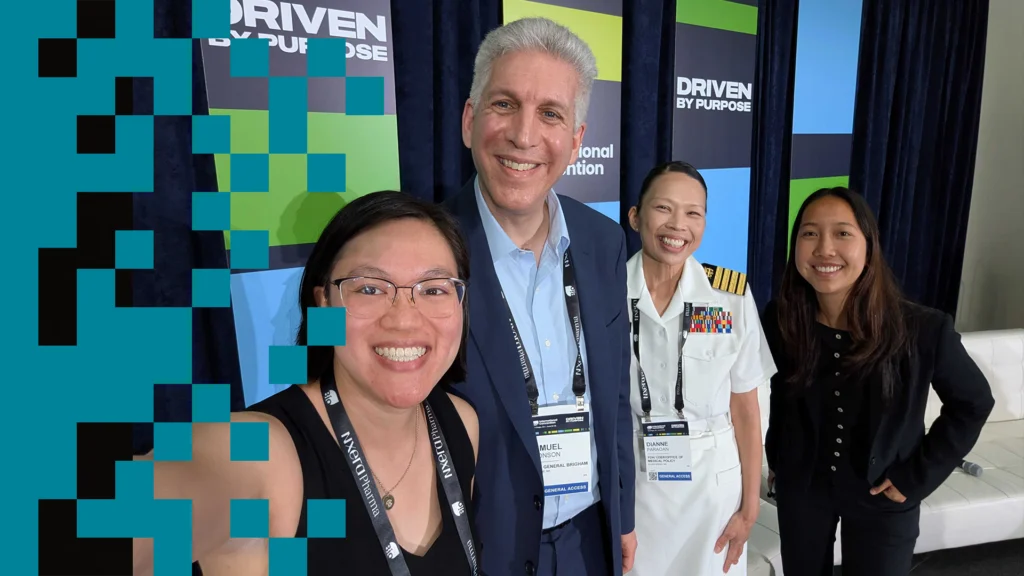
Recently, industry leaders and regulatory experts gathered to dissect the current state of AI in medicine. The panel, which included Samuel Aronson, president and chief AI officer of AIwithCare; Dianne Paraoan, acting director of the Office of Medical Policy at the FDA’s Center for Drug Evaluation and Research; and Tran Le, general manager for life sciences at Hippocratic AI, highlighted a critical realization: while AI holds the promise of revolutionizing drug development and patient care, it requires a robust, nuanced framework to prevent unintended harms.
The State of Play: AI’s Clinical Proliferation
The promise of AI in medicine is multifaceted. From generative models that assist in clinical documentation to predictive algorithms that identify patients at risk of chronic disease progression, the technology is moving faster than the guardrails intended to govern it. However, the excitement surrounding these tools is frequently tempered by concerns regarding "hallucinations"—where AI generates plausible but medically incorrect information—and the inherent biases embedded in training datasets.
As these tools transition from experimental pilot programs to standard-of-care infrastructure, the medical community is grappling with a fundamental question: How do we maintain the "human in the loop" while leveraging the computational speed of artificial intelligence?
Chronology: A Rapid Evolution in Policy and Application
To understand where we are, one must look at the accelerated timeline of AI adoption in the health sector:
- 2020-2021: The Emergence of Predictive Analytics. Initial focus centered on operational efficiency, such as bed management and staffing optimization.
- 2022-2023: The Generative AI Explosion. Following the public release of advanced large language models (LLMs), interest shifted toward clinical decision support (CDS) and automated note-taking.
- 2024: The Regulatory Pivot. Regulatory bodies, particularly the FDA, began shifting from a reactive stance to a proactive, risk-based oversight model, emphasizing the "Good Machine Learning Practice" (GMLP) guidelines.
- 2025-2026: Institutionalization. Current discussions, such as those held by the panel featuring Aronson, Paraoan, and Le, have moved beyond theoretical utility to focus on real-world evidence, clinical validation, and the ethics of patient-facing AI tools.
Supporting Data: The Efficiency vs. Accuracy Gap
Data provided by industry observers suggest a clear tension. According to recent surveys within the life sciences sector, over 70% of healthcare systems have integrated at least one AI-based diagnostic or administrative tool. Yet, a significant gap remains in clinical performance.

For example, while AI-driven diagnostics have shown an 85% accuracy rate in controlled imaging studies, that rate often drops significantly when applied to heterogeneous "real-world" populations with diverse demographic profiles. This performance degradation highlights the necessity for continuous monitoring and adaptive training—a concept that regulatory bodies are now pushing to mandate.
Furthermore, the economic impact is profound. AI integration is projected to save the U.S. healthcare system billions annually by 2030, but those savings are contingent upon the mitigation of "algorithmic debt"—the hidden costs associated with maintaining, updating, and auditing these systems as medical guidelines change.
Official Responses and Regulatory Frameworks
The FDA’s role, as represented by Dianne Paraoan, is increasingly complex. The Office of Medical Policy is tasked with ensuring that AI-enabled medical devices are not only effective but also safe across diverse patient populations.
"The goal is not to stifle innovation, but to create a ‘sandbox’ where AI can evolve without compromising patient safety," Paraoan noted during the recent discussion. The FDA is currently prioritizing the development of standards for "locked" versus "adaptive" algorithms. While locked algorithms are easier to validate, adaptive algorithms—those that learn from new data—represent the future of personalized medicine. Developing a regulatory framework that allows for "learning" without introducing unpredictable behavior remains the agency’s primary challenge.
Samuel Aronson of AIwithCare echoed this sentiment, emphasizing that the burden of safety cannot rest solely on the shoulders of the regulator. "Industry developers have a moral imperative to perform rigorous ‘stress testing’ on their models before they ever reach a clinician’s dashboard," Aronson stated.
Implications for the Future: What Patients and Providers Should Expect
The intersection of AI and clinical practice holds transformative implications for both providers and patients.

1. The Shift Toward "Precision Documentation"
One of the most immediate impacts is the shift from manual EHR (Electronic Health Record) entry to AI-assisted transcription and synthesis. While this promises to reduce clinician burnout, it raises questions about the accuracy of patient histories. If an AI "summarizes" a patient’s concern, does it inadvertently omit a vital piece of context that a human doctor might have noted?
2. Democratization of Expert-Level Care
As companies like Hippocratic AI work toward developing models that can provide specialized medical advice, the potential for bridging the gap in healthcare access becomes apparent. In regions with physician shortages, an AI-driven triage or advisory tool could save lives. However, this relies on the model’s ability to "know what it doesn’t know"—the ability to flag a case for human intervention when confidence scores are low.
3. Ethical Algorithmic Auditing
We are moving toward a future where "algorithmic bias" will be treated as a clinical error. Hospitals will likely begin to report on the performance of their AI tools with the same transparency they report on surgical outcomes. This will necessitate a new class of medical professional: the AI safety officer, tasked with monitoring for drift, bias, and technical failure within the clinical workflow.
Conclusion: A Cautious Optimism
As the industry moves forward, the conversation remains centered on balance. We are witnessing the most significant shift in clinical workflow since the introduction of the digital EHR. While the enthusiasm for AI’s potential to improve patient outcomes is well-founded, it must be tempered by the recognition that medicine is, at its core, a human discipline.
The recent insights from the STAT panel serve as a vital reminder: technology is only as effective as the policy and ethical frameworks that guide it. As we continue to navigate this terrain, the focus must remain on the patient. Whether it is a new drug discovery process or a diagnostic tool in the clinic, the standard of "do no harm" must be the foundation upon which every algorithm is built.
For those tracking this evolution, the next few years will be defined by the transition from "what can AI do?" to "what should AI do?" The answer to that question will likely determine the quality and accessibility of medical care for the next generation. As always, the AI Prognosis newsletter will be here to translate the complexity of these developments, ensuring that the promise of innovation is never decoupled from the requirement of safety.