








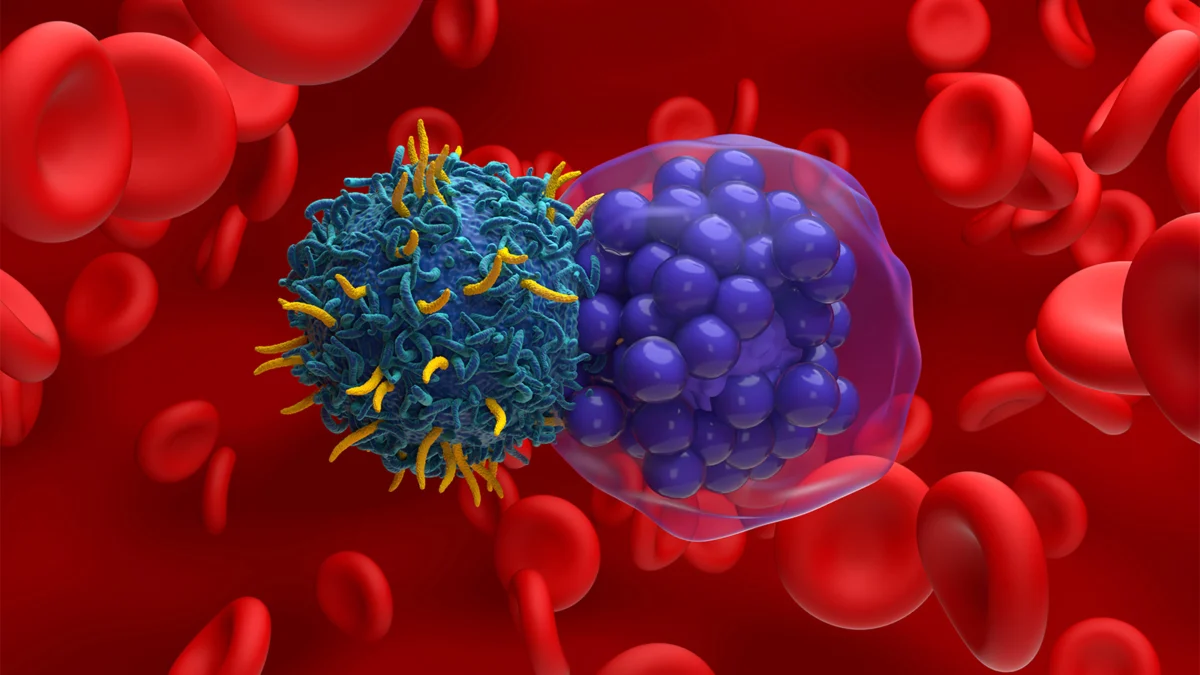
In a medical landscape once defined by limited options and grim prognoses for patients with relapsed or refractory blood cancers, a paradigm-shifting milestone has been reached. Updated results from a landmark decade-long clinical trial suggest that CD19-targeted CAR T-cell therapy—a revolutionary form of immunotherapy—is not merely extending life but potentially providing a functional cure for a significant subset of patients with aggressive lymphomas.
The findings, published in the New England Journal of Medicine, mark the ten-year anniversary of one of the earliest trials investigating the CAR construct CTL019, now clinically known as tisagenlecleucel (Kymriah). The data provides definitive evidence that for nearly one-third of patients who had exhausted all standard treatment avenues, a single infusion of engineered immune cells could induce durable, long-term remission.
The Landmark Findings: A Ten-Year Perspective
The study, led by researchers at Penn Medicine in Philadelphia, tracked 38 patients who received the pioneering therapy between 2014 and 2019. The cohort consisted of patients with either heavily pretreated large B-cell lymphoma (LBCL) or relapsed/refractory follicular lymphoma.
The most striking revelation of the 10-year follow-up is the durability of the response. Investigators noted that no relapses occurred in the patient population after 5.4 years of follow-up. For those with follicular lymphoma specifically, no patient relapsed after the 2.7-year mark.
In terms of survival, the results are equally compelling. The 10-year overall survival rate stood at 17% for the 24 patients with LBCL and an impressive 50% for the 14 patients with follicular lymphoma. While these numbers may seem modest in isolation, they represent a monumental achievement for a patient population that, at the time of enrollment, faced a median life expectancy measured in mere months.
Chronology of a Breakthrough
The trajectory of this research mirrors the rapid evolution of modern oncology.
- 2014–2019 (The Enrollment Phase): Researchers at the University of Pennsylvania began enrolling patients into the trial for CTL019. During this window, the field of immunotherapy was still in its infancy, and skepticism regarding the long-term viability of modified T-cells remained high.
- 2017 (The Validation): As early data emerged, the clinical success of the therapy paved the way for the FDA approval of Kymriah, the first CAR T-cell therapy to reach the market.
- 2020–2024 (The Durability Phase): As the trial participants moved further from their initial infusion, the medical community watched closely for late-stage relapses. The absence of such events underscored the hypothesis that the therapy could achieve a sustained, "cured" state.
- October 1, 2025 (The Data Cutoff): The final analysis presented in the current report confirms the 10-year durability, solidifying the therapy’s role as a cornerstone of hematologic oncology.
Supporting Data and Clinical Metrics
The study’s success is quantified through rigorous progression-free survival (PFS) and lymphoma-free survival metrics. The overall 10-year lymphoma-free survival was recorded at 38%. When adjusting for deaths from any cause—including those unrelated to the cancer—the 10-year progression-free survival remained at 17% for LBCL and 29% for follicular lymphoma.
Safety data over the ten-year span has also provided critical insights into the long-term impact of CAR T-cell infusion. While the therapy is potent, the study noted a 21% cumulative incidence of second primary cancers over the decade. This figure is higher than the 11% observed in an age- and gender-matched population from the SEER database. However, this risk must be balanced against the reality of the primary diagnosis. Common secondary findings included treatment-related acute myeloid leukemia, prostate cancer, and non-small cell lung cancer, primarily in patients with specific risk factors such as a history of smoking.
Importantly, no patients developed late-onset anemia or thrombocytopenia, suggesting that the long-term systemic impact on bone marrow and blood cell production is manageable.
Expert Perspectives: From Skepticism to "Cure"
The journey from the lab bench to this ten-year milestone has been defined by a shift in medical vocabulary. Co-author Dr. Stephen Schuster, of Penn Medicine, admits that he was initially unconvinced that any of the patients would survive to the five-year mark, let alone the ten-year mark.
"Once I saw the 5-year data, I thought, ‘Oh my god, maybe—I hate to say cure—but maybe we’ve cured patients,’" Dr. Schuster told MedPage Today. "We addressed that question by saying, well, if you live as long as an age- and gender-matched American and you die of unrelated causes and your lymphoma is in complete remission, then that’s essentially a cure."
Dr. Frederick Locke, of Moffitt Cancer Center, who played a pivotal role in coordinating multicenter trials, reflected on the early days of the technology. "We were super excited and hopeful that [CAR T-cell therapy] would lead to long-term remissions… the durability was unclear. This study is just now at 10 years, and we couldn’t have been more pleased with the results we saw."
Implications for Future Oncology
The legacy of this trial is not just the success of the treatment itself, but the roadmap it provides for the next generation of cancer therapies. The researchers emphasize that the field is moving toward a more sophisticated, precision-medicine approach.
Improving Pre-Therapy Disease Control
Dr. Schuster notes that a critical takeaway is the importance of "disease control prior to CAR T-cell therapy." Patients whose lymphoma is not rapidly proliferating at the time of infusion show significantly better outcomes. Consequently, the use of circulating tumor DNA (ctDNA) assays is becoming standard practice to determine the optimal window for CAR T-cell delivery.
Next-Generation Manufacturing
The current manufacturing process—which involves extracting T-cells, engineering them, and expanding them in a lab—is a significant bottleneck. Only about 25% of eligible patients currently receive these therapies due to production delays and access barriers. The future of the field, according to the researchers, lies in three key areas:
- Rapid Culturing: Techniques to speed up production to ensure that patients with aggressive disease can be treated before their condition deteriorates.
- Allogeneic "Off-the-Shelf" Products: Eliminating the need for autologous extraction by using donor cells, which would democratize access and remove the manufacturing failures associated with poor lymphocyte counts.
- In Vivo CAR T-Cell Therapy: A futuristic approach where the CAR machinery is delivered via lipid nanoparticles directly into the patient, eliminating the need for external cell processing entirely.
Conclusion: A New Horizon
The 10-year follow-up of the CTL019 trial is a testament to the power of human ingenuity in the face of terminal illness. By proving that CAR T-cell therapy can result in decade-long remissions, the oncology community has moved beyond the "experimental" phase and into an era where "cure" is a legitimate clinical outcome for blood cancers.
As Dr. Schuster noted, the convergence of bispecific antibodies, advanced ctDNA monitoring, and innovative delivery mechanisms suggests that the results seen today—while groundbreaking—are likely just the beginning. For thousands of patients currently fighting aggressive lymphomas, these findings provide not just data, but the most precious commodity of all: time.