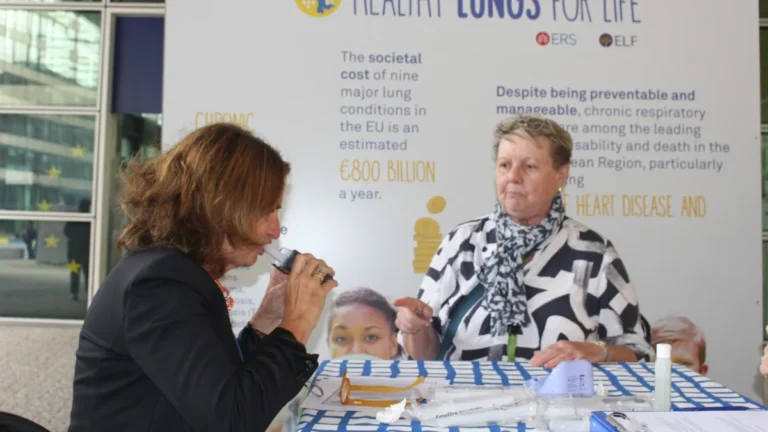












BRUSSELS – As the European Union prepares for a pivotal legislative overhaul, a coalition of medical experts, policymakers, and civil society advocates has issued a stark warning: the continent stands at a “decisive crossroads” regarding the health of its youth.
With the European Commission scheduled to revise the Tobacco Products Directive (TPD) and the Tobacco Advertising Directive (TAD) by the end of 2026, a high-level summit at the European Parliament, titled "Say No to Nicotine," has set the stage for a fierce regulatory battle. The event, hosted by MEPs Aurelijus Veryga and Romana Jerković, and supported by MEP Tilly Metz, underscored a unified demand: the era of lax oversight for emerging nicotine products must come to an end to prevent a looming public health crisis.
The Core Challenge: A Regulatory Landscape in Flux
The primary objective of the upcoming legislative revision is to close the widening gap between rapid technological innovation in the tobacco industry and the slow, often fragmented, pace of European law.
Current regulations, drafted in a pre-vape and pre-nicotine-pouch era, have left significant loopholes. These gaps allow manufacturers to market high-dose, flavoured, and brightly packaged products that arguably target a demographic far younger than the “adult smokers” the industry claims to serve.
The Myth of "Harm Reduction"
Throughout the Brussels summit, speakers dismantled the industry-led narrative of "harm reduction." While lobbyists argue that novel nicotine products—such as pouches and e-cigarettes—are essential tools for smokers looking to quit, medical experts challenged this premise.
Dr. Filippos Filippidis, Chair of the European Respiratory Society (ERS) Tobacco Control Committee, noted that medical-grade nicotine replacement therapies (NRTs) already exist for cessation purposes. He argued that the current wave of commercial products is not designed for public health, but for profit. "Young people are being targeted by a powerful industry that continues to promote addictive products," Filippidis stated. "We have the evidence-based policies needed to stop this; we simply lack the political cohesion to implement them across all member states."
Chronology: From Legacy Tobacco to the Modern Crisis
The trajectory of tobacco control in Europe has seen significant victories, yet the landscape has shifted beneath the feet of regulators.
- 2014: The adoption of the current Tobacco Products Directive (2014/40/EU), which established rules for the manufacture, presentation, and sale of tobacco products.
- 2020–2024: A period of unprecedented growth for “novel” nicotine products. Manufacturers began aggressive marketing of synthetic and tobacco-derived nicotine pouches, e-cigarettes, and heated tobacco products.
- June 2026 (The Current Moment): The European Parliament hosts the “Say No to Nicotine” summit, identifying the upcoming TPD/TAD revision as the primary vehicle to address these new threats.
- Late 2026: The target date for the European Commission to present its legislative proposals for the revised TPD and TAD.
Supporting Data: The Rising Tide of Addiction
The data presented at the summit paints a harrowing picture of a continent being re-addicted to nicotine. Perhaps most alarming is the situation in Sweden—a country often cited by industry proponents as a success story for tobacco-free nicotine products. However, data indicates that 17- to 29-year-olds in Sweden now report the highest levels of nicotine use globally.
The "Youth Trap"
Experts highlighted that modern nicotine products are not merely "alternatives"; they are engineered for maximum addiction. Dr. Angela Ciobanu of WHO Europe provided a breakdown of how the industry utilizes four key levers to hook the next generation:
- Marketing: Vibrant, youth-oriented branding that aligns with lifestyle influencers.
- Pricing: Introduction of entry-level prices that make high-dose nicotine accessible to pocket-money budgets.
- Design: Sleek, tech-focused aesthetics that mask the reality of the toxic cargo inside.
- Delivery Mechanisms: Engineered nicotine salts and high-concentration pouches (some containing up to 15mg of nicotine) that trigger rapid, intense addiction in adolescent brains.
Cardiologists at the event issued a dire warning: nicotine is highly toxic to the cardiovascular system. It damages the inner lining of the arteries, and the full medical fallout of the current generation’s usage will likely not manifest in public health statistics for another 15 to 20 years. By the time the health systems feel the impact, millions will already be dependent.
Official Responses and Political Maneuvering
The political atmosphere in Brussels is becoming increasingly charged. MEP Aurelijus Veryga, a staunch advocate for public health, has called for a "precautionary approach."
"We cannot afford to wait for the bodies to pile up before we regulate," Veryga argued. "If a product is not proven safe, it should not be on the market. We are treating these products as if they are benign, yet we are allowing our citizens to inhale substances that were never intended for the lungs."
The Shadow of Industry Interference
A recurring theme during the summit was the influence of the tobacco industry within the halls of the European Parliament. Attendees reported an increase in sophisticated lobbying tactics, including the distribution of “fact sheets” that mirror tobacco industry talking points and the manipulation of public consultations.
Reports surfaced of anonymous citizens flooding official channels with industry-aligned arguments, a tactic designed to simulate public demand for looser regulations. This interference has galvanized the medical community, who are now pushing for greater transparency in how the Commission engages with stakeholders during the revision process.
Implications: A Call for Unified EU Action
The consensus among the experts is clear: if the EU is to maintain its role as a global leader in health, it must act with legislative force. The primary recommendations for the upcoming TPD and TAD revisions include:
1. Harmonized Taxation
Taxation remains the most effective tool to curb consumption. Currently, fragmented national rules allow for "cross-border evasion," where users buy cheaper products from neighbouring countries. A unified EU tax framework would neutralize this price arbitrage.
2. Standardized Regulation
The current regulatory framework creates loopholes based on product categories. Experts argue that all nicotine-containing products should be subjected to the same strict standards regarding flavourings, additives, and marketing as traditional tobacco products.
3. Closing the "Innovation" Loophole
The industry frequently releases "novel" products specifically to circumvent existing rules. The new directive must move from a reactive stance—regulating products as they appear—to a proactive stance, where products must undergo rigorous safety evaluations before entering the market.
Conclusion: The Final Window for Action
As the end of 2026 approaches, the European Commission faces a defining test of its commitment to public health. The "Say No to Nicotine" event has served as a wake-up call, stripping away the veneer of "harm reduction" to reveal a deeper, more urgent concern: the deliberate grooming of a new generation of nicotine addicts.
The path forward requires more than just updated wording in a directive; it requires a fundamental shift in how the European Union views the tobacco industry. As Dr. Ciobanu poignantly asked: "The question is no longer whether nicotine and tobacco products are evolving. The question is whether public health policies can keep pace."
For the next generation, the answer to that question will determine their health for decades to come. With the eyes of the medical community and the public firmly fixed on the European Parliament, the stage is set for a landmark confrontation that could either cement the EU as a bastion of preventative health or leave it vulnerable to the commercial interests of a global industry that has proven, time and again, that it prioritizes profit over the longevity of its consumers.